About this artwork
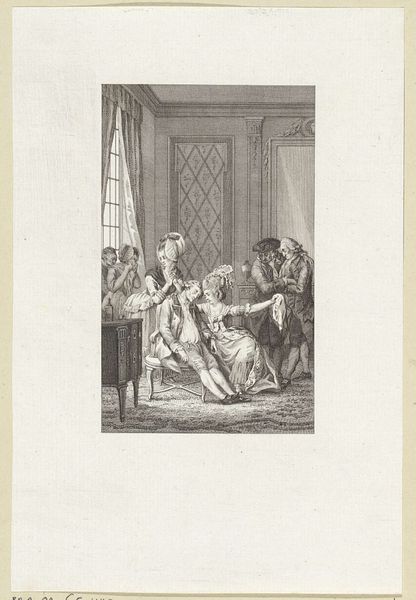
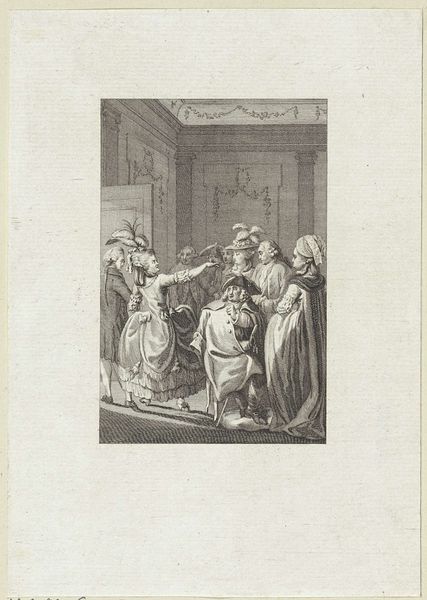
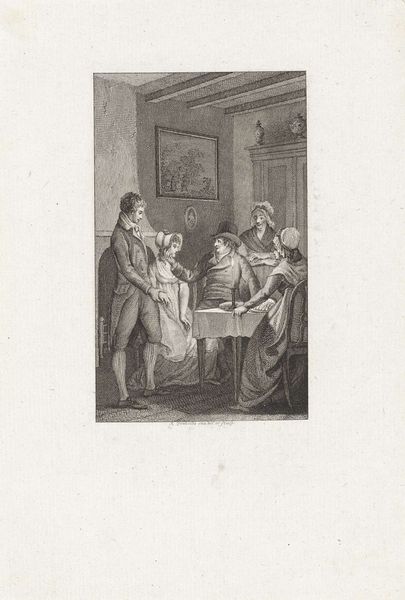
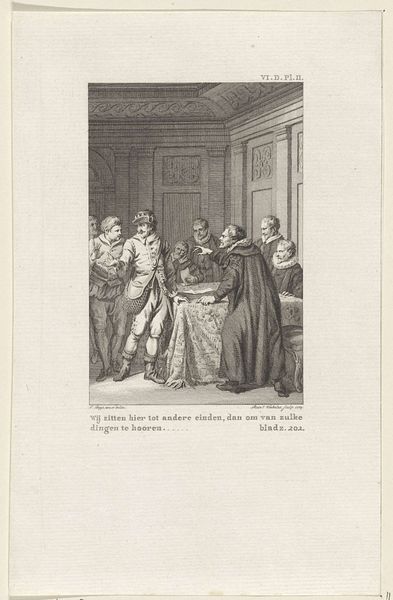
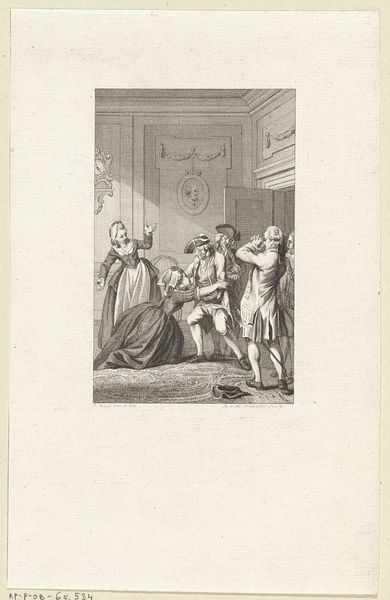
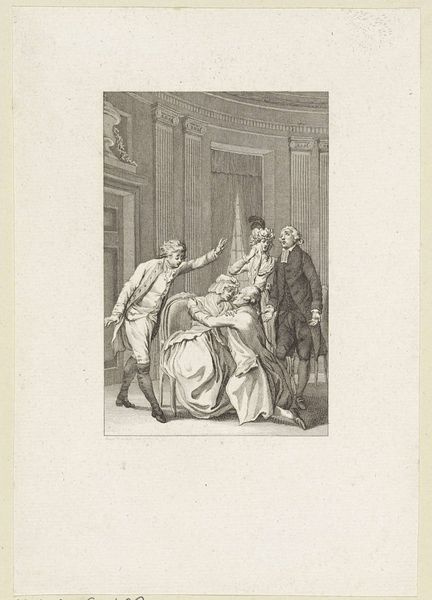
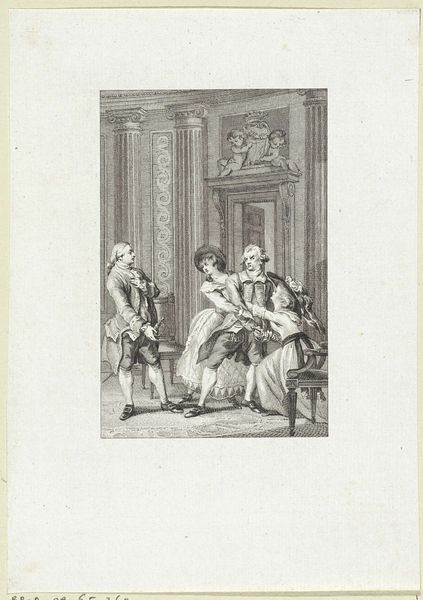
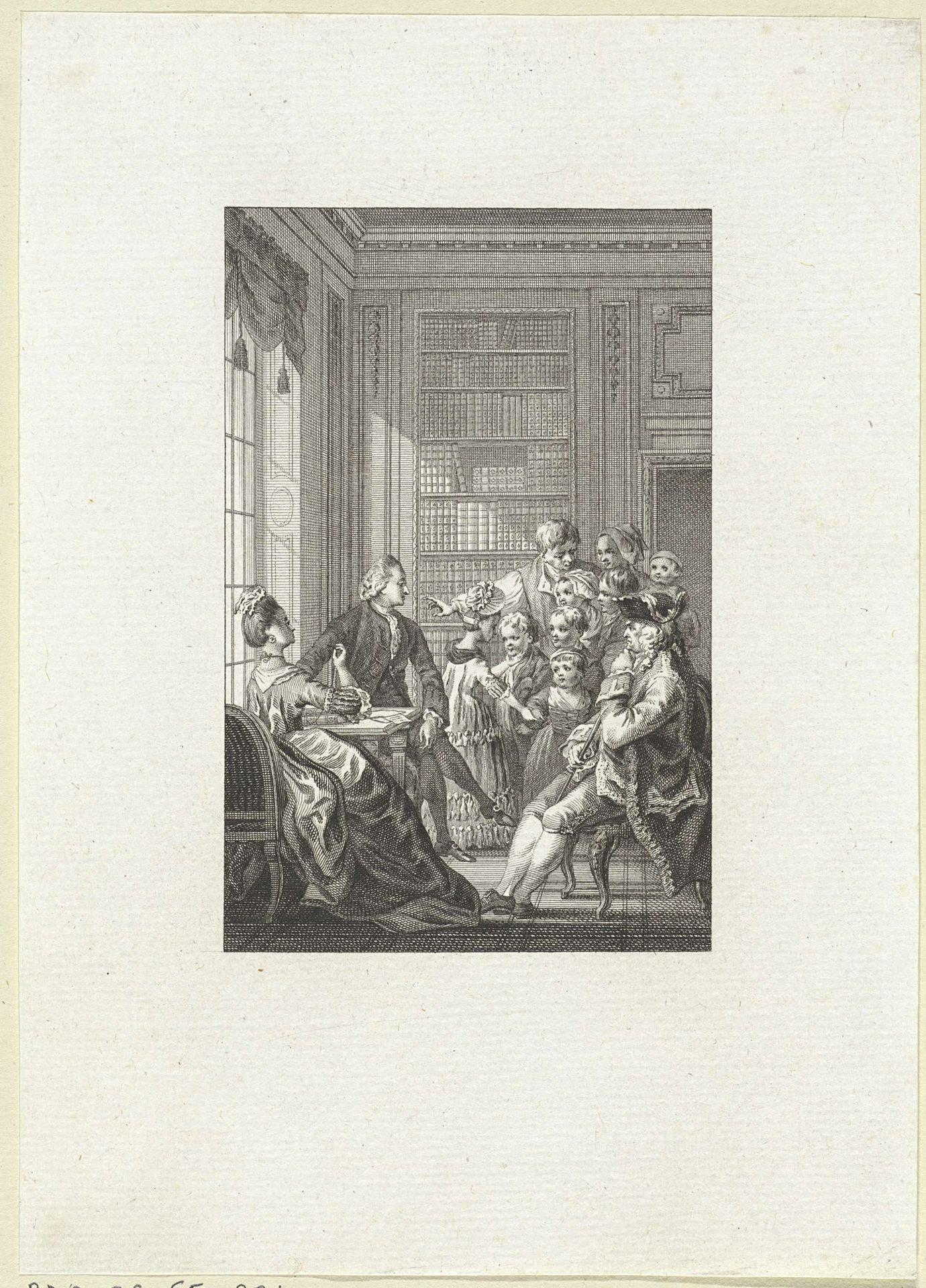
Editor: Here we have "Three Adults Looking at a Group of Children in the Reading Room," an engraving by Reinier Vinkeles dating back to 1775. There's a formality to the scene, the adults watching over these children in a very structured, almost staged way. What historical context shapes your view of this work? Curator: It's fascinating to consider this work within the framework of 18th-century social ideals. The Enlightenment's emphasis on education and reason trickles down, and we see it reflected in art like this. Consider the power dynamics at play: Adults positioned as knowledge-holders, overseeing children, the future generation. But is it benevolent guidance or a form of social control? What do you make of the way the children are grouped together? Editor: It strikes me as very ordered, everyone neatly placed, not very individual. Is this then a statement on how children should be educated to fit within society? Curator: Precisely! Think about the evolving concept of childhood itself during this period. It was moving away from seeing children as miniature adults towards recognizing their unique developmental stages. This engraving becomes a lens through which we can examine those societal expectations and how they were visualized. The setting, a domestic interior filled with books, also speaks volumes about the importance of cultivating young minds. But are we glorifying this image or critiquing its vision of society? Editor: I see what you mean. On the one hand, the image champions learning, but the rigidity makes it feel a bit oppressive. I didn't consider how loaded this seemingly simple scene could be. Curator: Exactly. And that’s where art history intersects with critical theory – it challenges us to look beyond the surface and ask uncomfortable questions about power, ideology, and representation. What have you gleaned from this dialogue? Editor: This experience definitely shifted how I view art. Considering its historical background helps unearth deeper insights and social values that shaped its creation. Thank you. Curator: My pleasure. Keep interrogating the art and the world around it.
Drie volwassenen kijken naar een groep kinderen in de leeskamer
1775

Reinier Vinkeles
1741 - 1816Location
RijksmuseumArtwork details
- Medium
- engraving
- Dimensions
- height 208 mm, width 149 mm
- Location
- Rijksmuseum
- Copyright
- Rijks Museum: Open Domain
Tags
Comments
Share your thoughts
About this artwork
Editor: Here we have "Three Adults Looking at a Group of Children in the Reading Room," an engraving by Reinier Vinkeles dating back to 1775. There's a formality to the scene, the adults watching over these children in a very structured, almost staged way. What historical context shapes your view of this work? Curator: It's fascinating to consider this work within the framework of 18th-century social ideals. The Enlightenment's emphasis on education and reason trickles down, and we see it reflected in art like this. Consider the power dynamics at play: Adults positioned as knowledge-holders, overseeing children, the future generation. But is it benevolent guidance or a form of social control? What do you make of the way the children are grouped together? Editor: It strikes me as very ordered, everyone neatly placed, not very individual. Is this then a statement on how children should be educated to fit within society? Curator: Precisely! Think about the evolving concept of childhood itself during this period. It was moving away from seeing children as miniature adults towards recognizing their unique developmental stages. This engraving becomes a lens through which we can examine those societal expectations and how they were visualized. The setting, a domestic interior filled with books, also speaks volumes about the importance of cultivating young minds. But are we glorifying this image or critiquing its vision of society? Editor: I see what you mean. On the one hand, the image champions learning, but the rigidity makes it feel a bit oppressive. I didn't consider how loaded this seemingly simple scene could be. Curator: Exactly. And that’s where art history intersects with critical theory – it challenges us to look beyond the surface and ask uncomfortable questions about power, ideology, and representation. What have you gleaned from this dialogue? Editor: This experience definitely shifted how I view art. Considering its historical background helps unearth deeper insights and social values that shaped its creation. Thank you. Curator: My pleasure. Keep interrogating the art and the world around it.
Comments
Share your thoughts