1859 - 1886
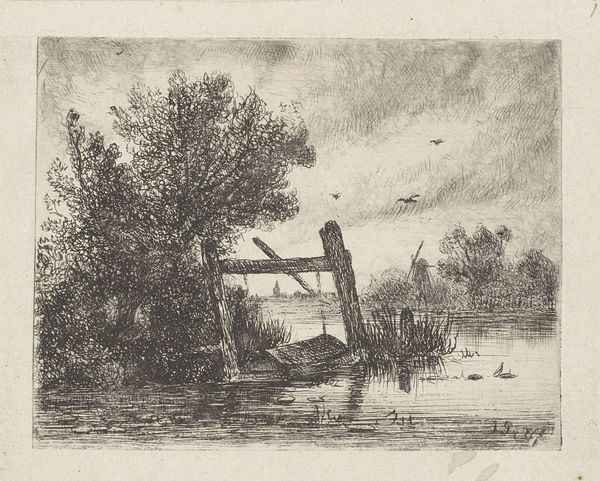
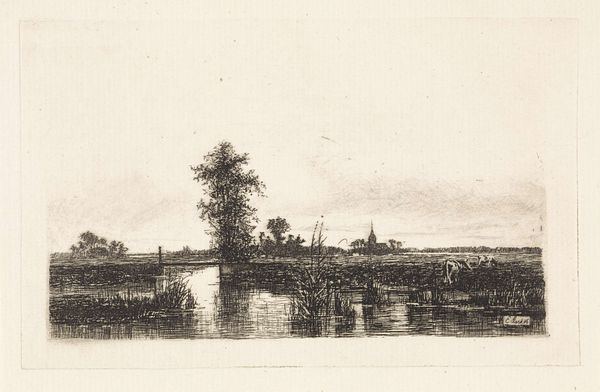
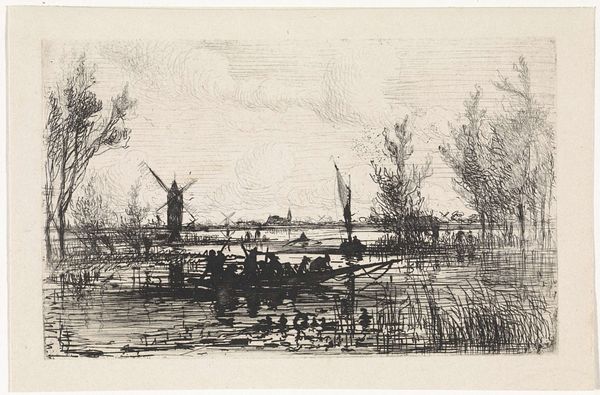
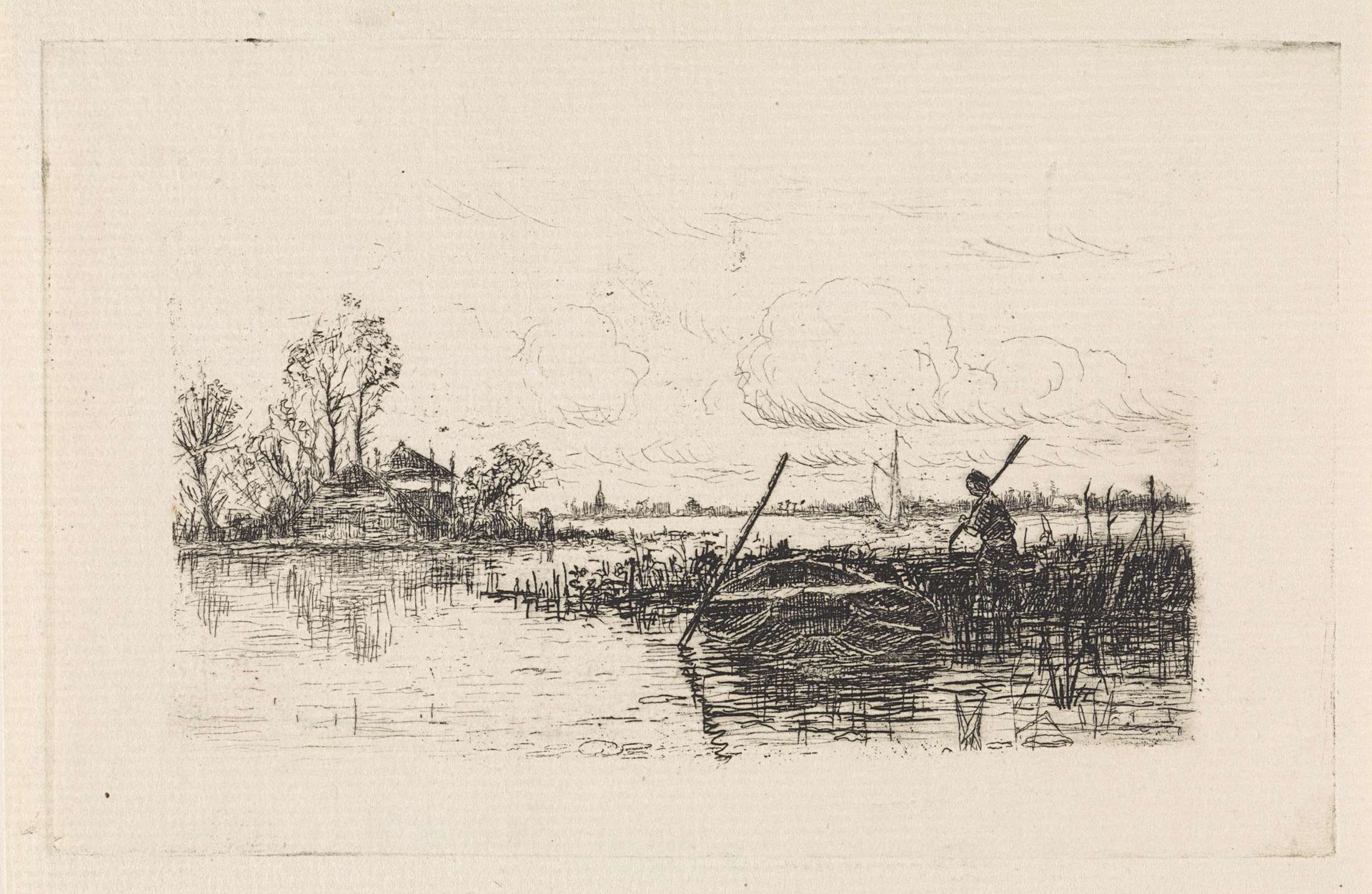
Landschap met een man bij een roeiboot

Elias Stark
1849 - 1933Location
RijksmuseumListen to curator's interpretation
Curatorial notes
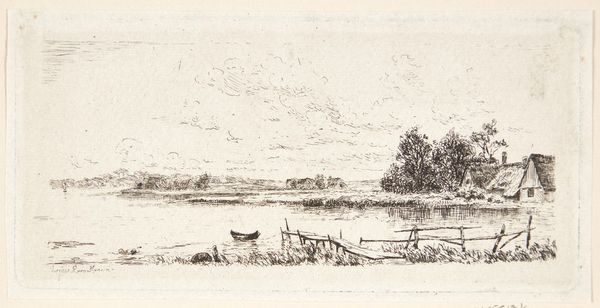
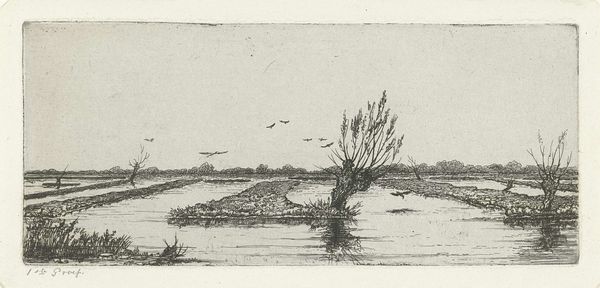
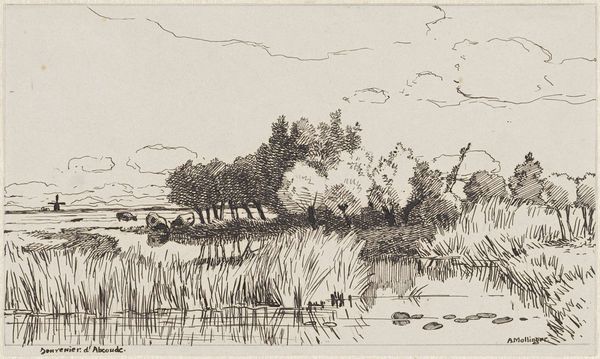
Editor: This is "Landschap met een man bij een roeiboot," or "Landscape with a man in a rowboat," an etching by Elias Stark, made sometime between 1859 and 1886. I find the scene quite serene, even with the stark black lines. The man seems very still. What stands out to you about this work? Curator: It's interesting that you call the lines 'stark,' given the artist's name. The subject here certainly resonates with a larger cultural fascination in 19th-century Europe: a desire to connect with nature and a sense of quiet solitude. Where do you think such fascination comes from? Editor: Maybe it was a reaction to the growing industrialization, a sort of pastoral fantasy? Curator: Precisely! And note the availability and increasing affordability of printmaking. The etching process, with its ability to create multiples, allowed artists like Stark to distribute these idyllic scenes widely, shaping a public perception of the landscape as a retreat from the anxieties of modern life. Look closely - what details do you think most strongly evoked the sensation of 'rural escape' for viewers at that time? Editor: I think it’s the scale and composition – such a vast sky, open water, and the figure almost disappearing into nature. This smallness probably captured the sublime effect they sought. Curator: That’s astute. It encouraged viewers, whether buying art or not, to consider art’s public role to define the politics of landscape, linking social well-being to visual expression and nature's beauty. Editor: So the piece's value lies in illustrating the socio-political thinking of the time more than portraying the landscape itself. I'll remember that for my upcoming assignment. Curator: It’s in the blend of the two – social trends shape how people interact with the land and reflect on its essence in artistic practices.