1938
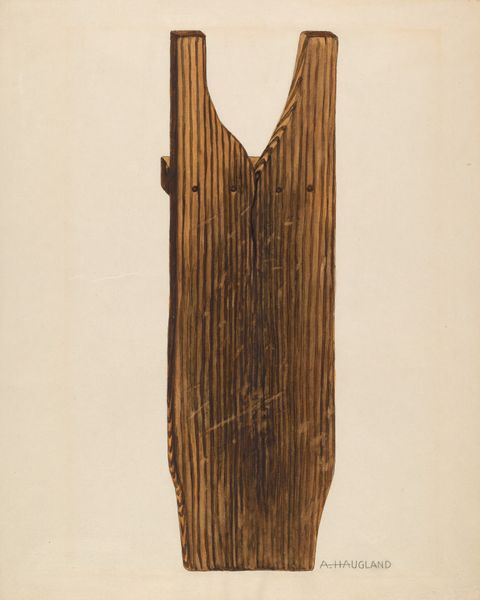
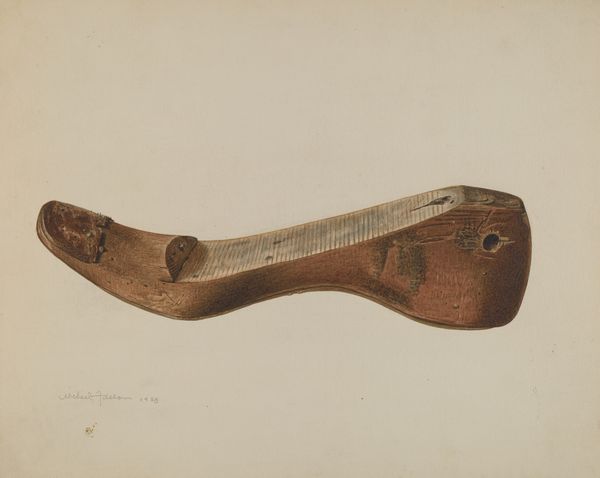
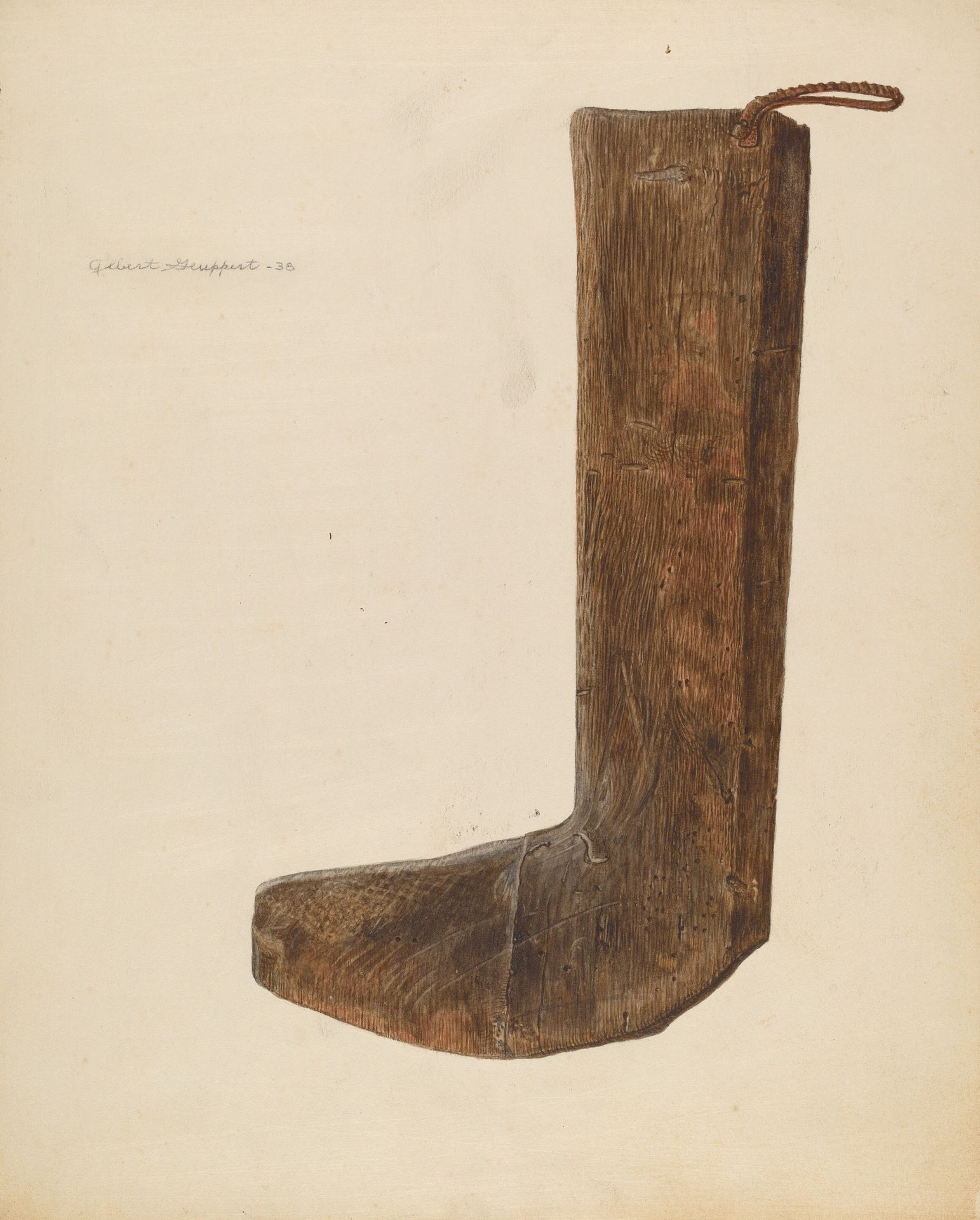
Boot Form


Listen to curator's interpretation
Curatorial notes
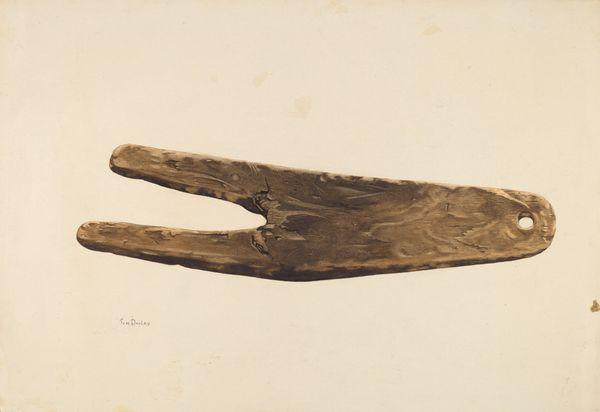
Editor: This is Albert Geuppert's "Boot Form" from 1938, created with drawing, paper, watercolor, and wood. I find the rough texture and almost primitive form intriguing. It feels very grounded, like a basic tool. What do you see in this piece? Curator: I see an artifact steeped in the socio-political realities of the late 1930s. While seemingly simple, the boot form can be interpreted as a symbol of labor, perhaps referencing the working class and the rise of industrialization. What might a simple object signify in an era marked by economic hardship and escalating global conflict? Editor: So, you're saying the boot form isn't just a literal representation? Curator: Precisely. The choice of wood and the apparent simplicity could be read as a deliberate commentary on the value of manual labor. It evokes ideas related to class, labor, and social identity during a period of significant social change and growing fascism in Europe. Can we also consider how this object subverts traditional art objects? Editor: That’s fascinating! It makes me think about the art created by marginalized communities during this same period. The material speaks of durability. I also notice it is displayed like sculpture. What considerations would explain the material? Curator: Excellent point. The material underscores both utilitarianism and a kind of enduring presence amid social turbulence. But doesn't this formal study also serve as commentary on artistic convention during this politically fraught moment in time? Editor: I never considered it in that light before, seeing it connected to labor movements and social classes, makes it very engaging. Thank you! Curator: It highlights how objects often hold stories, reflecting complex layers of history and social experience, and how it’s important for the viewer to draw those linkages in our contemporary world.