1808
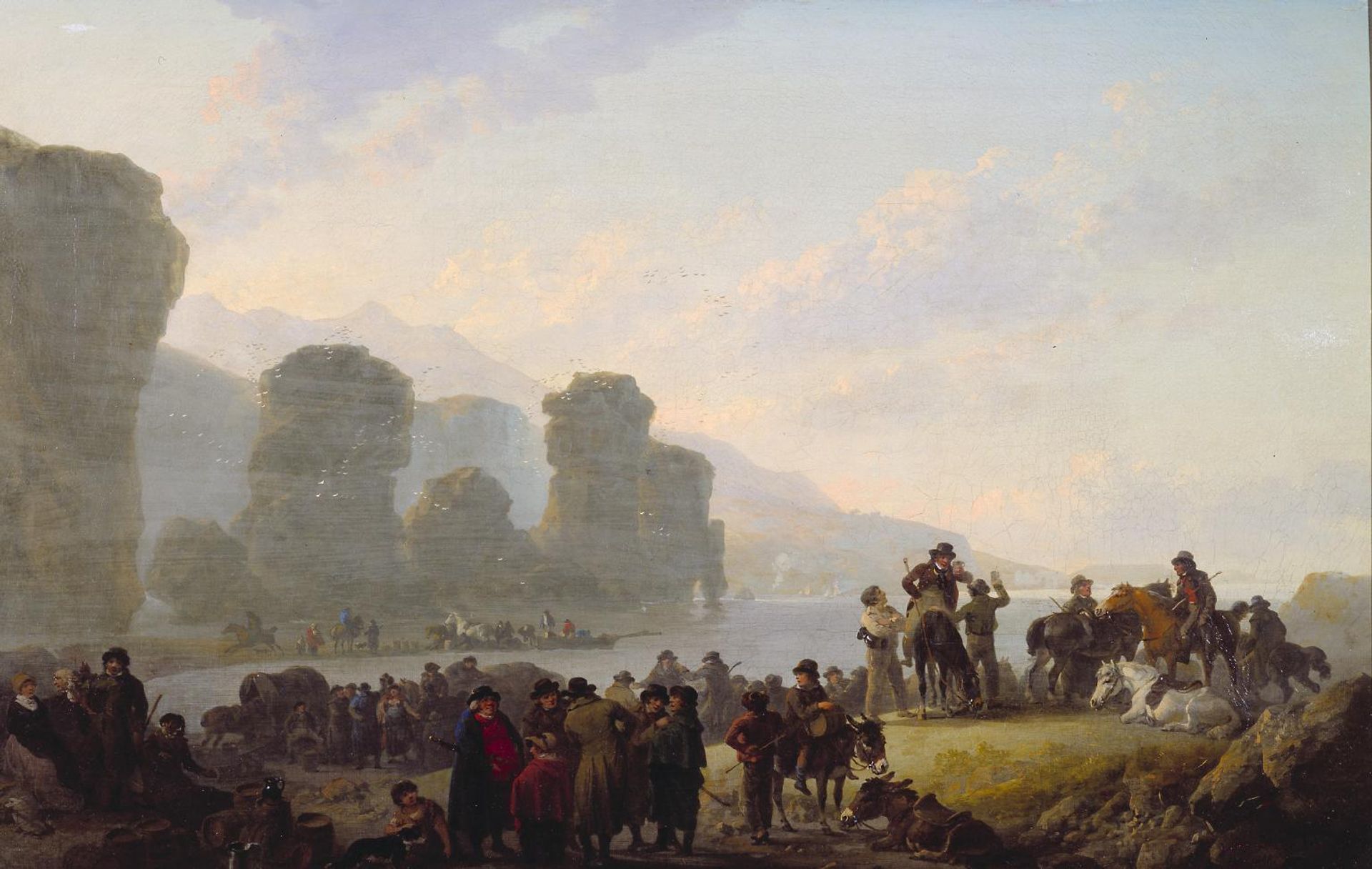
Smugglers on the Irish Coast


Listen to curator's interpretation
Curatorial notes
Curator: Ibbetson’s "Smugglers on the Irish Coast" presents a fascinating glimpse into the socioeconomic complexities of 18th-century Ireland. The figures, dwarfed by dramatic rock formations, speak volumes about the power dynamics at play. Editor: It’s a muted scene, isn't it? The use of earth tones and soft light suggests a covert operation, the figures blending into the landscape. The scene's arrangement makes me question the labor and local economies at play. Curator: Exactly! The illegality of smuggling must be contextualized within the oppressive trade policies imposed by Britain, a form of resistance from marginalized communities. Note how the artist uses the sublime to frame the narrative of human agency. Editor: I'm drawn to the materials being moved—what are they? Who benefits from this exchange, and at what cost to those involved? I wonder about the specific fabrics and goods changing hands. Curator: It also evokes a sense of cultural identity and the resourcefulness of the Irish people amidst economic hardship and the struggle for autonomy. Editor: It’s a valuable lens through which to view the intertwined narratives of labor, landscape, and social rebellion during a pivotal moment in Irish history. Curator: Indeed, offering insight into the complex intersectional dimensions of Irish society at the time. Editor: A compelling look at the tangible and social implications of illicit exchange.