About this artwork
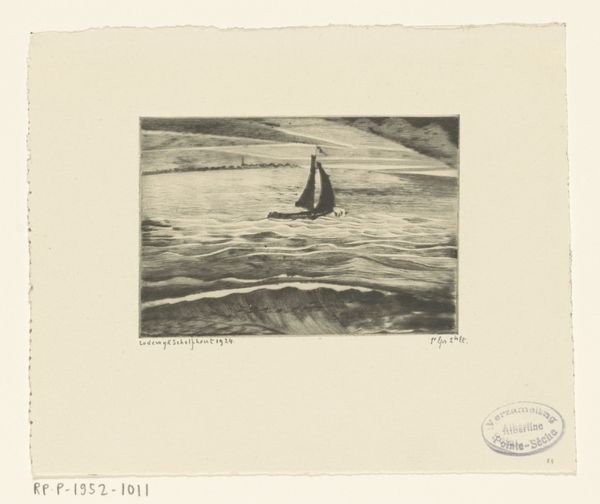
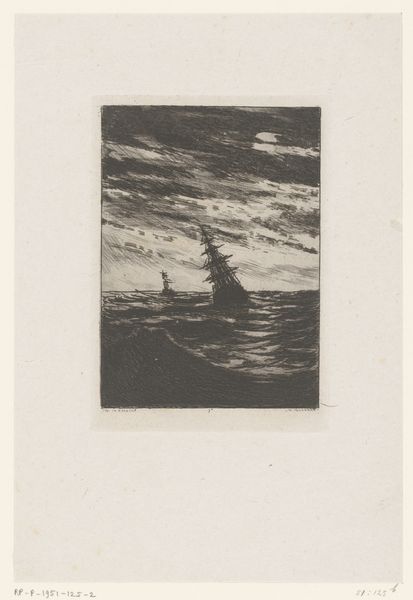
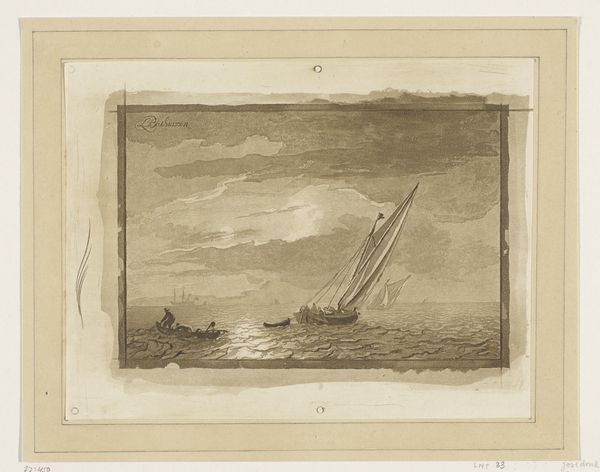
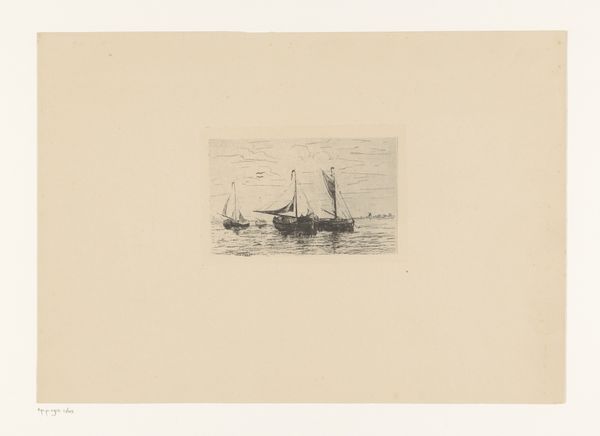
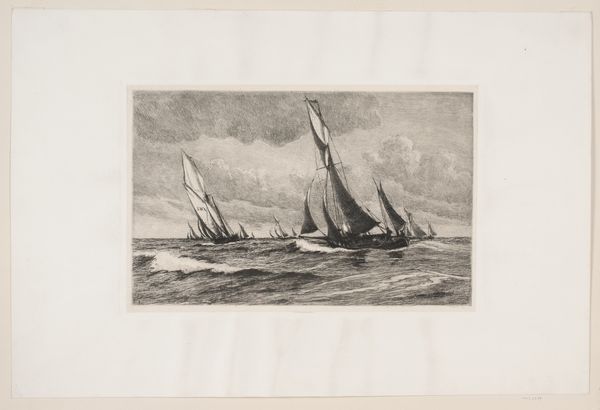
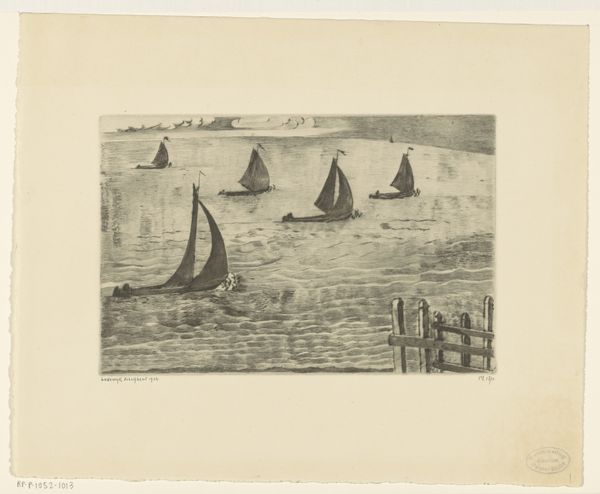
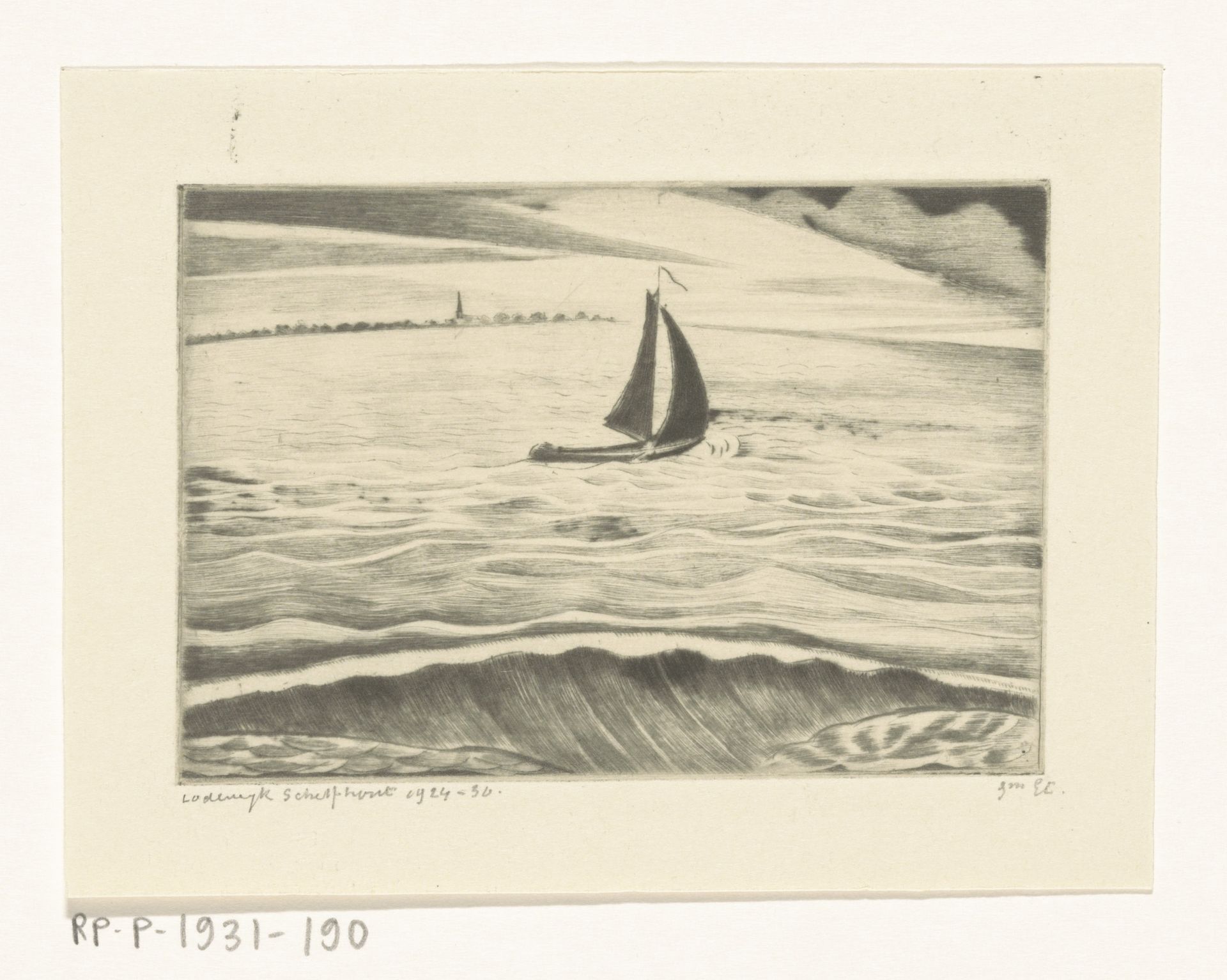
Editor: This is “Zeilschip bij Marken,” a drawing and etching on paper by Lodewijk Schelfhout, created between 1924 and 1930. The whole image has a silvery, monochromatic tone which gives the scene a quiet feeling, like a memory. What strikes you most about it? Curator: I see more than just quietude; I see a narrative deeply rooted in cultural identity. Look at the single sailboat – not a grand warship or a trading vessel, but a humble Zeilschip, hinting at the daily lives of ordinary people connected to the sea. The artist seems to be drawing a visual parallel with Dutch history and self-perception. Editor: That's interesting. I mostly focused on the seascape, how the waves dominate the lower half, almost swallowing the small sailboat. The distant coastline feels so remote. Curator: Exactly! It is that sense of perspective. Consider the weight of the water. How the boat cuts the waves with an apparent effort that becomes an allegory. Could that symbolize something about Dutch resilience? Editor: Resilience? It feels more lonely than resilient. Like an individual battling the elements. Curator: Perhaps it’s both. Artists often imbue commonplace objects with layers of symbolic meaning that express inner life. The recurring theme of seascape, specifically Zeilschip's symbolic strength, in art acts like a signpost directing back to cultural origins. Think about it – water has always shaped survival, expansion and innovation. This isn't just the depiction of a sailboat, it carries an emotional, psychological echo, especially for the Dutch. Editor: So, even something as seemingly simple as a sailboat etching becomes a window into understanding a nation's identity? Curator: Precisely. We see symbols reflecting collective memory in every line. Now, how might that change your initial interpretation? Editor: I definitely have a richer understanding now. It’s not just a seascape; it's a cultural touchstone. Thanks for sharing your insights!

Artwork details
- Medium
- drawing, print, etching, paper
- Dimensions
- height 69 mm, width 101 mm
- Location
- Rijksmuseum
- Copyright
- Rijks Museum: Open Domain
Tags
drawing
etching
landscape
paper
modernism
realism
sea
Comments
Be the first to share your thoughts about this work.
About this artwork
Editor: This is “Zeilschip bij Marken,” a drawing and etching on paper by Lodewijk Schelfhout, created between 1924 and 1930. The whole image has a silvery, monochromatic tone which gives the scene a quiet feeling, like a memory. What strikes you most about it? Curator: I see more than just quietude; I see a narrative deeply rooted in cultural identity. Look at the single sailboat – not a grand warship or a trading vessel, but a humble Zeilschip, hinting at the daily lives of ordinary people connected to the sea. The artist seems to be drawing a visual parallel with Dutch history and self-perception. Editor: That's interesting. I mostly focused on the seascape, how the waves dominate the lower half, almost swallowing the small sailboat. The distant coastline feels so remote. Curator: Exactly! It is that sense of perspective. Consider the weight of the water. How the boat cuts the waves with an apparent effort that becomes an allegory. Could that symbolize something about Dutch resilience? Editor: Resilience? It feels more lonely than resilient. Like an individual battling the elements. Curator: Perhaps it’s both. Artists often imbue commonplace objects with layers of symbolic meaning that express inner life. The recurring theme of seascape, specifically Zeilschip's symbolic strength, in art acts like a signpost directing back to cultural origins. Think about it – water has always shaped survival, expansion and innovation. This isn't just the depiction of a sailboat, it carries an emotional, psychological echo, especially for the Dutch. Editor: So, even something as seemingly simple as a sailboat etching becomes a window into understanding a nation's identity? Curator: Precisely. We see symbols reflecting collective memory in every line. Now, how might that change your initial interpretation? Editor: I definitely have a richer understanding now. It’s not just a seascape; it's a cultural touchstone. Thanks for sharing your insights!
Comments
Be the first to share your thoughts about this work.