1840
A History of the Amistad Captives: Being a Circumstantial Account of the Capture of the Spanish Schooner Amistad, by the Africans on Board; Their Voyage, and Capture near Long Island, New York; with Biographical Sketches of Each of the Surviving Africans.


Listen to curator's interpretation
Curatorial notes
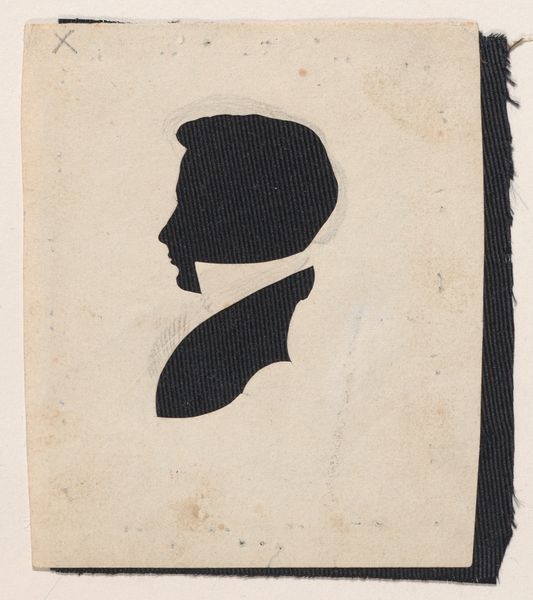
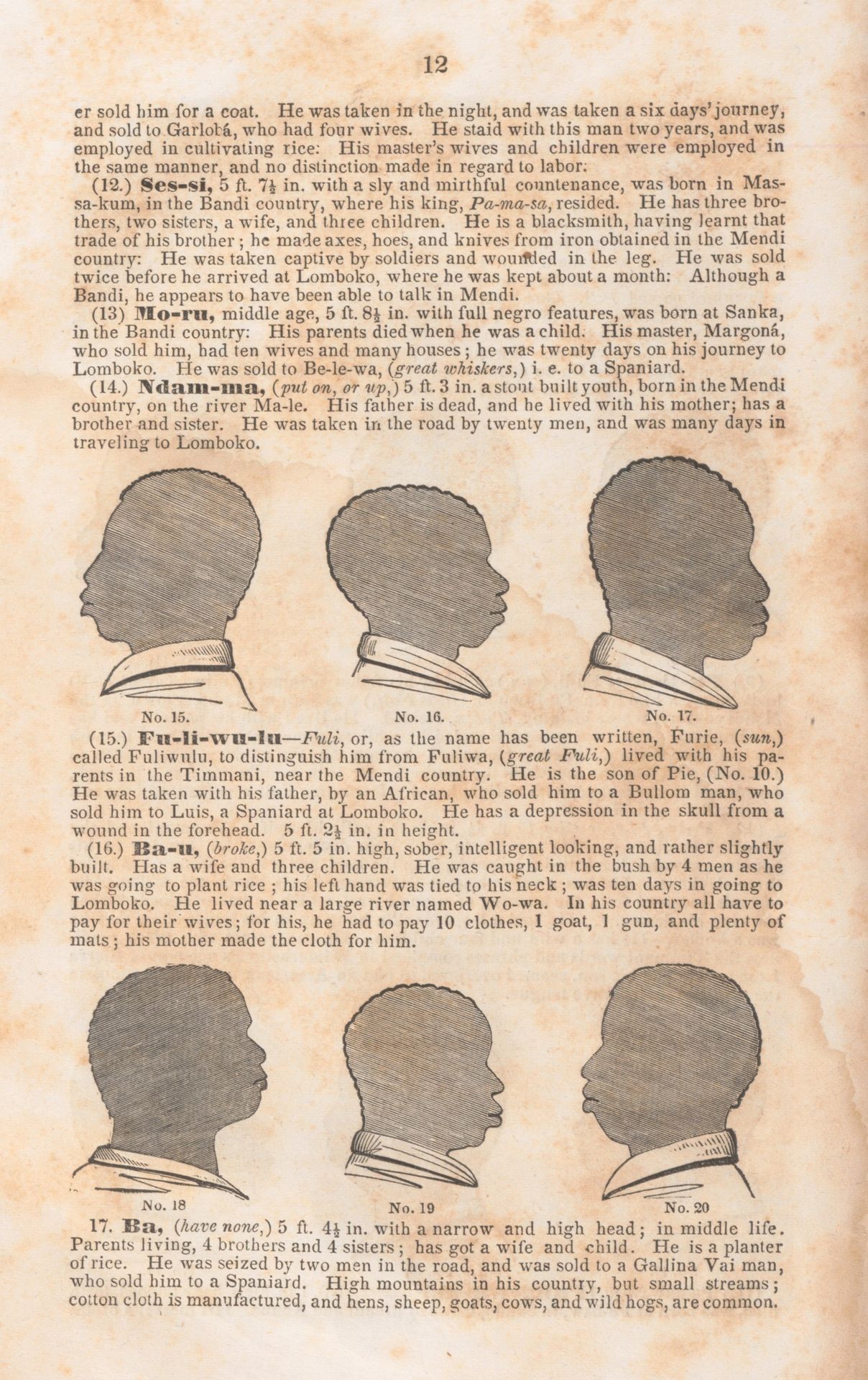
These stark silhouette portraits, printed by John Warner Barber, document the Amistad captives. The profiles, devoid of individual expression, echo ancient Roman portraiture, yet here, they serve a different purpose. The intent is to record and categorize, not to celebrate individuality. Observe how the captions reduce each person to measurements, origins, and circumstances of enslavement. This echoes practices found in ancient Egyptian tomb paintings, where the depiction of captives served as a symbolic assertion of power, dehumanizing the individuals, reducing them to mere commodities. Notice how the act of profiling transforms the individual into a specimen. This reduction is a recurring motif throughout history, resurfacing in phrenology and eugenics, each iteration attempting to quantify and classify humanity. The image, a silent testament to the brutal trade in human lives, engages us on a deep, subconscious level, reminding us of the cyclical nature of history. The impulse to categorize and control has been a constant presence in our collective memory, manifesting in various forms across time and culture.