About this artwork
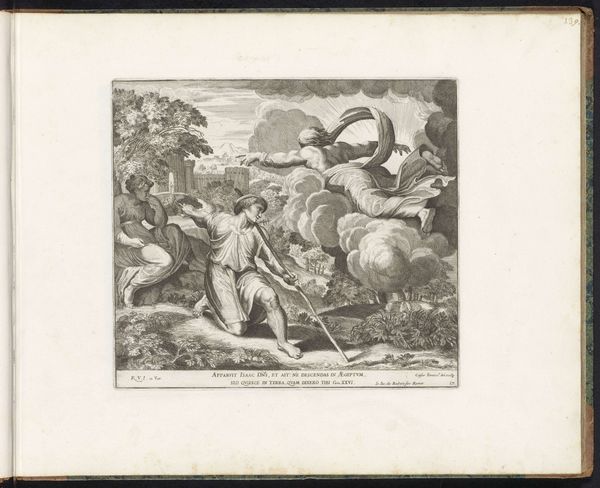
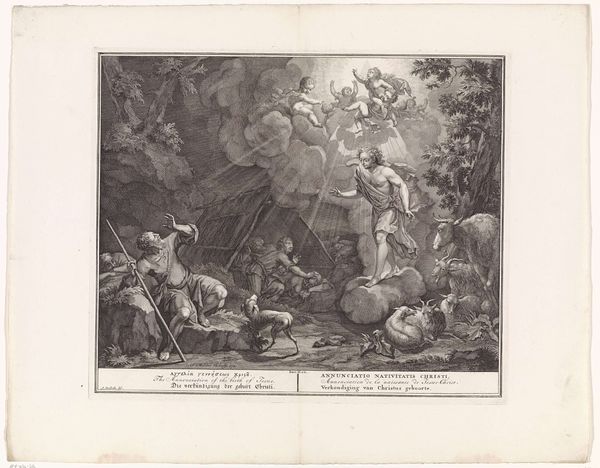
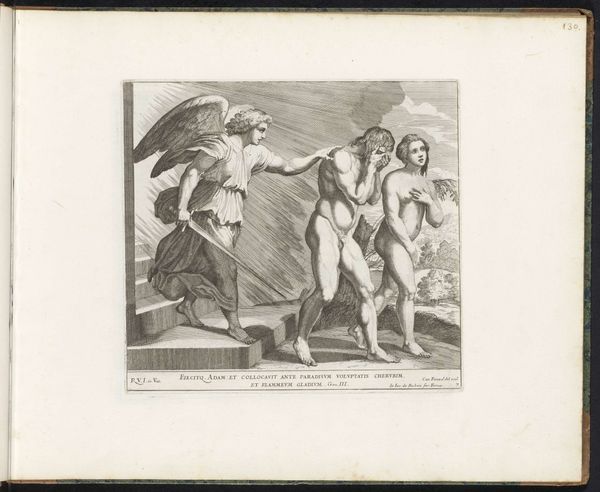
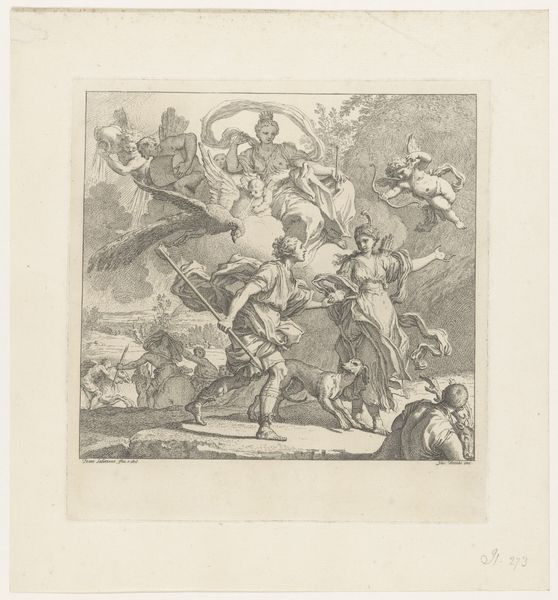
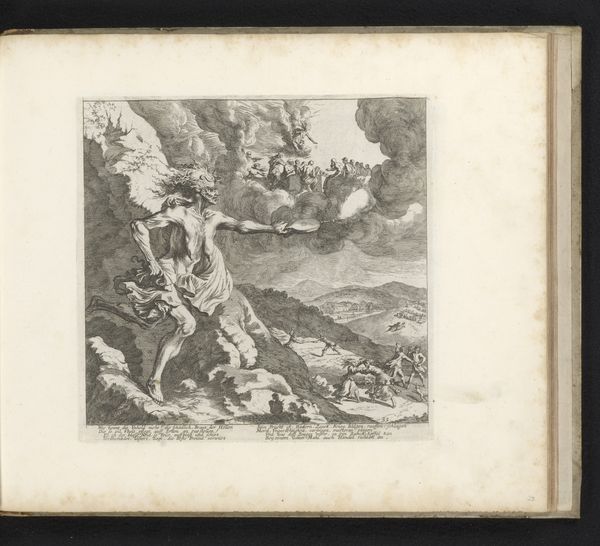
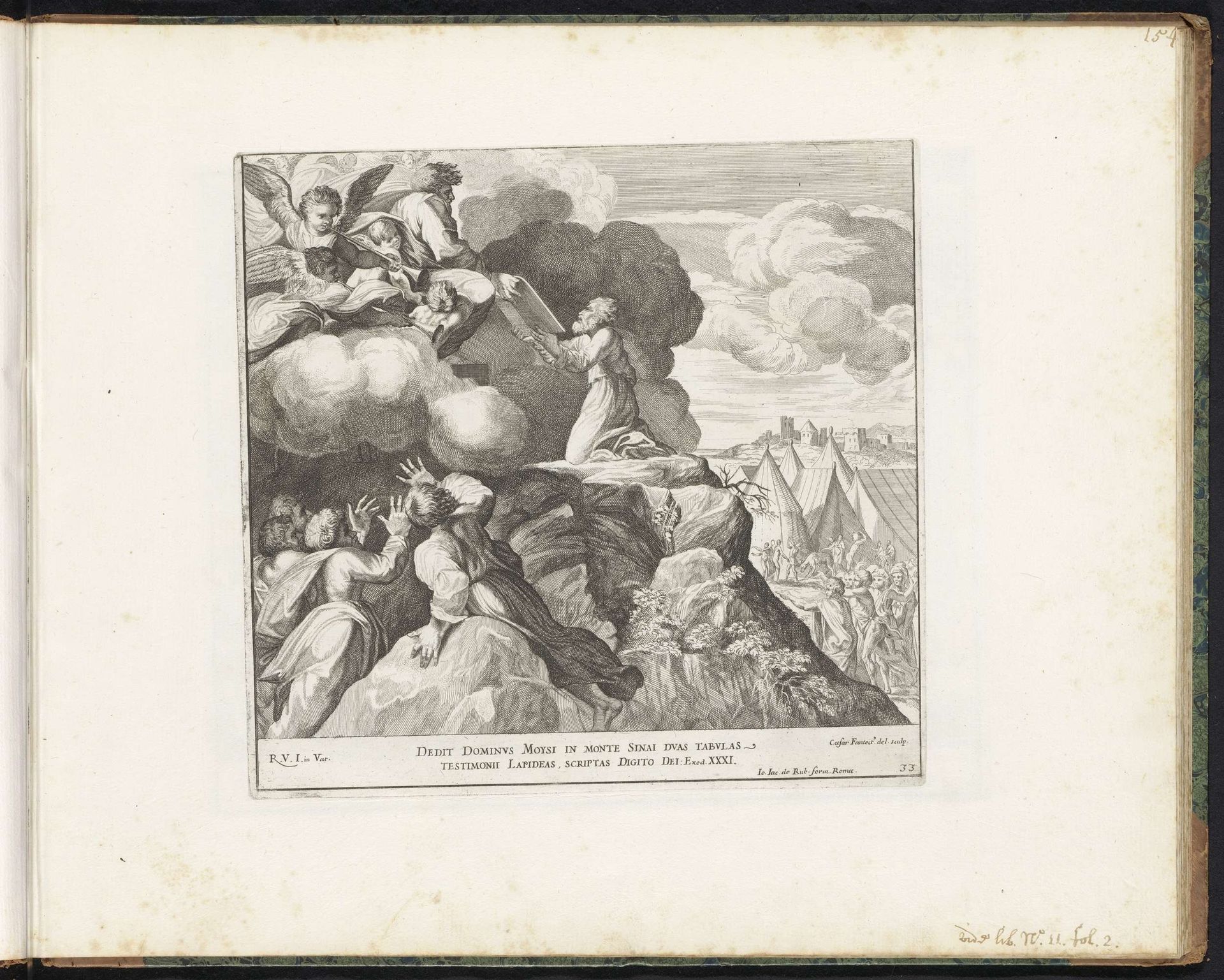
Cesare Fantetti created this print, "Moses Receiving the Tablets of the Law," using etching techniques. The composition is structured into distinct zones: celestial, terrestrial, and the distant camp below, each rendered with meticulous detail through line and texture. The cloudscape, bearing divine figures, contrasts sharply with the solid, rocky terrain where Moses kneels. This juxtaposition uses contrasting textures to highlight the divine versus the mortal. The piece invites us to explore the interplay between the earthly and the divine. Fantetti, through his manipulation of line and space, creates a semiotic dialogue between the different realms. The use of scale and perspective, particularly in the depiction of the distant camp, establishes a visual hierarchy, reinforcing the central event's significance. Consider how Fantetti's strategic use of form, not just as aesthetic choices but as vehicles for meaning, reflects broader cultural and philosophical concerns about divine law and human existence.

Artwork details
- Medium
- print, paper, ink, engraving
- Dimensions
- height 248 mm, width 260 mm
- Copyright
- Rijks Museum: Open Domain
Tags
narrative-art
baroque
figuration
paper
ink
coloured pencil
history-painting
engraving
Comments
Be the first to share your thoughts about this work.
About this artwork
Cesare Fantetti created this print, "Moses Receiving the Tablets of the Law," using etching techniques. The composition is structured into distinct zones: celestial, terrestrial, and the distant camp below, each rendered with meticulous detail through line and texture. The cloudscape, bearing divine figures, contrasts sharply with the solid, rocky terrain where Moses kneels. This juxtaposition uses contrasting textures to highlight the divine versus the mortal. The piece invites us to explore the interplay between the earthly and the divine. Fantetti, through his manipulation of line and space, creates a semiotic dialogue between the different realms. The use of scale and perspective, particularly in the depiction of the distant camp, establishes a visual hierarchy, reinforcing the central event's significance. Consider how Fantetti's strategic use of form, not just as aesthetic choices but as vehicles for meaning, reflects broader cultural and philosophical concerns about divine law and human existence.
Comments
Be the first to share your thoughts about this work.