About this artwork
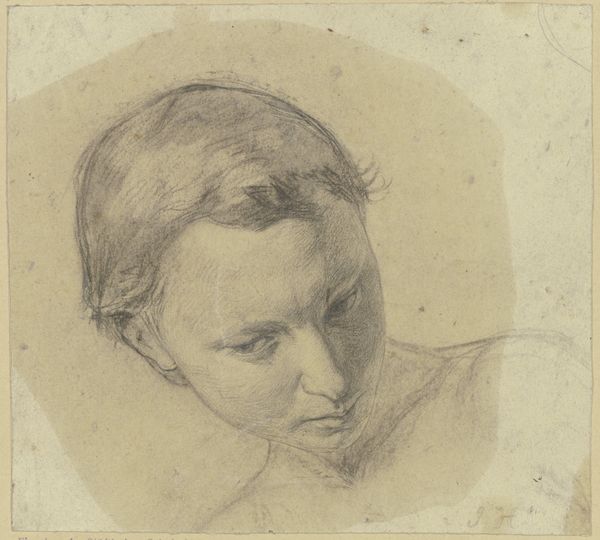
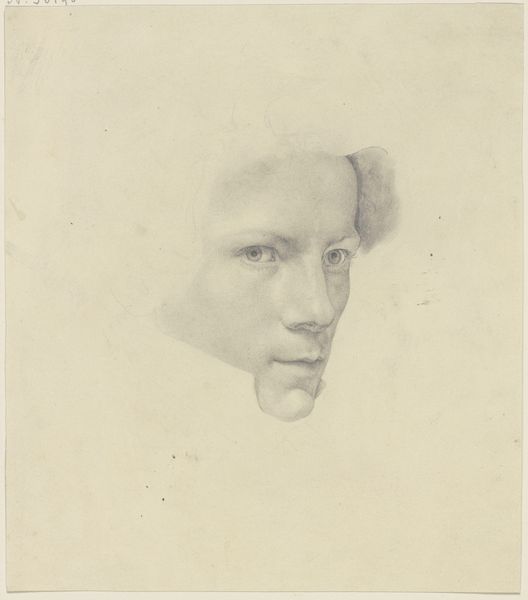
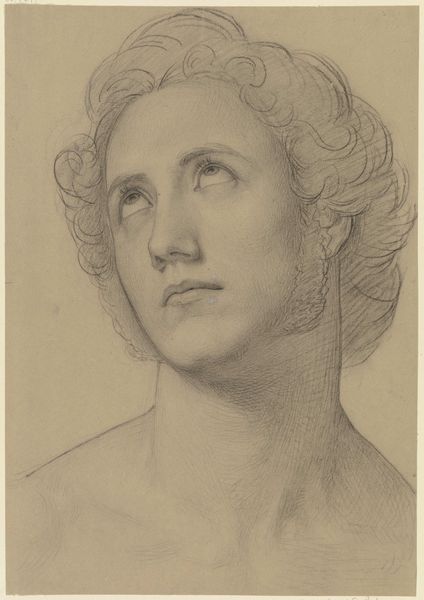
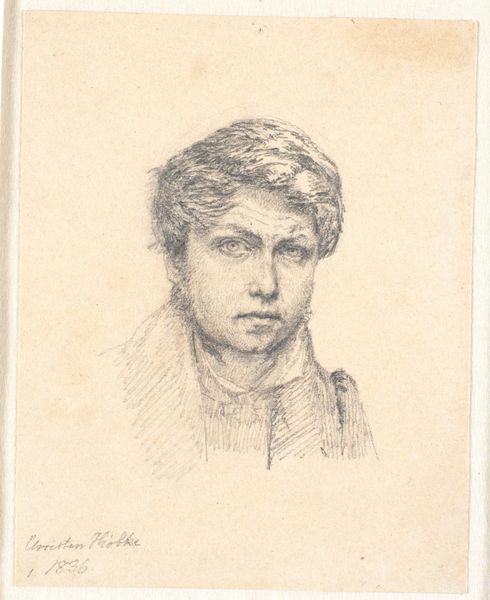
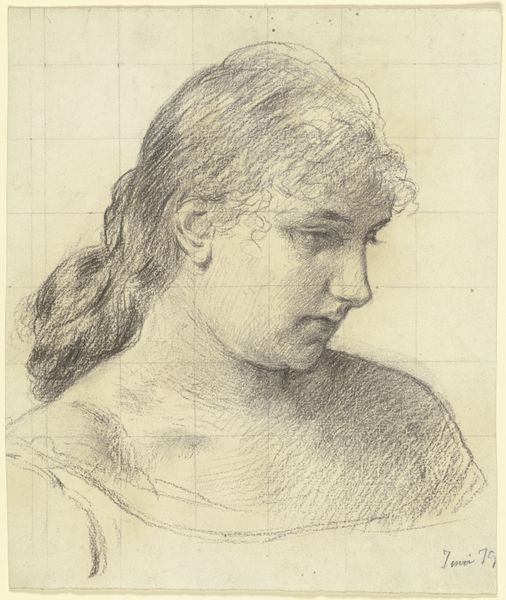
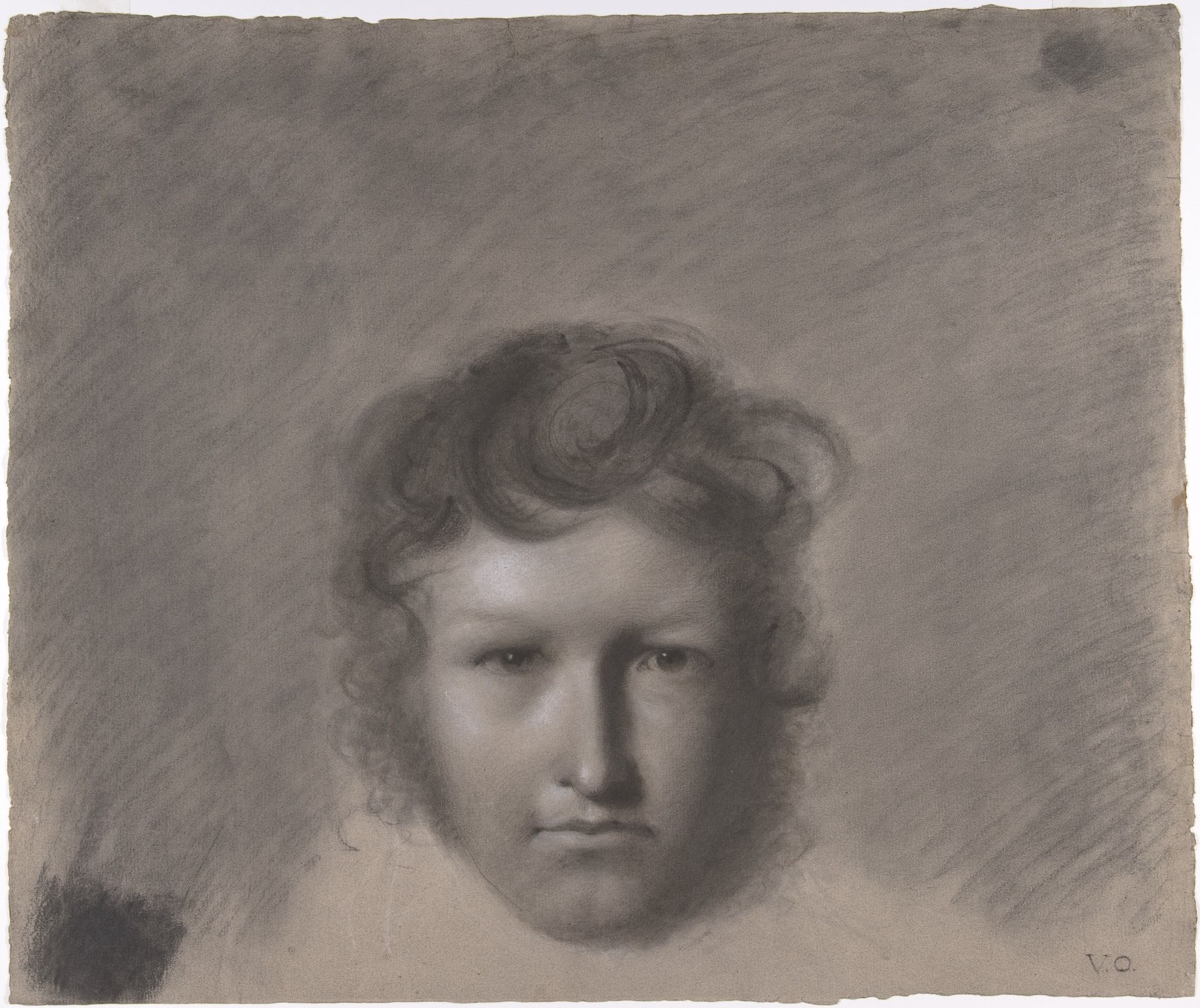
This self-portrait was made by Andre-Jacques-Victor Orsel using graphite on paper. Here, the artist works with very simple means. Graphite is pure carbon, the same stuff as charcoal or soot, but in a more refined mineral form. The drawing is a tonal study, moving from light to dark. The artist has built up the image with a close, even hatching, which is most visible in the darker areas. These marks show the artist's labor, the repeated action of the hand that gradually coaxes an image into being. Although it's just a drawing on paper, Orsel achieved a sculptural effect through the gradations of light and shadow. The support, too, is important. The paper is a textured surface that takes the graphite well, allowing for the subtle gradations of tone that give the portrait its depth. Consider how these ordinary materials can be used with tremendous skill. In the end, it is not about 'high art' or 'craft', but about a deeply thoughtful creative process.
Self-Portrait
1810 - 1825

Andre-Jacques-Victor Orsel
1795 - 1850
The Metropolitan Museum of Art
Metropolitan Museum of Art, New York, NYArtwork details
- Medium
- drawing, print, charcoal
- Dimensions
- sheet: 14 3/4 x 17 11/16 in. (37.4 x 44.9 cm)
- Location
- Metropolitan Museum of Art, New York, NY
- Copyright
- Public Domain
Tags
Comments
Share your thoughts
About this artwork
This self-portrait was made by Andre-Jacques-Victor Orsel using graphite on paper. Here, the artist works with very simple means. Graphite is pure carbon, the same stuff as charcoal or soot, but in a more refined mineral form. The drawing is a tonal study, moving from light to dark. The artist has built up the image with a close, even hatching, which is most visible in the darker areas. These marks show the artist's labor, the repeated action of the hand that gradually coaxes an image into being. Although it's just a drawing on paper, Orsel achieved a sculptural effect through the gradations of light and shadow. The support, too, is important. The paper is a textured surface that takes the graphite well, allowing for the subtle gradations of tone that give the portrait its depth. Consider how these ordinary materials can be used with tremendous skill. In the end, it is not about 'high art' or 'craft', but about a deeply thoughtful creative process.
Comments
Share your thoughts