About this artwork
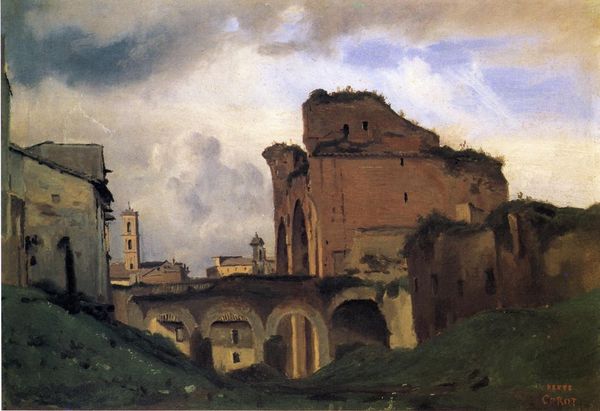
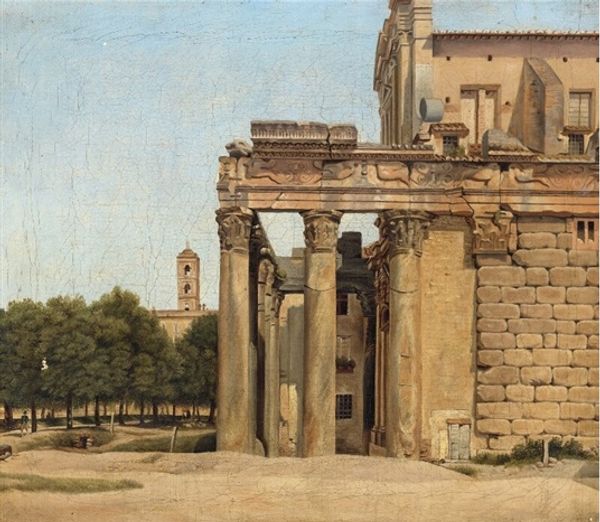
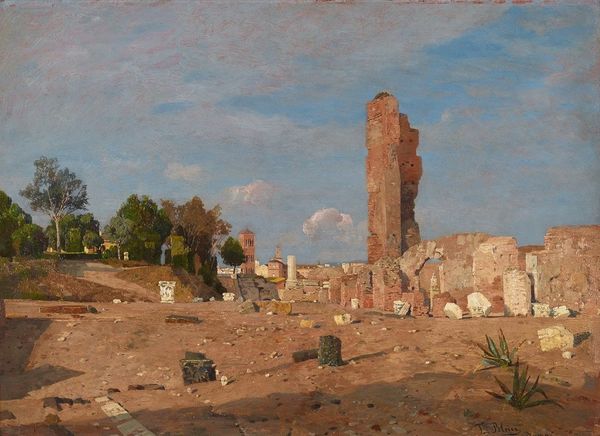
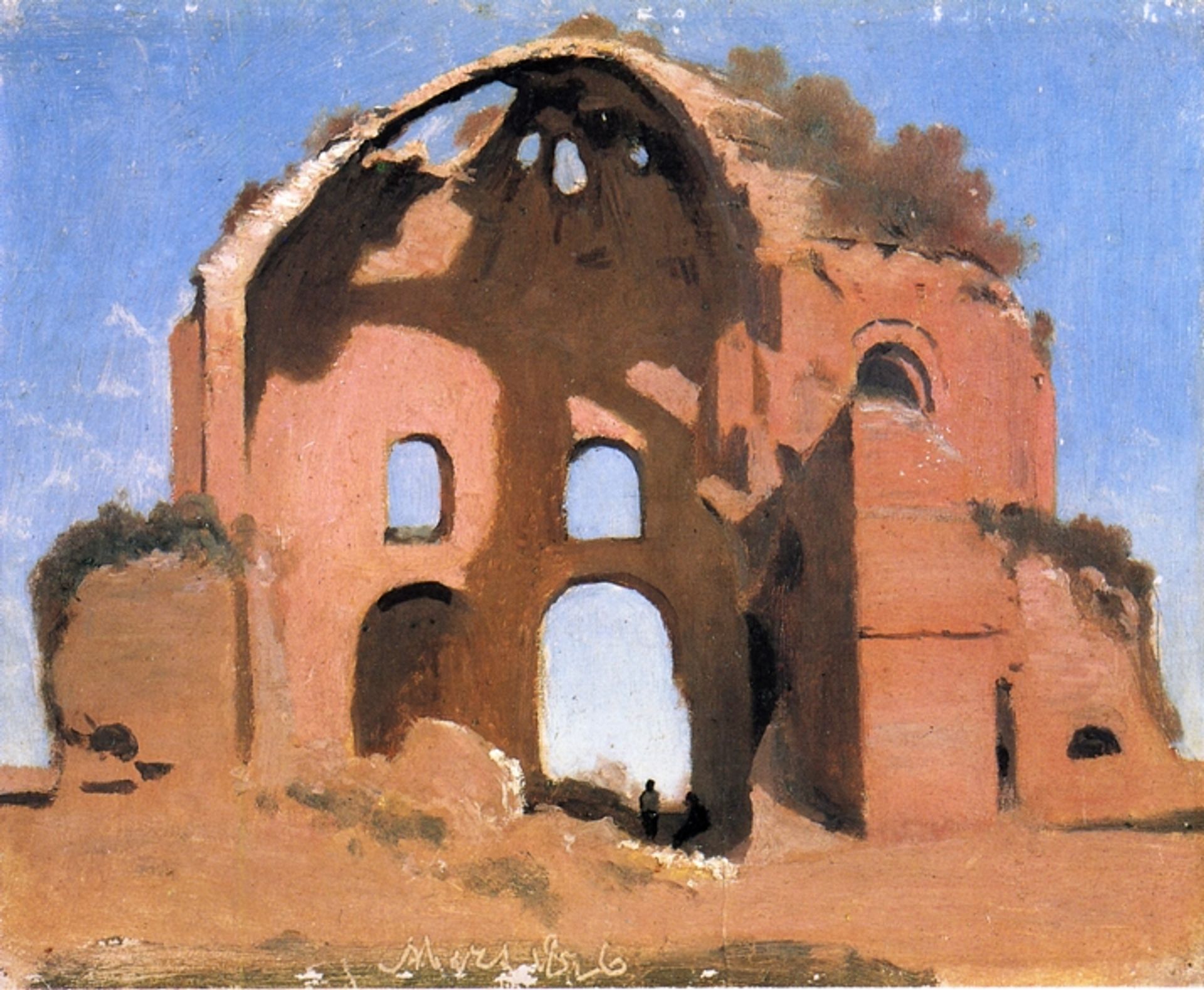
Here we see Corot's oil on canvas painting, "View of Pincio, Italy". Dominating the scene is a large, ruined structure, rendered in earthy browns and reds. Its stark, geometric form against a soft, blue sky evokes both grandeur and decay. The rough texture of the brushstrokes adds a tactile quality, inviting the viewer to consider the physical presence of the ruin. Corot's approach is fascinating because he balances the representational with the abstract. The building is clearly identifiable, yet the loose handling of paint and simplified forms push it towards abstraction. This tension plays with our perception, destabilizing the traditional notions of landscape painting. The figures at the base of the painting serve as a sign, inviting us to reflect on the passage of time and the shifting meanings attached to historical sites. Ultimately, this work functions as an exploration of form and perception. It challenges us to question the relationship between representation and reality, reminding us that art is not just about what we see, but how we see it.
View of Pincio, Italy 1843

Camille Corot
1796 - 1875Location
Musée des Beaux-Arts d'Angers, Angers, FranceArtwork details
- Medium
- painting, oil-paint, architecture
- Dimensions
- 21 x 27 cm
- Location
- Musée des Beaux-Arts d'Angers, Angers, France
- Copyright
- Public domain
Tags
painting
oil-paint
landscape
oil painting
romanticism
arch
cityscape
architecture
Comments
No comments
About this artwork
Here we see Corot's oil on canvas painting, "View of Pincio, Italy". Dominating the scene is a large, ruined structure, rendered in earthy browns and reds. Its stark, geometric form against a soft, blue sky evokes both grandeur and decay. The rough texture of the brushstrokes adds a tactile quality, inviting the viewer to consider the physical presence of the ruin. Corot's approach is fascinating because he balances the representational with the abstract. The building is clearly identifiable, yet the loose handling of paint and simplified forms push it towards abstraction. This tension plays with our perception, destabilizing the traditional notions of landscape painting. The figures at the base of the painting serve as a sign, inviting us to reflect on the passage of time and the shifting meanings attached to historical sites. Ultimately, this work functions as an exploration of form and perception. It challenges us to question the relationship between representation and reality, reminding us that art is not just about what we see, but how we see it.
Comments
No comments