About this artwork
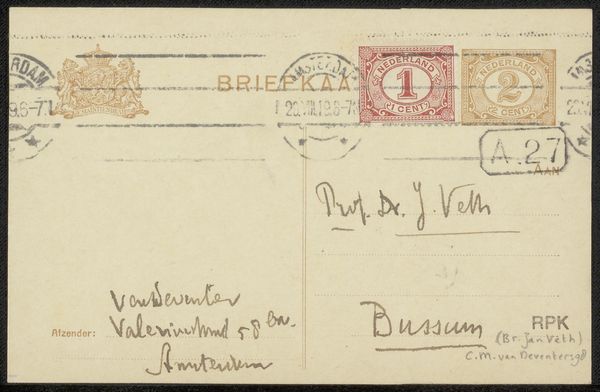
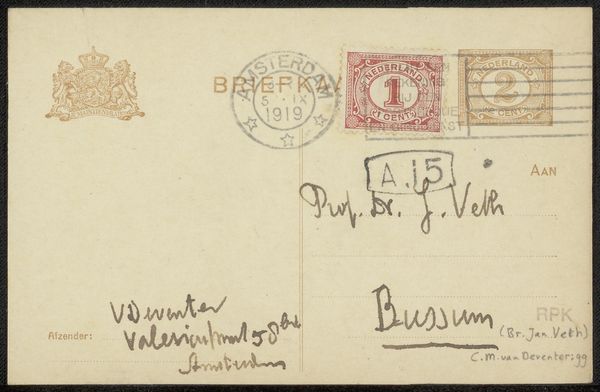
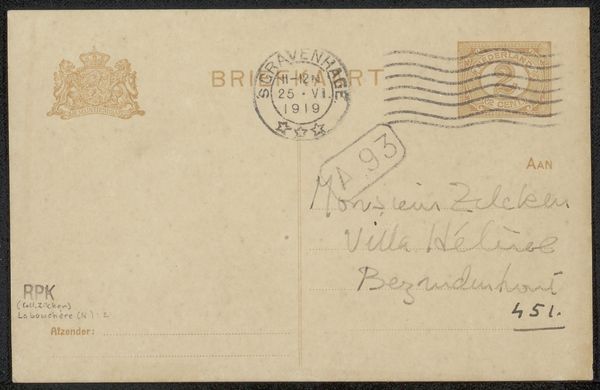
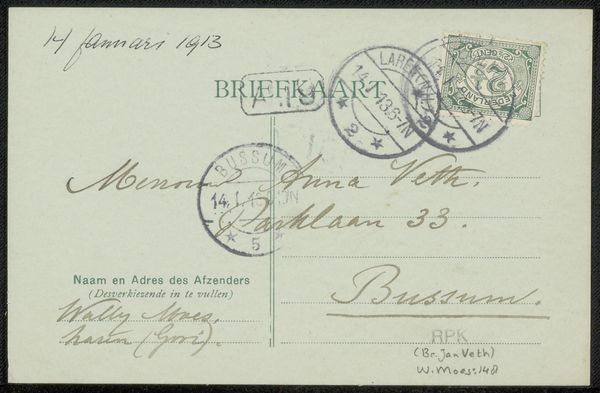
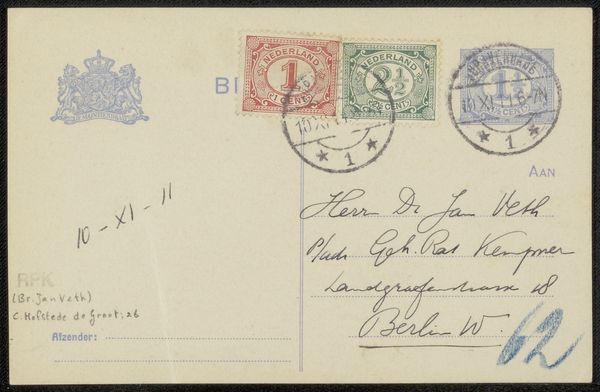
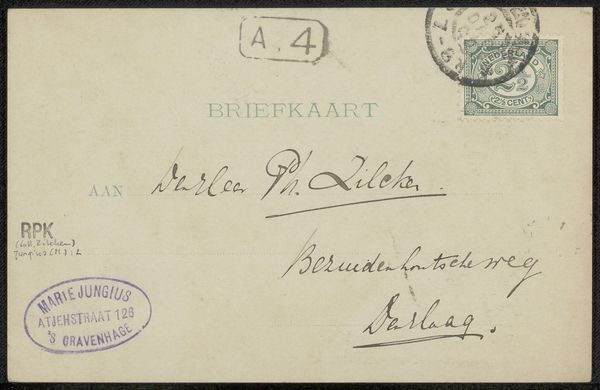
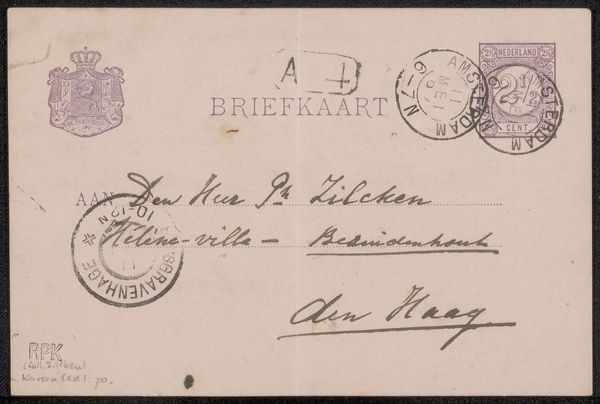
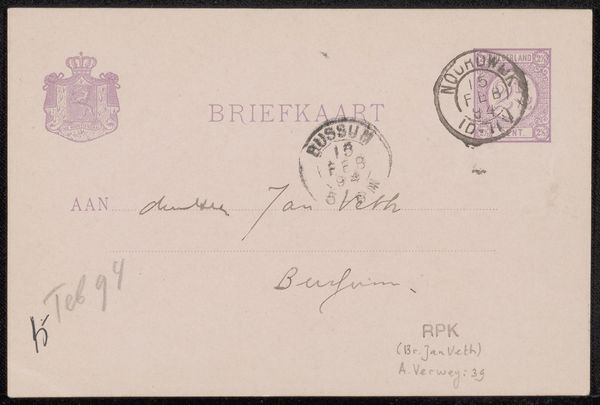
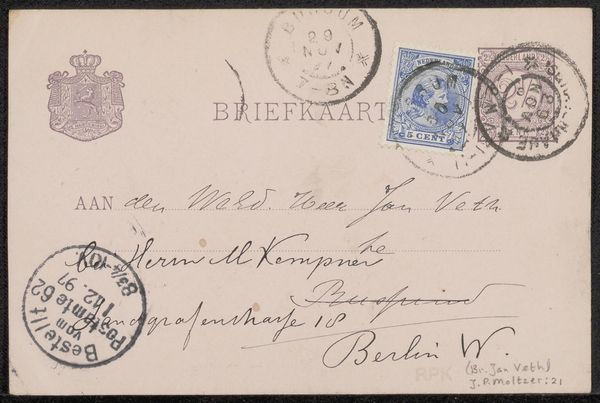
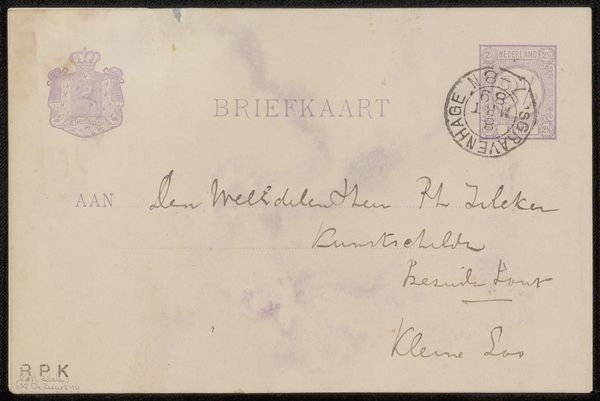
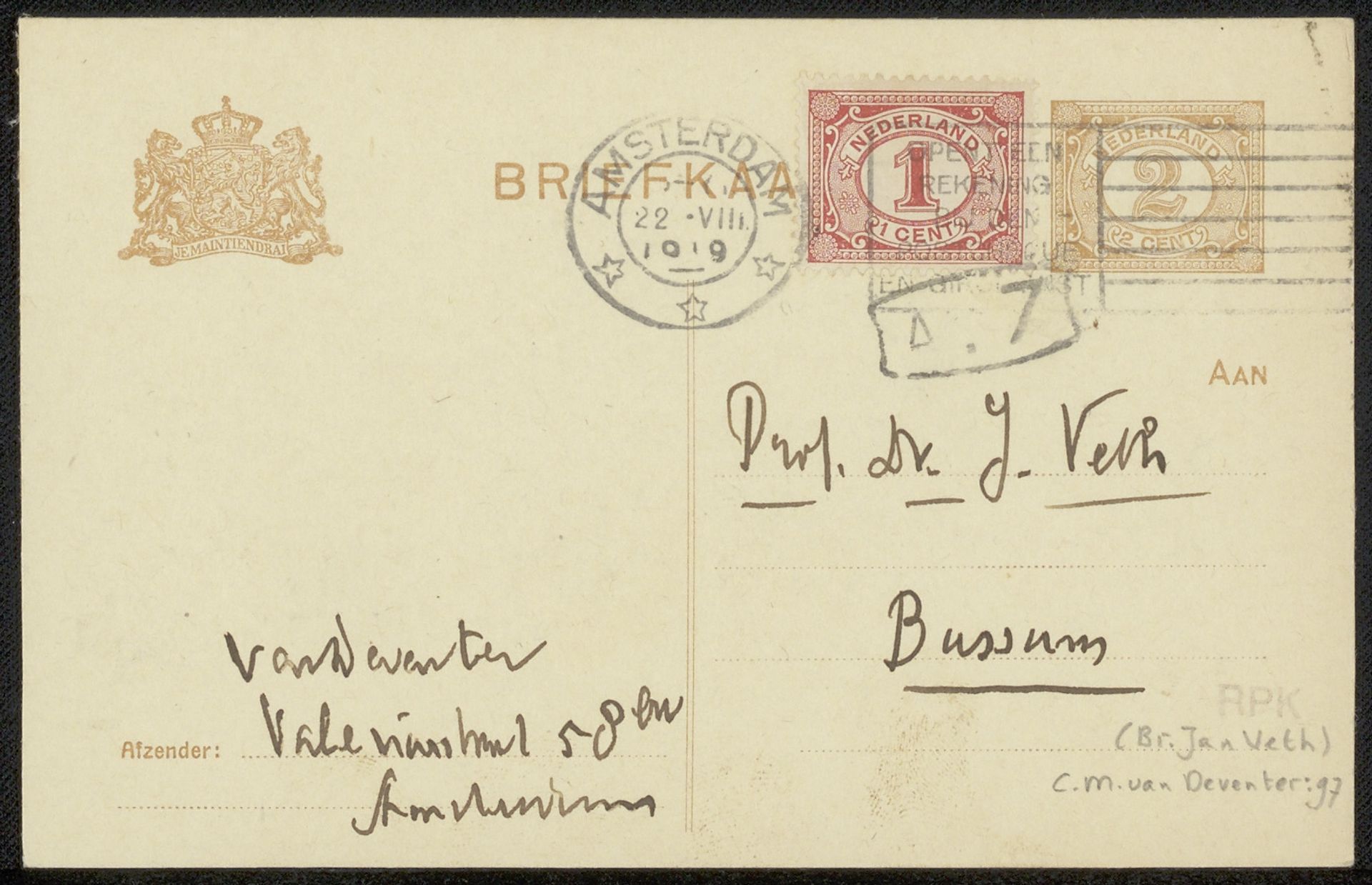
This is a postcard to Jan Veth, postmarked in Amsterdam, from Chap van Deventer, dated August 22, 1919. World War I had just ended, and while the Netherlands remained neutral, the war's impact was felt across Europe. In this context, we can see the postcard as a poignant reminder of communication and connection in a world disrupted by conflict. The stamps and postmark offer a glimpse into the postal system of the time, and, by extension, the social networks that it facilitated. Jan Veth, the recipient, was a prominent artist and critic. This tells us something about the artistic circles in which Van Deventer, the sender, likely moved. The brief message and the personal nature of the correspondence remind us that art is always embedded in a web of human relationships. Historians can look to postal archives, biographies of the figures mentioned, and studies of Dutch society in the early 20th century to better understand the artwork. This little piece of ephemera offers us a window onto a specific moment in time.

Artwork details
- Copyright
- Rijks Museum: Open Domain
Tags
Comments
Share your thoughts
About this artwork
This is a postcard to Jan Veth, postmarked in Amsterdam, from Chap van Deventer, dated August 22, 1919. World War I had just ended, and while the Netherlands remained neutral, the war's impact was felt across Europe. In this context, we can see the postcard as a poignant reminder of communication and connection in a world disrupted by conflict. The stamps and postmark offer a glimpse into the postal system of the time, and, by extension, the social networks that it facilitated. Jan Veth, the recipient, was a prominent artist and critic. This tells us something about the artistic circles in which Van Deventer, the sender, likely moved. The brief message and the personal nature of the correspondence remind us that art is always embedded in a web of human relationships. Historians can look to postal archives, biographies of the figures mentioned, and studies of Dutch society in the early 20th century to better understand the artwork. This little piece of ephemera offers us a window onto a specific moment in time.
Comments
Share your thoughts