About this artwork
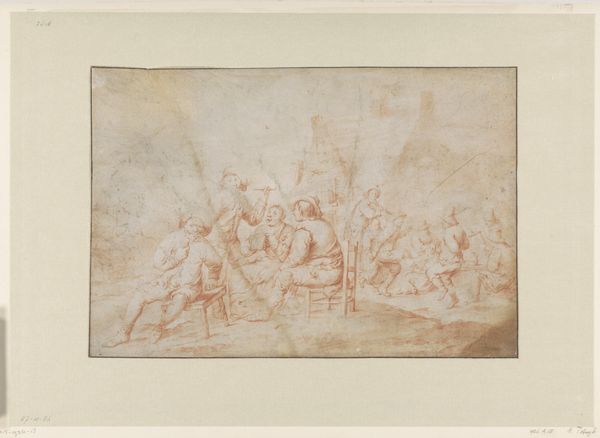
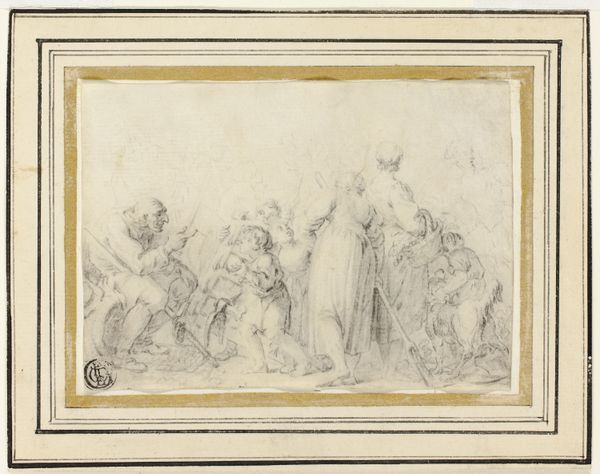
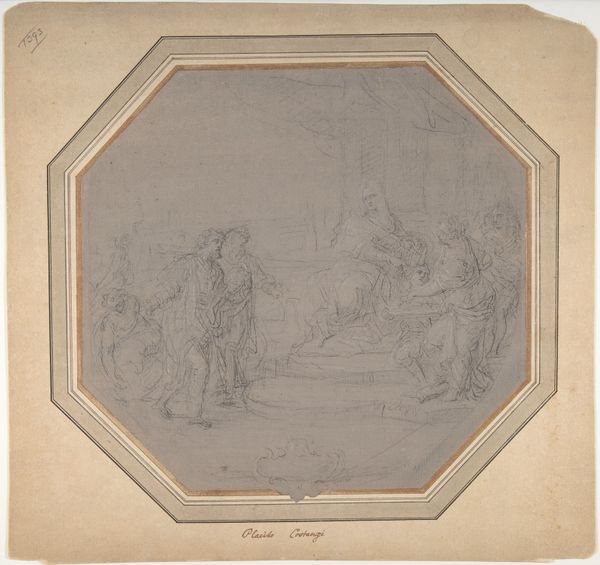
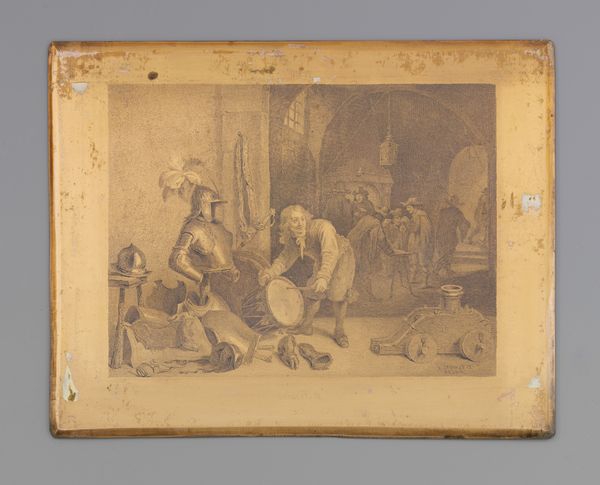
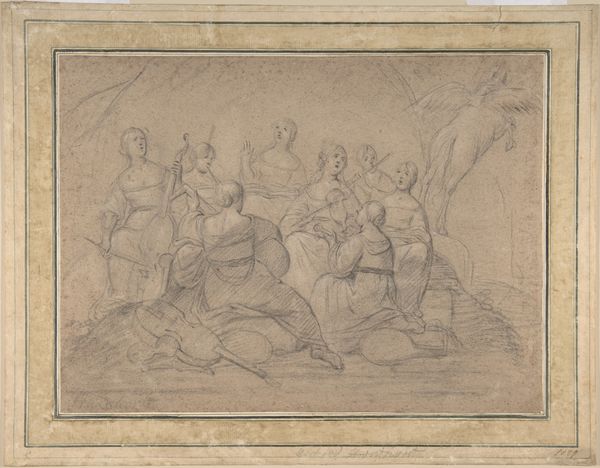
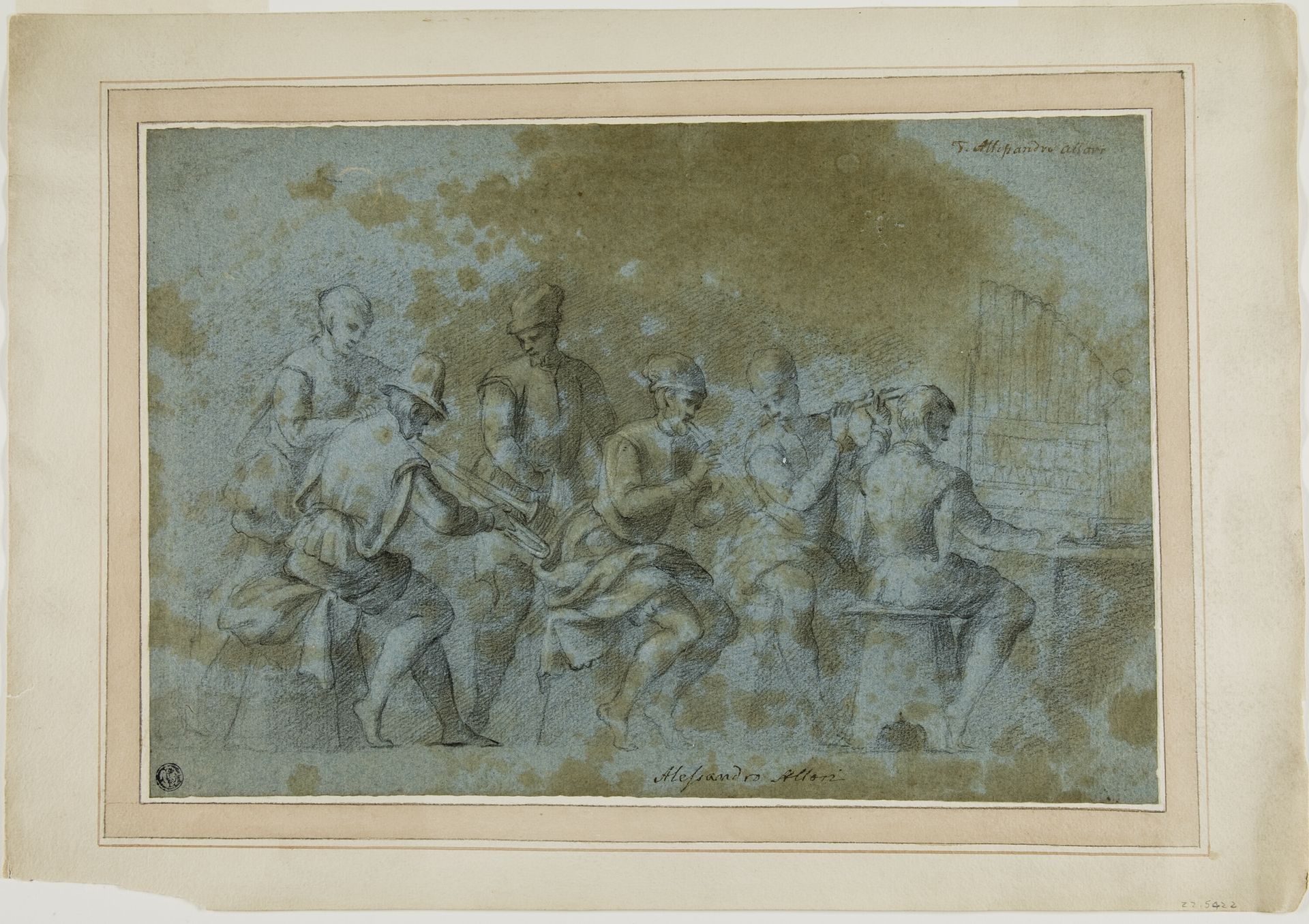
This drawing, "Concert Scene," presents a gathering of musicians rendered with pen and brown ink, highlighted with blue wash. Music, from antiquity to the Renaissance, was not merely entertainment, but a symbol of cosmic harmony. Observe the organist. The organ itself, with its many pipes, has roots in ancient Greece, evolving through the medieval period. The instrument's complexity mirrors the universal order, a concept deeply rooted in Pythagorean thought. The act of playing music is an attempt to resonate with that order. Consider the act of listening, too, an act charged with psychological weight. Music accesses our deepest emotions and subconscious memories. The act of communal music-making and listening serves as a powerful means of social cohesion. The themes of harmony, order, and emotional catharsis, initially embedded in ancient ritual, resurface in the Renaissance, reminding us of the cyclical progression of cultural memory, of symbols shifting in meaning, yet retaining their fundamental power.
Concert Scene n.d.


Artwork details
- Medium
- drawing, print, paper, chalk, pen
- Dimensions
- 256 × 374 mm
- Location
- The Art Institute of Chicago
- Copyright
- Public Domain
Tags
portrait
drawing
figuration
paper
oil painting
chalk
line
pen
genre-painting
history-painting
italy
Comments
No comments
About this artwork
This drawing, "Concert Scene," presents a gathering of musicians rendered with pen and brown ink, highlighted with blue wash. Music, from antiquity to the Renaissance, was not merely entertainment, but a symbol of cosmic harmony. Observe the organist. The organ itself, with its many pipes, has roots in ancient Greece, evolving through the medieval period. The instrument's complexity mirrors the universal order, a concept deeply rooted in Pythagorean thought. The act of playing music is an attempt to resonate with that order. Consider the act of listening, too, an act charged with psychological weight. Music accesses our deepest emotions and subconscious memories. The act of communal music-making and listening serves as a powerful means of social cohesion. The themes of harmony, order, and emotional catharsis, initially embedded in ancient ritual, resurface in the Renaissance, reminding us of the cyclical progression of cultural memory, of symbols shifting in meaning, yet retaining their fundamental power.
Comments
No comments