before 1877
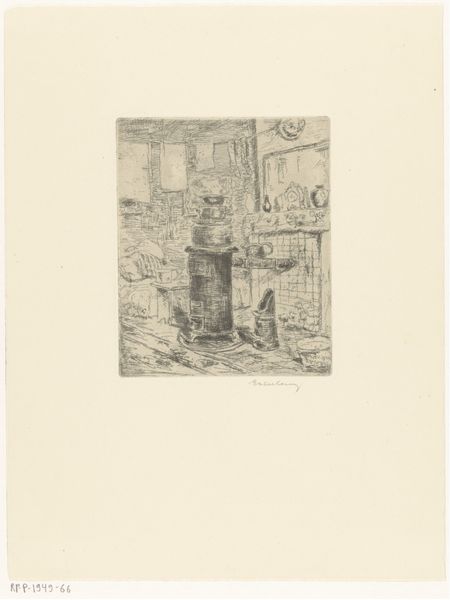
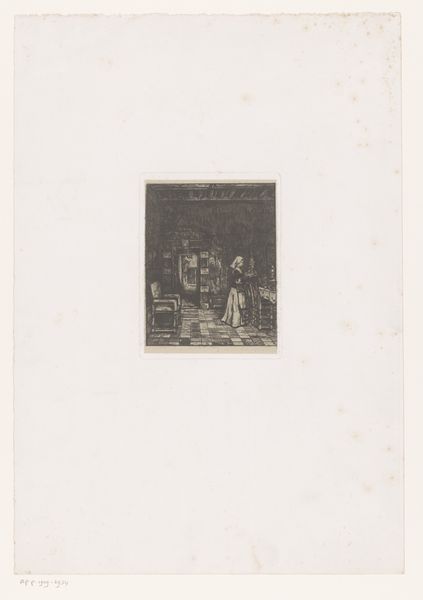
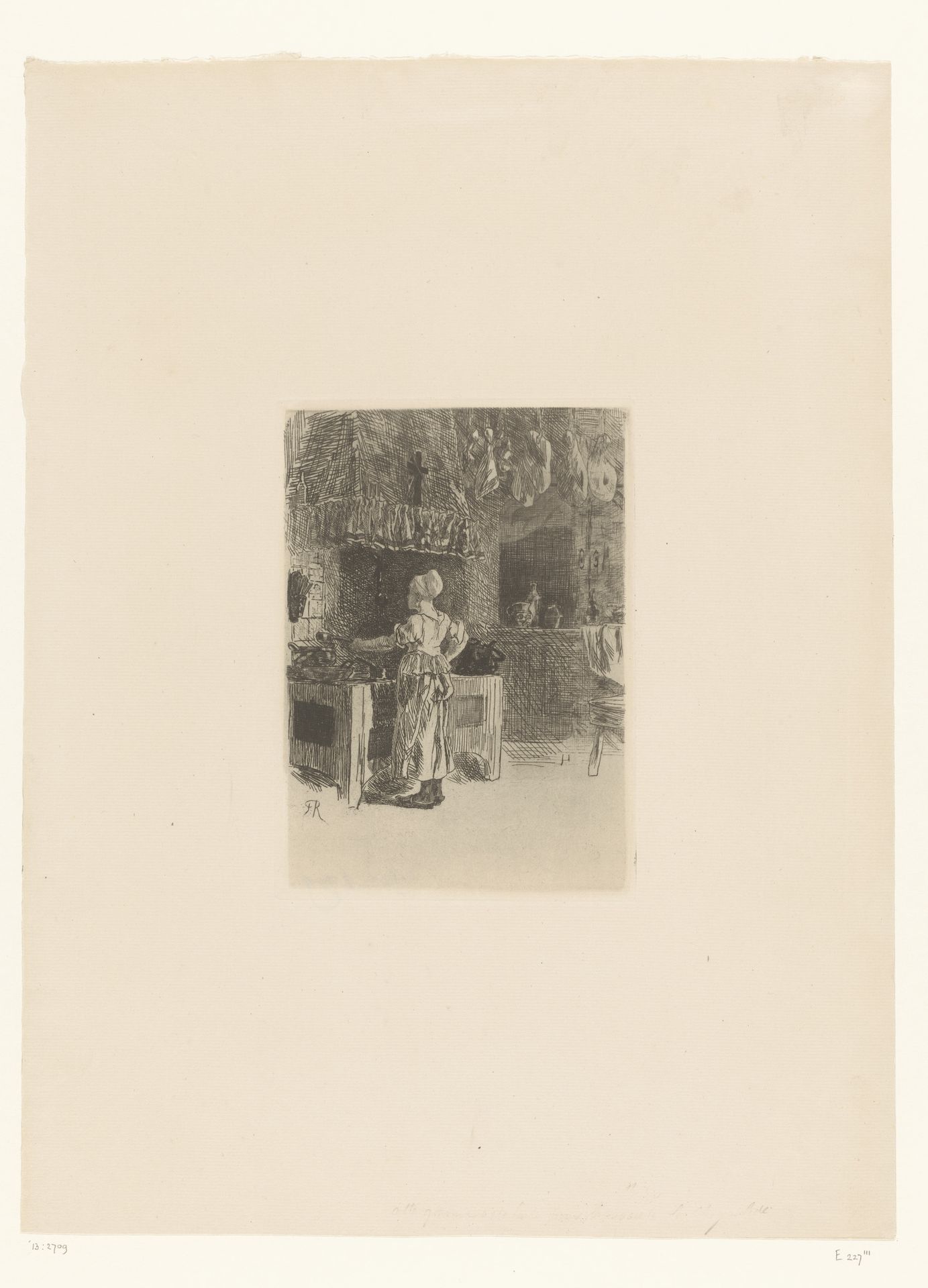
Keuken van een herberg in Anseremme

Felicien Rops
1833 - 1898Location
RijksmuseumListen to curator's interpretation
Curatorial notes
Felicien Rops created this print, *Keuken van een herberg in Anseremme*, using etching, a process that democratized image-making in the 19th century. A metal plate is coated in wax, the artist scratches an image into the wax, and then the plate is bathed in acid, which bites into the exposed metal, leaving an impression that can be inked and printed. Rops was fascinated by the ways of making, and the means of production in which objects and artworks are created. The texture of the lines, the depth of the shadows – all are directly related to his engagement with the etched plate. What’s interesting here is how Rops uses a medium capable of infinite reproduction to depict a scene of humble labor. Look at the woman, presumably a worker at the inn, caught in a moment of domestic activity. The print, in its inherent reproducibility, contrasts with the singular, manual labor of the woman in the image. Consider how Rops’ choice of etching emphasizes the social and economic realities of his time, nodding to mass production while depicting everyday life.