Dimensions: height 101 mm, width 63 mm
Copyright: Rijks Museum: Open Domain
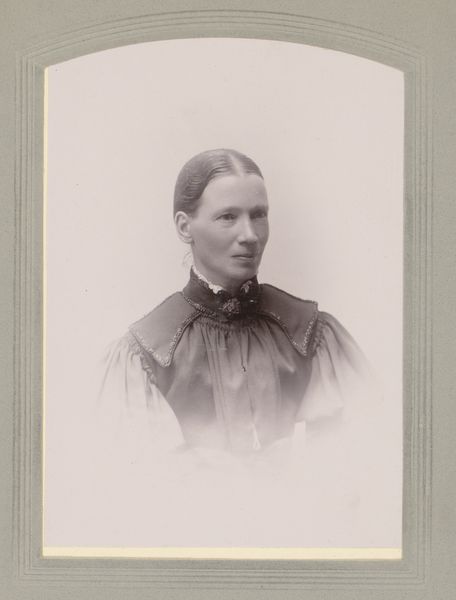
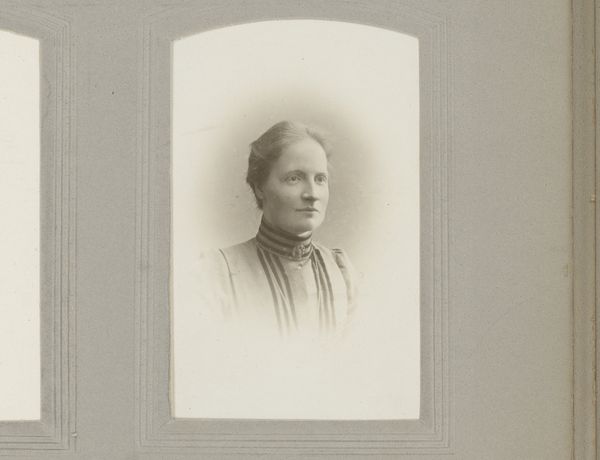
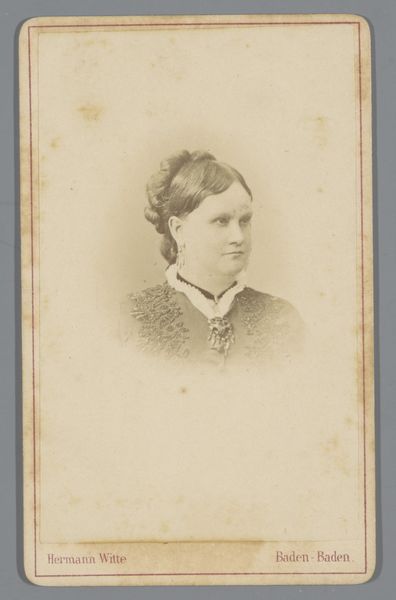
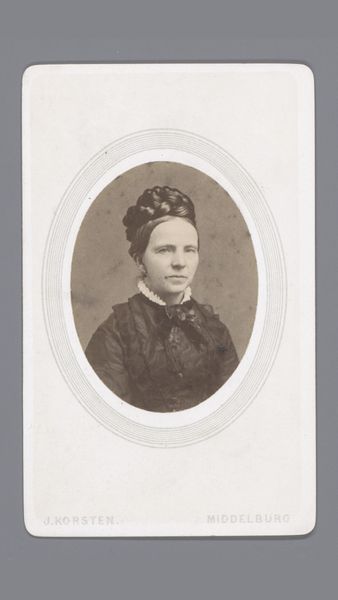
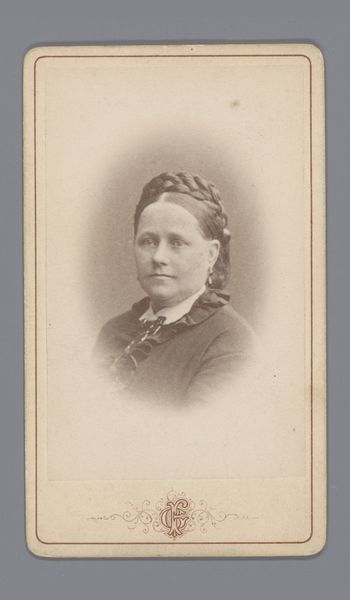
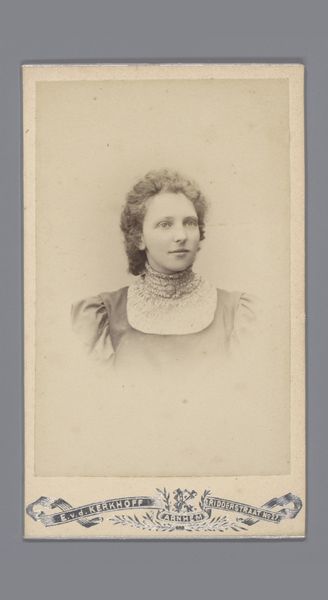
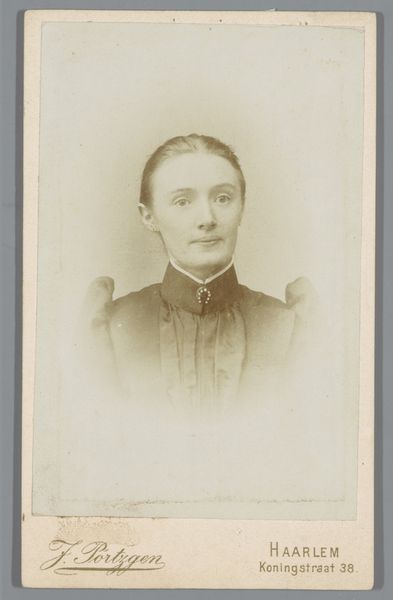
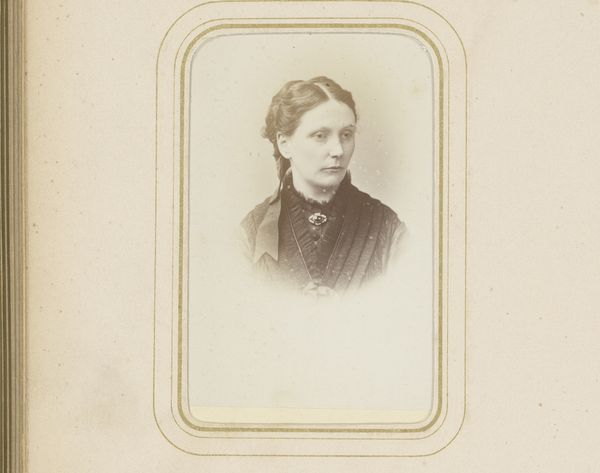
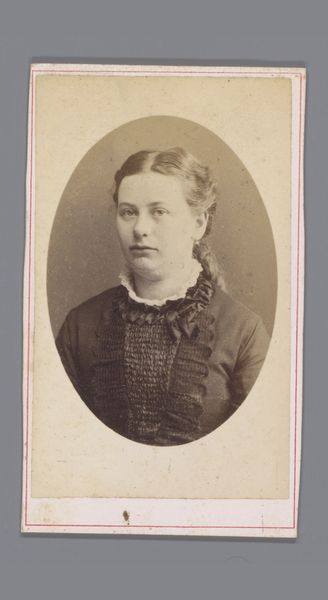
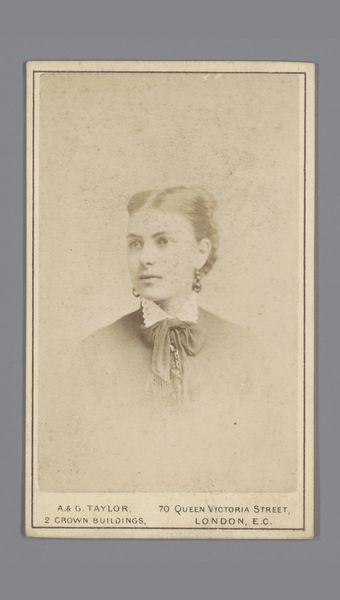
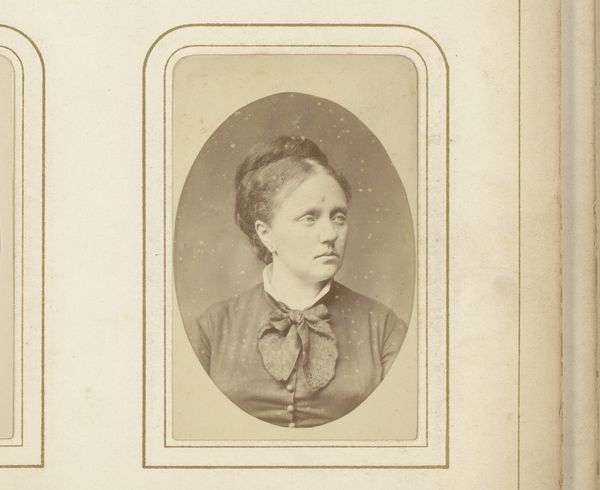
Curator: This gelatin silver print, created between 1867 and 1880 by Eurenius & Quist, is cataloged as "Portret van een onbekende vrouw" – a portrait of an unknown woman. Editor: My first impression is one of quiet dignity, and perhaps a touch of melancholy. The soft focus around her face lends an almost ethereal quality, but the firm set of her mouth speaks to resilience. Curator: Indeed. The format itself, known as a carte de visite, gained immense popularity during this period, becoming a tangible symbol of social status and connection. Photography studios became ubiquitous in many major cities. Editor: But the "unknown woman" status begs the question of accessibility. Who was she, and why is she now unknown? Did the societal structures of the time contribute to erasing her identity, even while preserving her image? Curator: Exactly! These photographs functioned as both personal mementos and public displays of societal belonging. Understanding that framework provides context. The clothing she wears offers social clues— the high-necked dress with lace trim, a symbol of the era. Editor: It does speak to middle-class values, doesn't it? Still, I wonder about her story. Does her expression suggest something beyond societal expectations? Perhaps some suppressed emotion, or a quiet rebellion against prescribed gender roles? Her gaze feels so direct. Curator: You are correct in identifying what could be an emerging role for women. As the Industrial Revolution unfolded and societal structures shifted, photography offered a means of representation. While adherence to strict portrait conventions still reigned, subtle signs of changing gender dynamics emerged. Editor: Which is fascinating. The portrait serves both as a document of its time, and as a potential window into individual experiences. Maybe by continuing to engage with this image, asking these questions, we can reclaim some of her lost history. Curator: Precisely! And understanding that images don't exist in a vacuum—they're reflections of intricate societal networks and evolving ideologies. The romantic style adds to that timeless quality and further adds an aura of both refinement, and yet quiet solitude, around the unknown subject. Editor: Absolutely. Examining these works encourages us to confront questions about history, representation, and the enduring power of the photographic gaze.
Comments
No comments
Be the first to comment and join the conversation on the ultimate creative platform.
 Collect
 React
React Comment
More like this