About this artwork
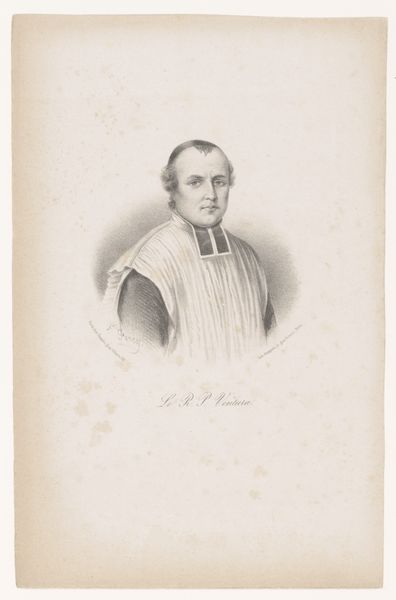
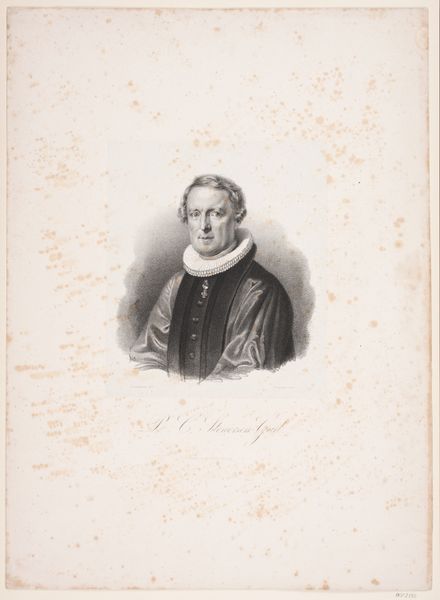
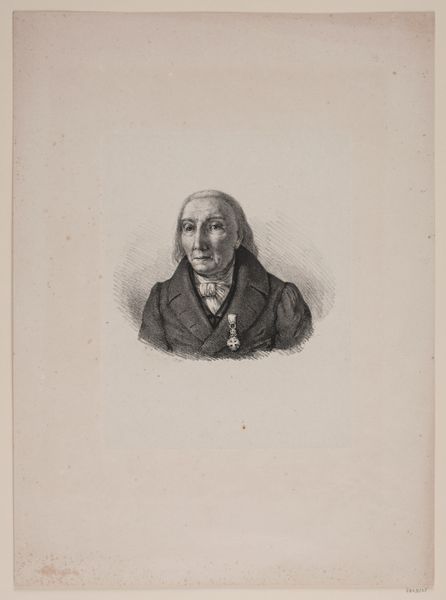
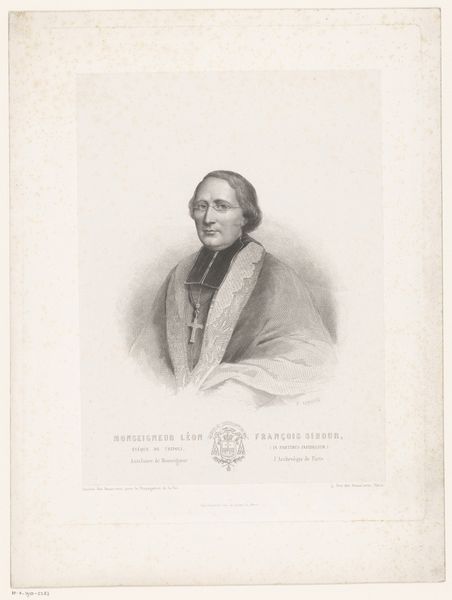
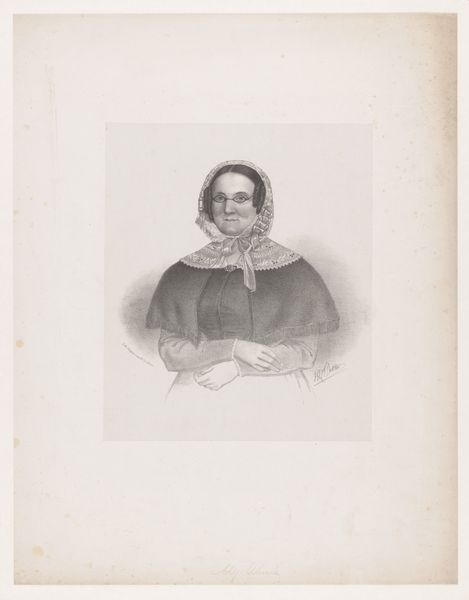
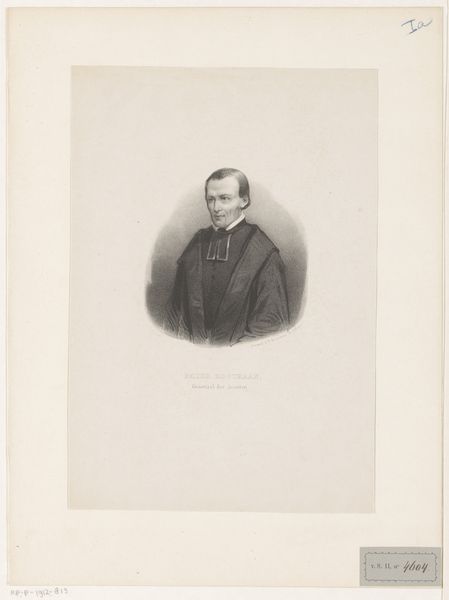
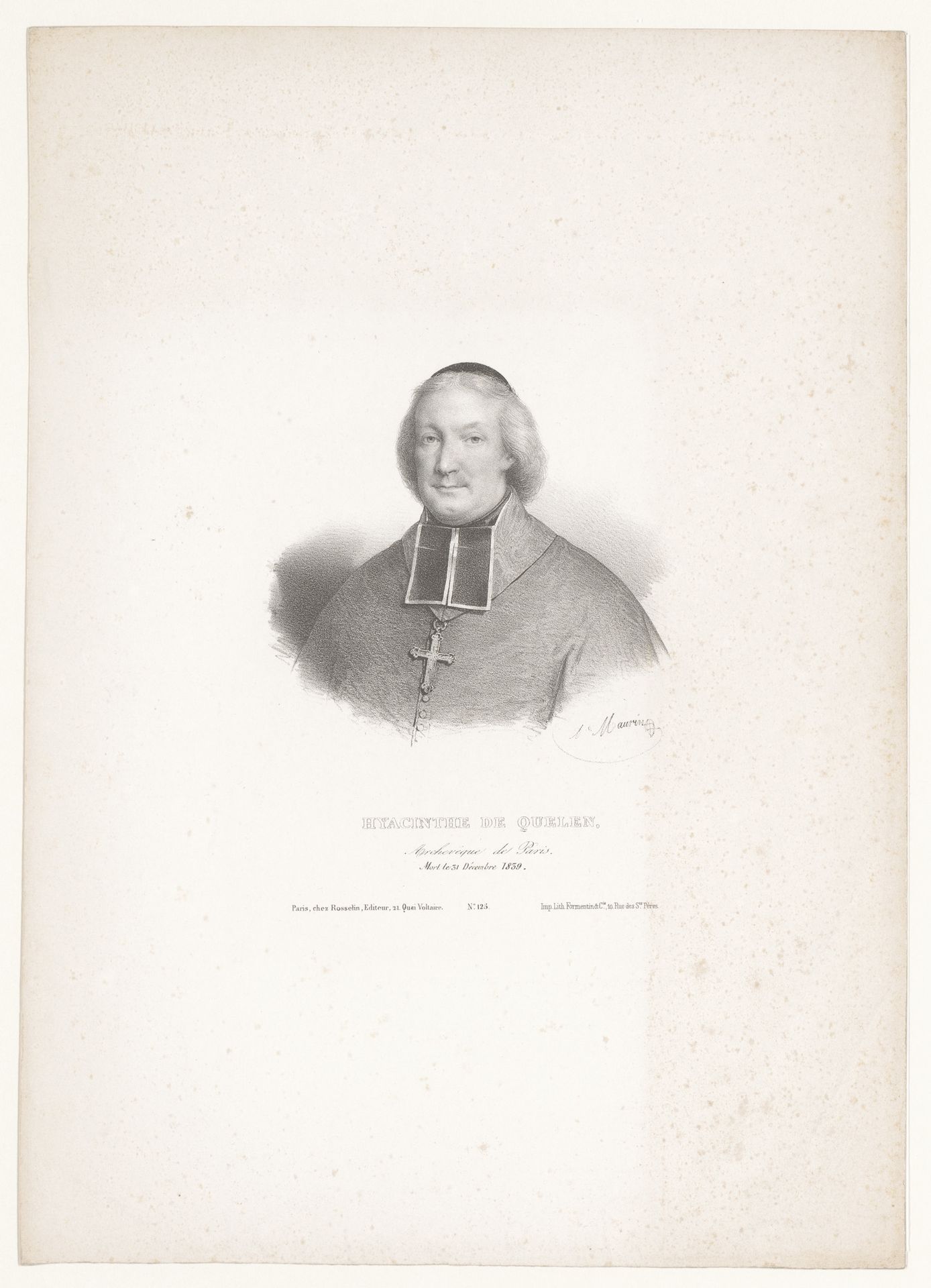
Antoine Maurin made this portrait of Hyacinthe-Louis de Quélen with lithography, a printmaking technique that democratized image production in the 19th century. The process involves drawing on a flat stone with a greasy crayon, then treating the stone so that ink adheres only to the drawn areas. The resulting print captures a remarkable tonal range, evident in the delicate shading of Quélen's face and the subtle textures of his garments. Lithography's appeal lay in its relatively low cost and ease of production, making images more accessible to a wider audience. This portrait, likely part of a larger series, speaks to the burgeoning market for likenesses of prominent figures. It reflects the increasing circulation of images in a society undergoing rapid industrialization. The choice of lithography highlights the changing dynamics of art production and consumption in the 19th century, challenging traditional notions of artistic value and labor.
Portret van Hyacinthe-Louis de Quélen 1839 - 1856

Antoine Maurin
1793 - 1860Location
RijksmuseumArtwork details
- Medium
- drawing, print, pencil, engraving
- Dimensions
- height 359 mm, width 257 mm
- Location
- Rijksmuseum
- Copyright
- Rijks Museum: Open Domain
Tags
portrait
pencil drawn
drawing
neoclacissism
light pencil work
pencil sketch
pencil drawing
pencil
pencil work
engraving
Comments
No comments
About this artwork
Antoine Maurin made this portrait of Hyacinthe-Louis de Quélen with lithography, a printmaking technique that democratized image production in the 19th century. The process involves drawing on a flat stone with a greasy crayon, then treating the stone so that ink adheres only to the drawn areas. The resulting print captures a remarkable tonal range, evident in the delicate shading of Quélen's face and the subtle textures of his garments. Lithography's appeal lay in its relatively low cost and ease of production, making images more accessible to a wider audience. This portrait, likely part of a larger series, speaks to the burgeoning market for likenesses of prominent figures. It reflects the increasing circulation of images in a society undergoing rapid industrialization. The choice of lithography highlights the changing dynamics of art production and consumption in the 19th century, challenging traditional notions of artistic value and labor.
Comments
No comments