About this artwork
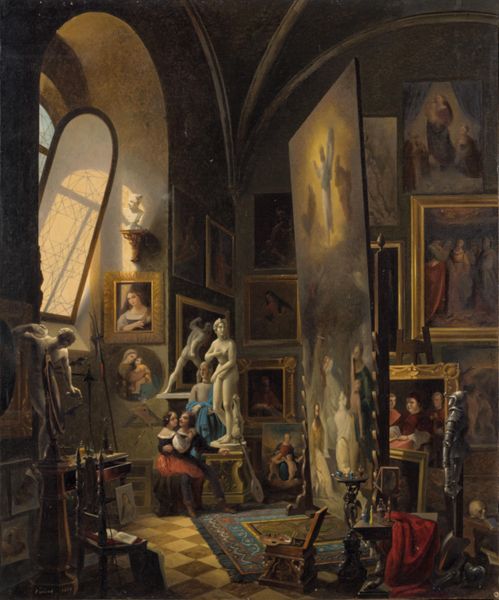
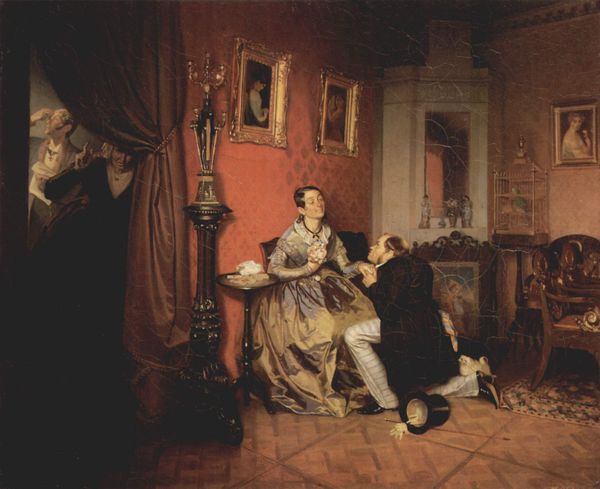
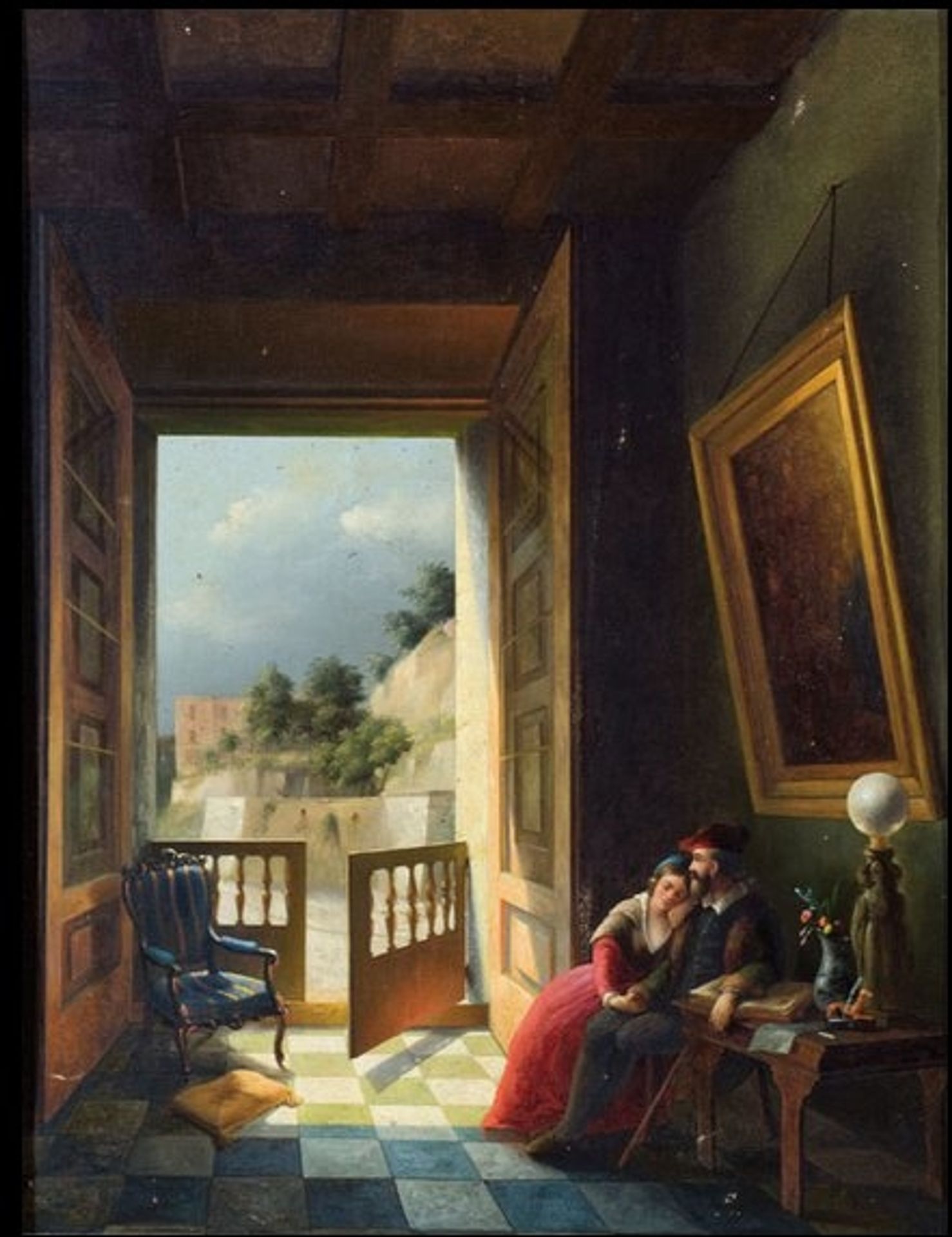
Editor: We're looking at "Romantic Interior," an oil painting by Vincenzo Abbati. Its date is unknown. The first thing that strikes me is how the painting contrasts the bright, open exterior with the shadowed interior space, drawing our eyes toward the embracing couple. How do you read the symbolism within this intimate scene? Curator: This painting exemplifies the Romantic movement's fascination with intimate settings and domestic life. Abbati seems to be commenting on the idealized vision of private life in opposition to the political and social upheavals of the time. Note how the architectural details and the painting within a painting frame the couple, almost as if displaying an exclusive lifestyle, hinting at the role of art in shaping these perceptions. What effect does the architecture have, drawing your eyes to the exterior? Editor: The way the doors open to the world beyond, a city scape of sorts, suggest they are isolated from the concerns and movements taking place there. It creates a feeling of safety and shelter. Do you think the positioning of the couple draws a relationship between that personal life and the exterior world? Curator: Exactly. The open doors almost seem to taunt the audience, creating a visual barrier despite the openness, reminding us that this idyllic scene might be performative rather than authentic. We could also consider the artist's own place within a changing society. The artwork might portray the idealization of a life they may not have ever lived, but aspired to. The political is inherent to this genre scene. Editor: That’s a perspective I hadn’t considered—the performance of intimacy as a form of social commentary! The work encourages further questions of public and private life at the time, with societal forces creating a tension that seeps into how relationships are visually perceived. Curator: Indeed, art often becomes a mirror reflecting not just what is, but what society wishes to be.

Artwork details
- Medium
- oil-paint
- Location
- Private Collection
- Copyright
- Public domain
Tags
Comments
Share your thoughts
About this artwork
Editor: We're looking at "Romantic Interior," an oil painting by Vincenzo Abbati. Its date is unknown. The first thing that strikes me is how the painting contrasts the bright, open exterior with the shadowed interior space, drawing our eyes toward the embracing couple. How do you read the symbolism within this intimate scene? Curator: This painting exemplifies the Romantic movement's fascination with intimate settings and domestic life. Abbati seems to be commenting on the idealized vision of private life in opposition to the political and social upheavals of the time. Note how the architectural details and the painting within a painting frame the couple, almost as if displaying an exclusive lifestyle, hinting at the role of art in shaping these perceptions. What effect does the architecture have, drawing your eyes to the exterior? Editor: The way the doors open to the world beyond, a city scape of sorts, suggest they are isolated from the concerns and movements taking place there. It creates a feeling of safety and shelter. Do you think the positioning of the couple draws a relationship between that personal life and the exterior world? Curator: Exactly. The open doors almost seem to taunt the audience, creating a visual barrier despite the openness, reminding us that this idyllic scene might be performative rather than authentic. We could also consider the artist's own place within a changing society. The artwork might portray the idealization of a life they may not have ever lived, but aspired to. The political is inherent to this genre scene. Editor: That’s a perspective I hadn’t considered—the performance of intimacy as a form of social commentary! The work encourages further questions of public and private life at the time, with societal forces creating a tension that seeps into how relationships are visually perceived. Curator: Indeed, art often becomes a mirror reflecting not just what is, but what society wishes to be.
Comments
Share your thoughts