About this artwork
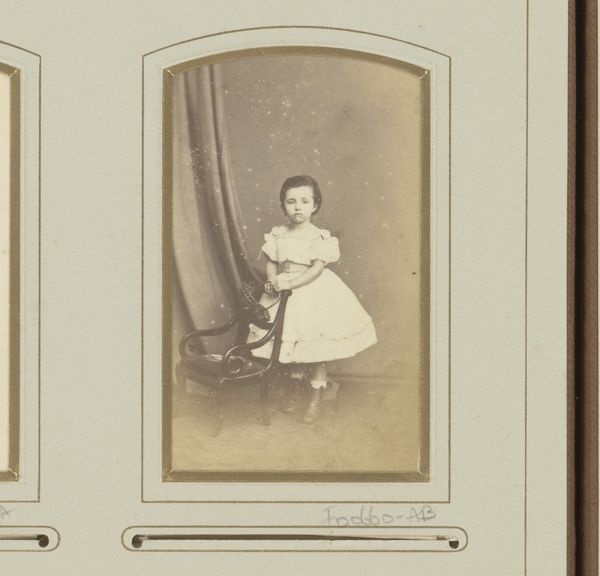
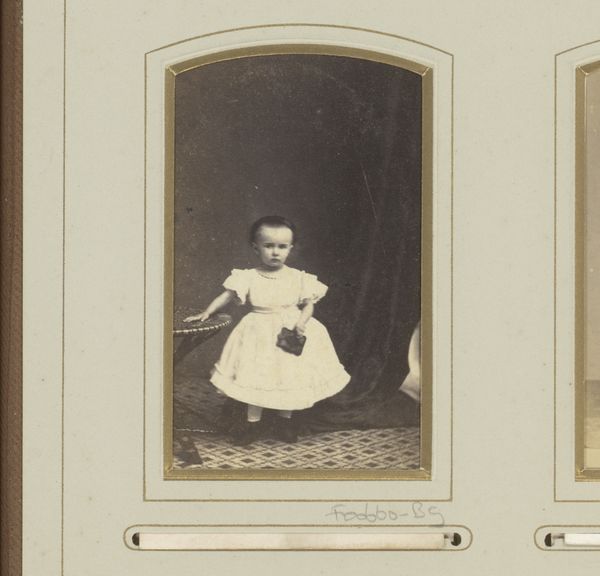
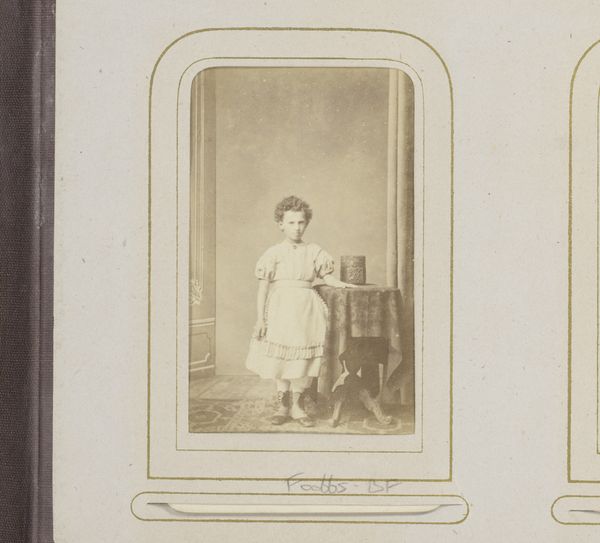
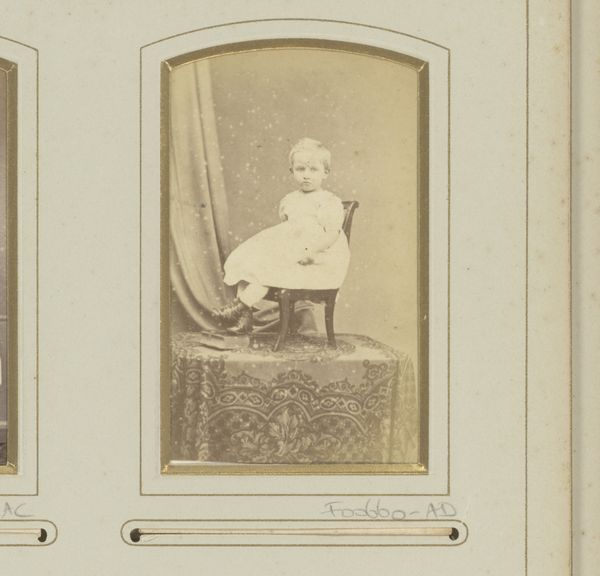
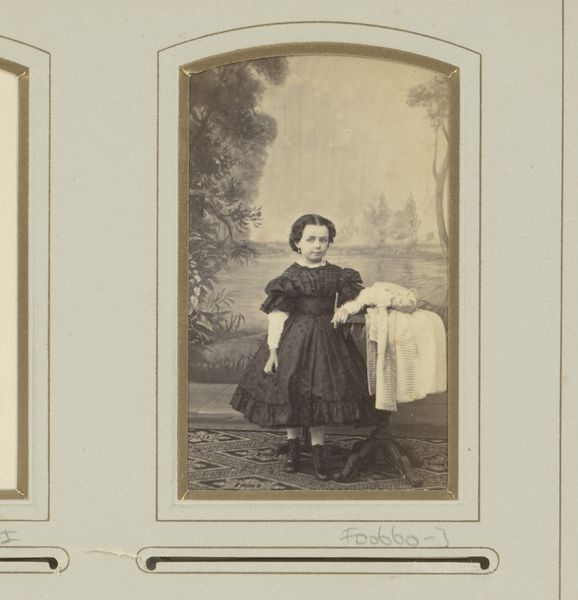
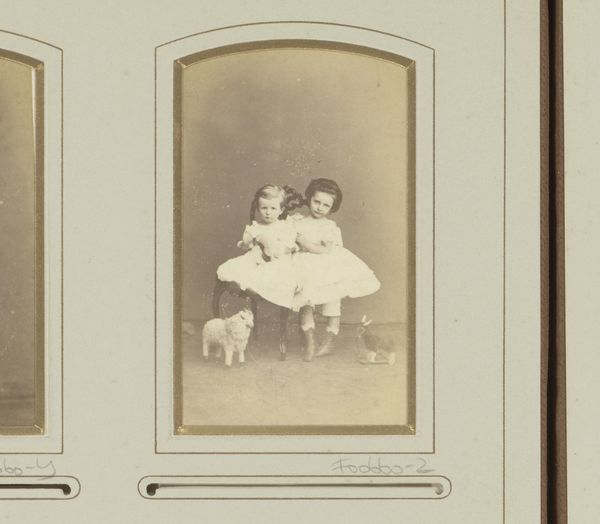
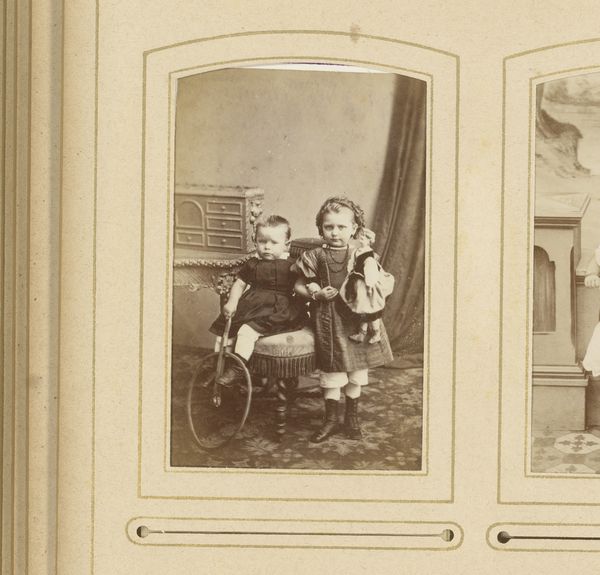
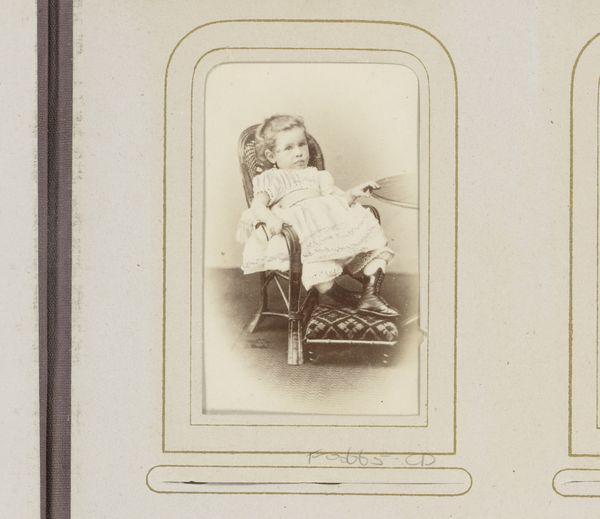
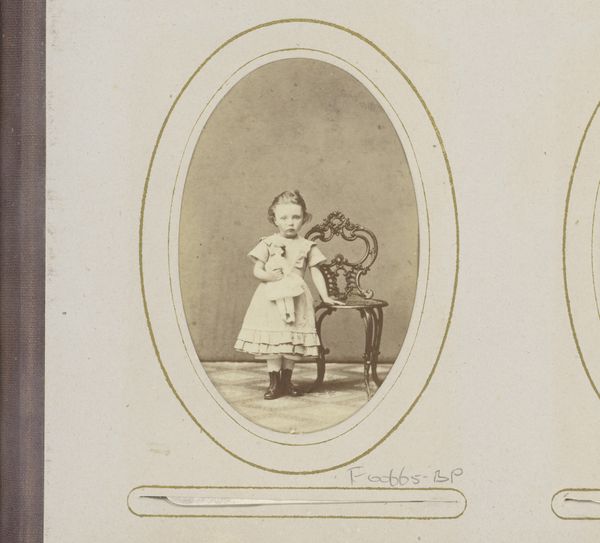
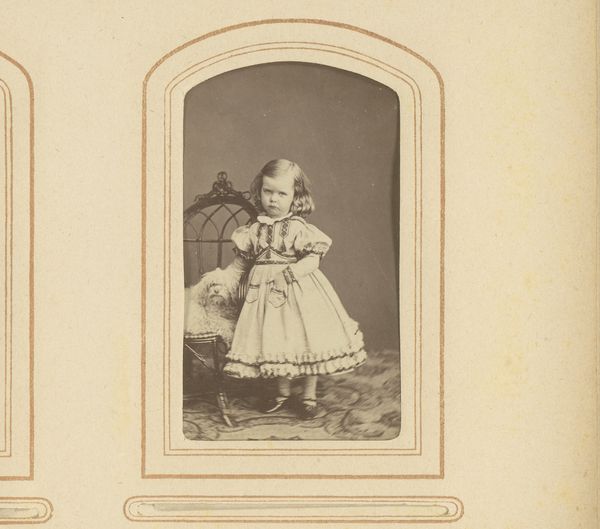
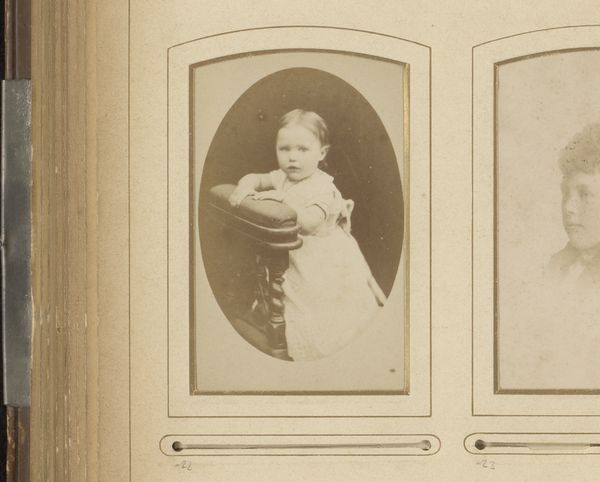
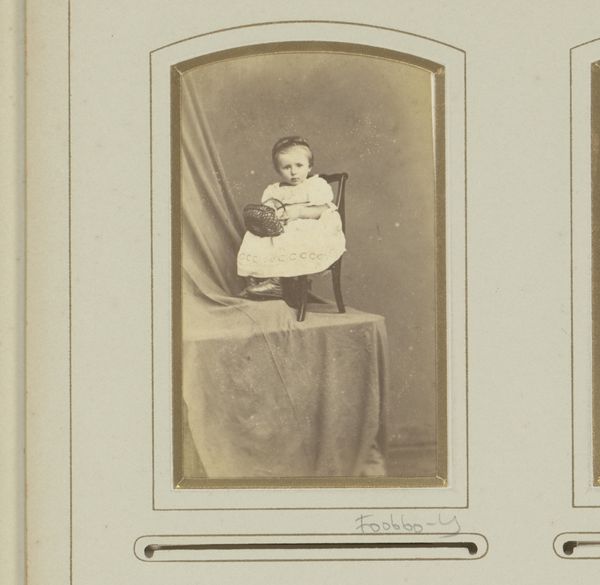
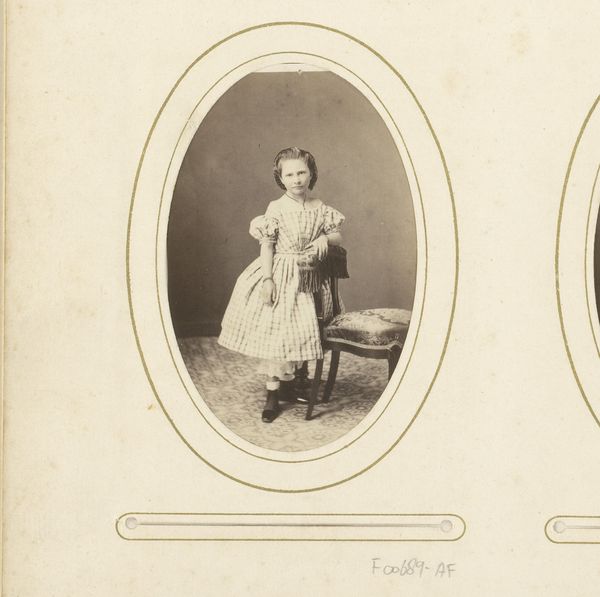
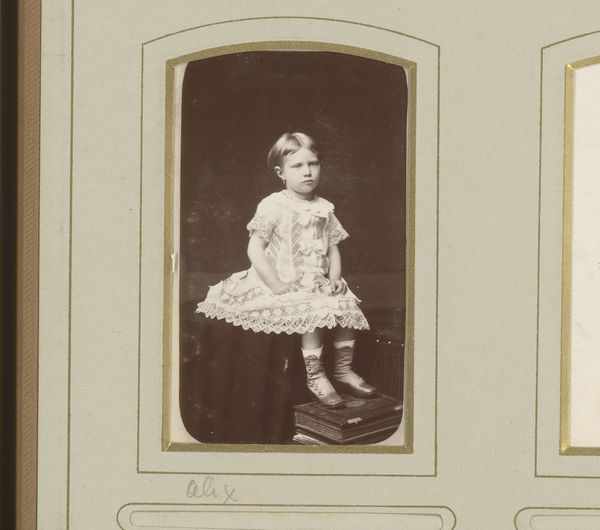
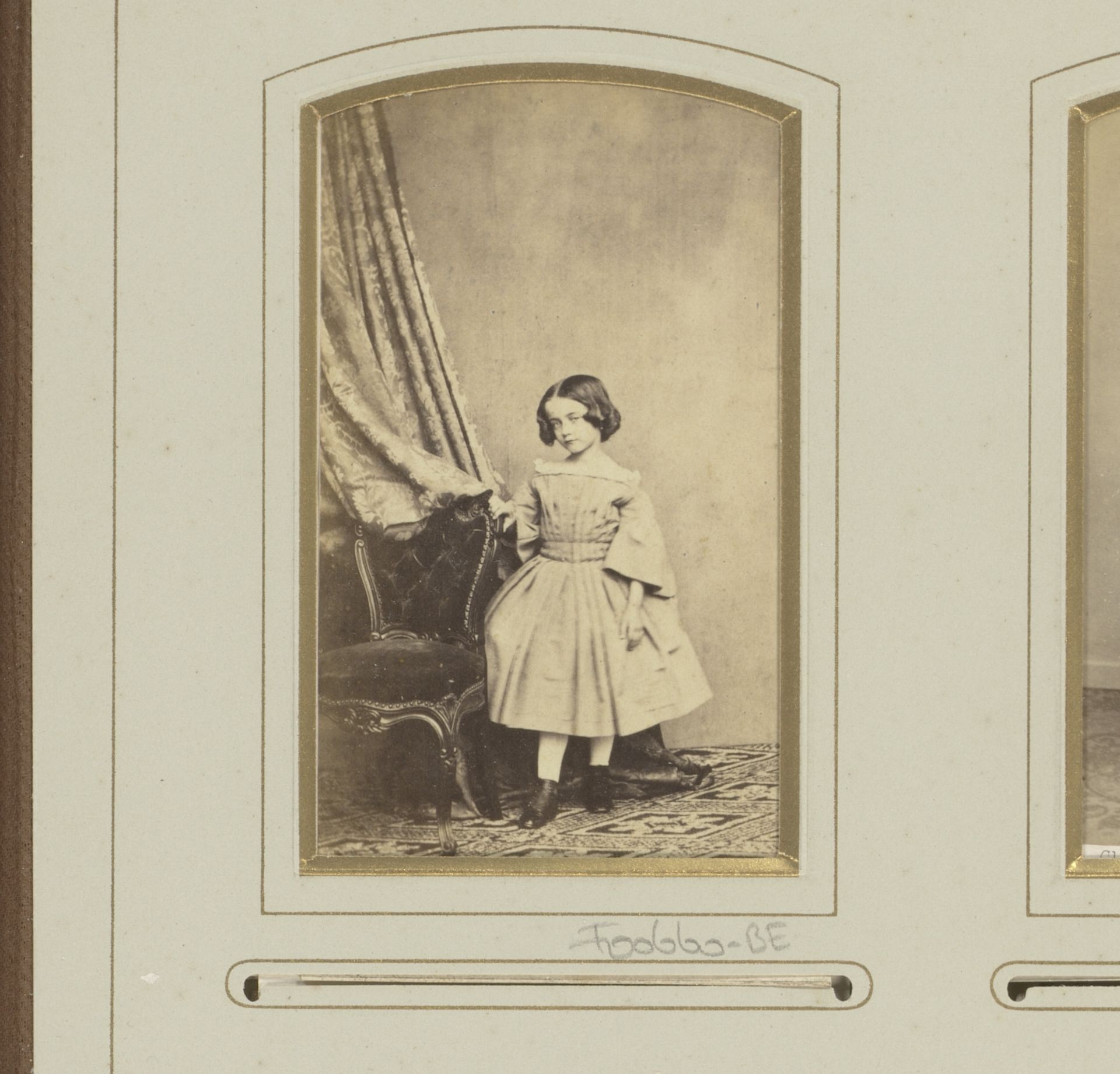
Editor: Here we have "Portrait of a Girl by a Chair," a gelatin silver print from around the 1850s or 70s, attributed to Delehaye & Sluyts. What strikes me is how formally the girl is presented. I'm curious about what this photograph might signify. What do you make of it? Curator: I see echoes of old portraiture traditions rendered through this new medium. The girl, staged with the heavy drapery and ornate chair, almost becomes an allegory. Don't you think she's representing a kind of... cultivated innocence? Editor: Cultivated innocence? In what way? Curator: Note the chair. A symbol of status and upbringing. It suggests she occupies a certain social position. The drapery acts almost as a proscenium, staging her youth as something precious, something to be preserved in image. It suggests the performative aspect of childhood for this era. Editor: So the picture isn't just a portrait of *this* particular girl, but it's meant to signal something more generally about girlhood and class. Is that fair? Curator: Precisely. Think of the gaze. Direct, but carefully managed. Is it vulnerability? Pride? Perhaps the cultural ideal being projected onto her image at the time? It speaks to cultural aspirations. Editor: It's fascinating to see how much history is embedded in this seemingly simple portrait! Now that you point out these details, it encourages you to consider more broadly this representation of identity and societal values in the past. Curator: Indeed. It allows a look at the threads connecting the girl to a cultural web far beyond that single captured moment.

Artwork details
- Medium
- photography, gelatin-silver-print
- Dimensions
- height 84 mm, width 51 mm
- Copyright
- Rijks Museum: Open Domain
Tags
photography
gelatin-silver-print
Comments
Be the first to share your thoughts about this work.
About this artwork
Editor: Here we have "Portrait of a Girl by a Chair," a gelatin silver print from around the 1850s or 70s, attributed to Delehaye & Sluyts. What strikes me is how formally the girl is presented. I'm curious about what this photograph might signify. What do you make of it? Curator: I see echoes of old portraiture traditions rendered through this new medium. The girl, staged with the heavy drapery and ornate chair, almost becomes an allegory. Don't you think she's representing a kind of... cultivated innocence? Editor: Cultivated innocence? In what way? Curator: Note the chair. A symbol of status and upbringing. It suggests she occupies a certain social position. The drapery acts almost as a proscenium, staging her youth as something precious, something to be preserved in image. It suggests the performative aspect of childhood for this era. Editor: So the picture isn't just a portrait of *this* particular girl, but it's meant to signal something more generally about girlhood and class. Is that fair? Curator: Precisely. Think of the gaze. Direct, but carefully managed. Is it vulnerability? Pride? Perhaps the cultural ideal being projected onto her image at the time? It speaks to cultural aspirations. Editor: It's fascinating to see how much history is embedded in this seemingly simple portrait! Now that you point out these details, it encourages you to consider more broadly this representation of identity and societal values in the past. Curator: Indeed. It allows a look at the threads connecting the girl to a cultural web far beyond that single captured moment.
Comments
Be the first to share your thoughts about this work.