About this artwork
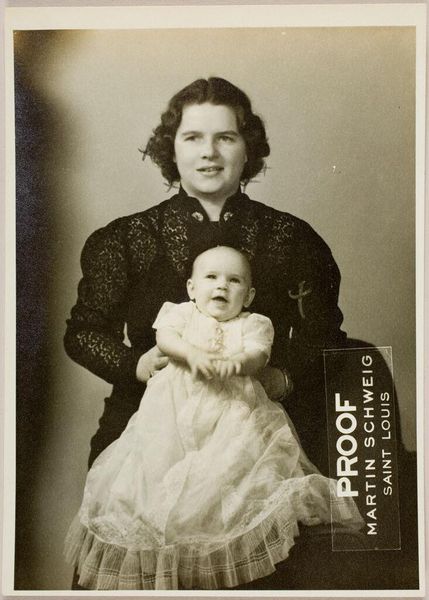
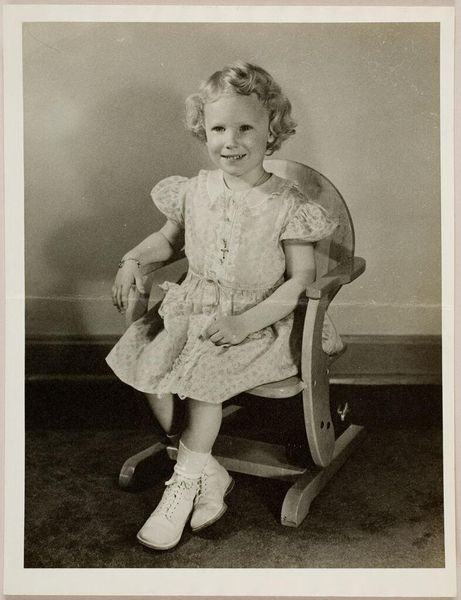
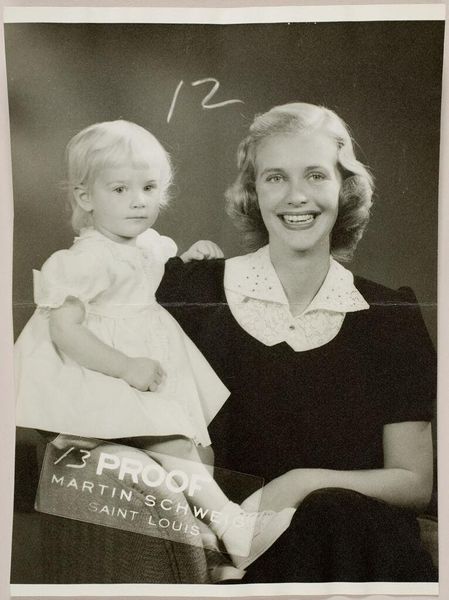
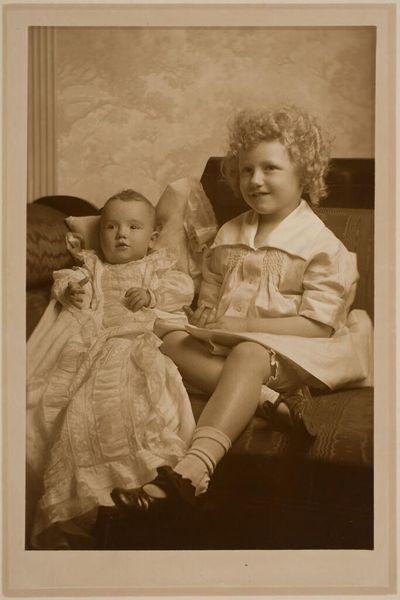
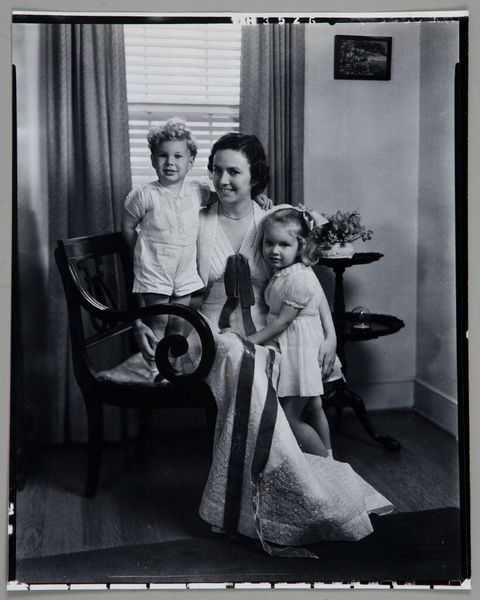
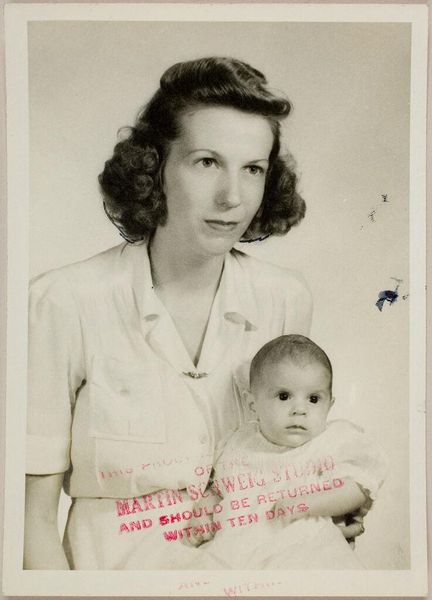
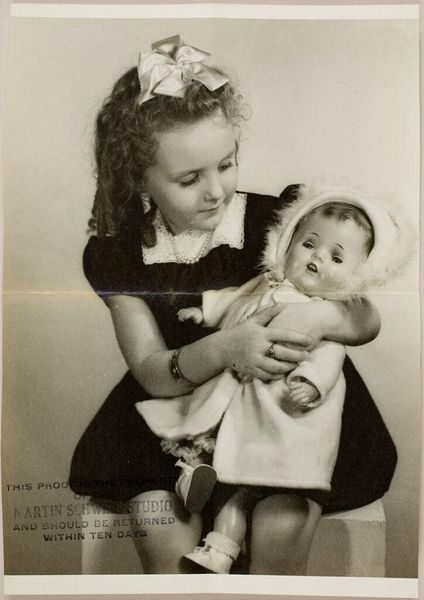
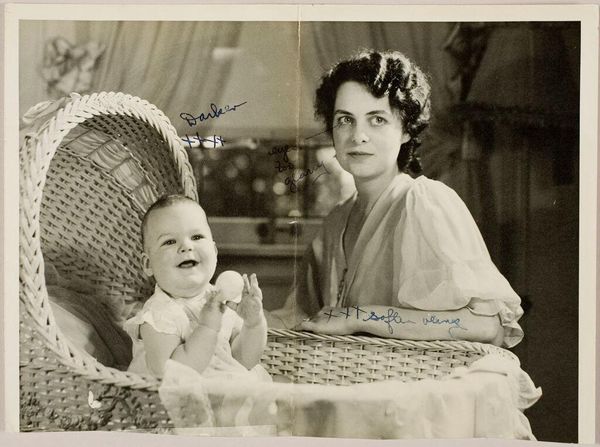
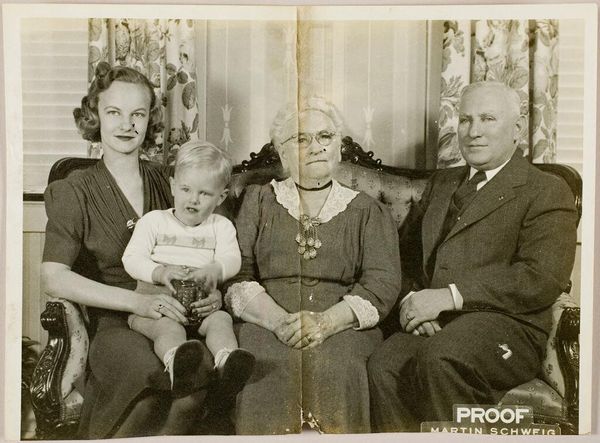
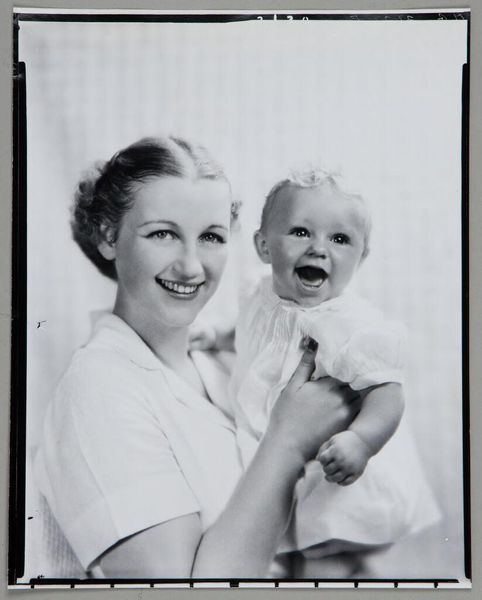
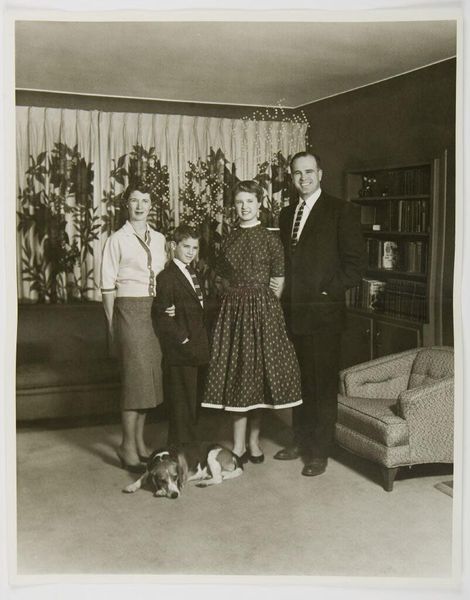
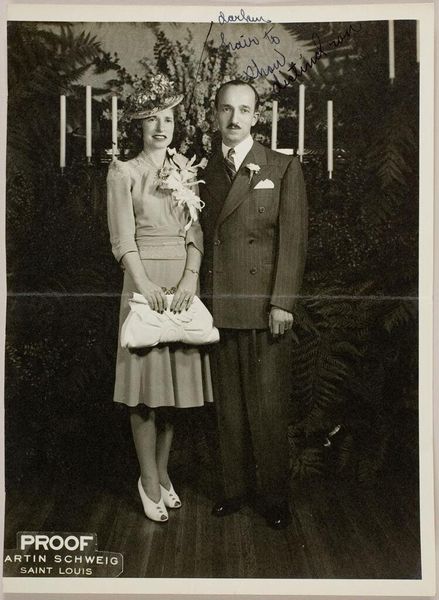
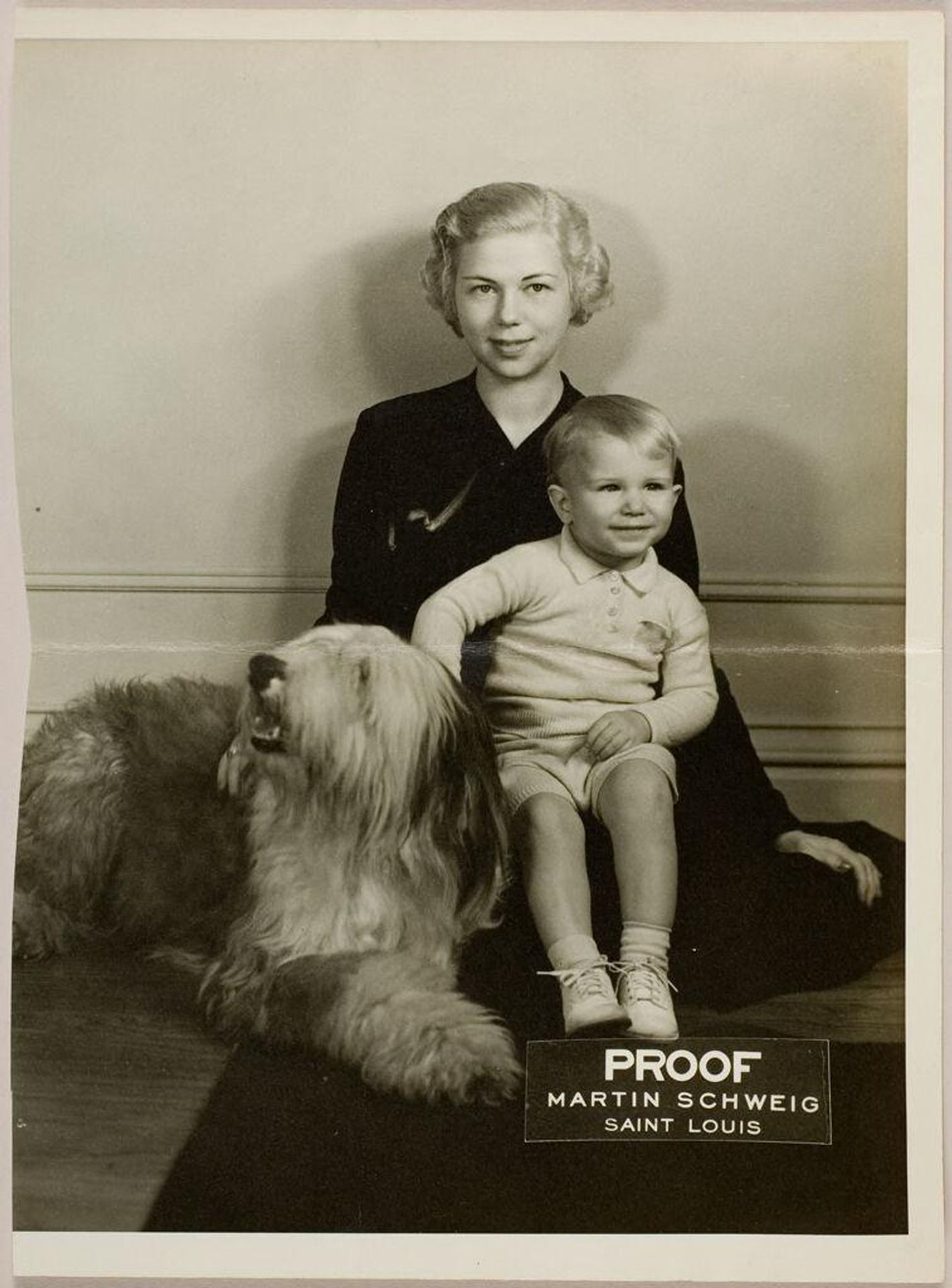
Curator: This is an untitled photograph by Martin Schweig, showing a young woman with a child and a dog. The image itself measures about 24 by 18 centimeters. Editor: It’s a striking composition, isn’t it? The subjects are arranged almost hierarchically, drawing the eye upwards. Curator: Indeed. And this is a photographic proof, meant to be reviewed for a final print, from Schweig’s studio in St. Louis. The context of production is interesting to consider—the studio’s role in shaping middle-class identity through portraiture. Editor: The tonal range, from the dark dress to the lighter skin tones, creates a subtle drama. I’m intrigued by the texture of the dog's fur—it almost vibrates off the surface. Curator: And look closely at the props and clothing, the materials of a certain era and class. These details speak volumes about the social landscape of the time. Editor: Perhaps the formal constraints heighten the sense of posed artifice, the staged intimacy so characteristic of studio portraiture. Curator: Precisely. Considering this image through the lens of its production and consumption reveals so much about the values it reflects. Editor: Yes, and focusing on the inherent qualities of form and texture provides the viewer with a way into understanding the image itself.
Untitled (young woman posed sitting on floor with dog and young boy)
1938

Artwork details
- Dimensions
- image: 23.8 x 17.8 cm (9 3/8 x 7 in.)
- Location
- Harvard Art Museums
- Copyright
- CC0 1.0
Comments
Be the first to share your thoughts about this work.
About this artwork
Curator: This is an untitled photograph by Martin Schweig, showing a young woman with a child and a dog. The image itself measures about 24 by 18 centimeters. Editor: It’s a striking composition, isn’t it? The subjects are arranged almost hierarchically, drawing the eye upwards. Curator: Indeed. And this is a photographic proof, meant to be reviewed for a final print, from Schweig’s studio in St. Louis. The context of production is interesting to consider—the studio’s role in shaping middle-class identity through portraiture. Editor: The tonal range, from the dark dress to the lighter skin tones, creates a subtle drama. I’m intrigued by the texture of the dog's fur—it almost vibrates off the surface. Curator: And look closely at the props and clothing, the materials of a certain era and class. These details speak volumes about the social landscape of the time. Editor: Perhaps the formal constraints heighten the sense of posed artifice, the staged intimacy so characteristic of studio portraiture. Curator: Precisely. Considering this image through the lens of its production and consumption reveals so much about the values it reflects. Editor: Yes, and focusing on the inherent qualities of form and texture provides the viewer with a way into understanding the image itself.
Comments
Be the first to share your thoughts about this work.