About this artwork
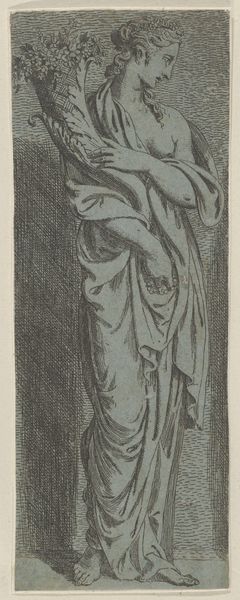
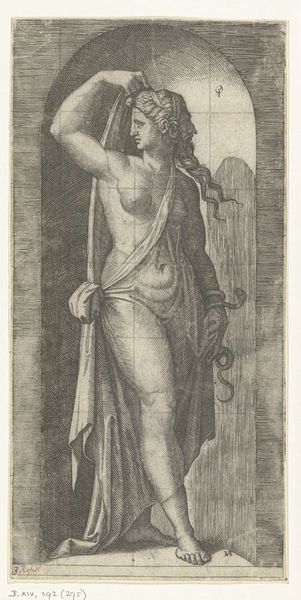
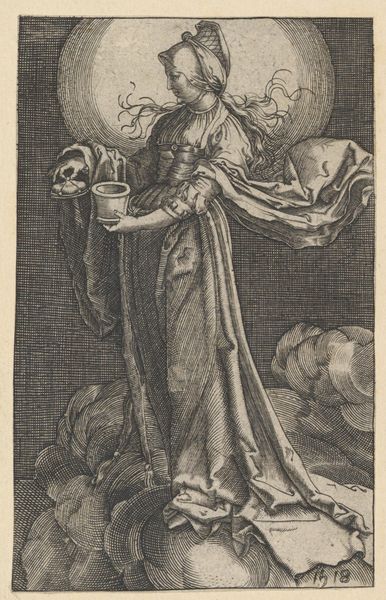
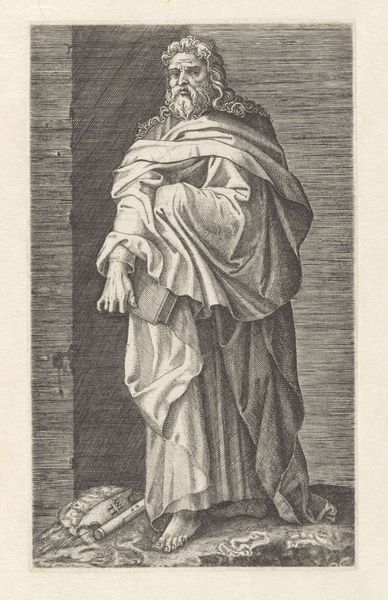
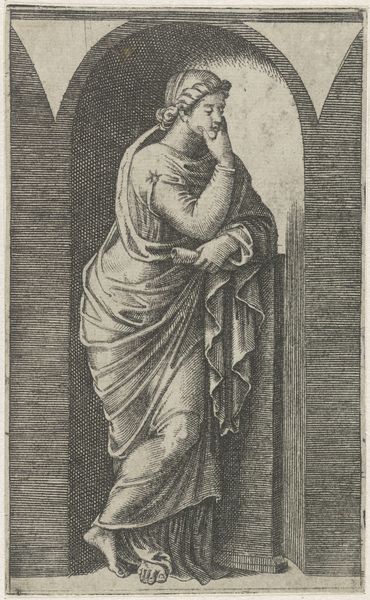
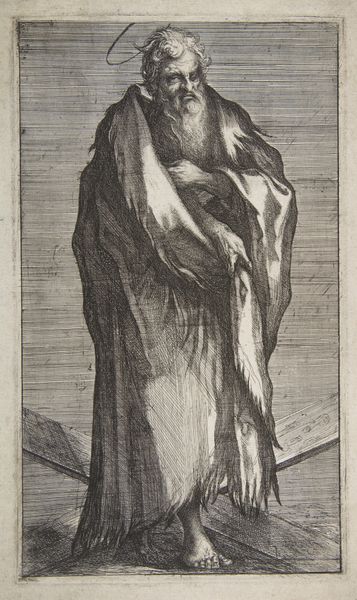
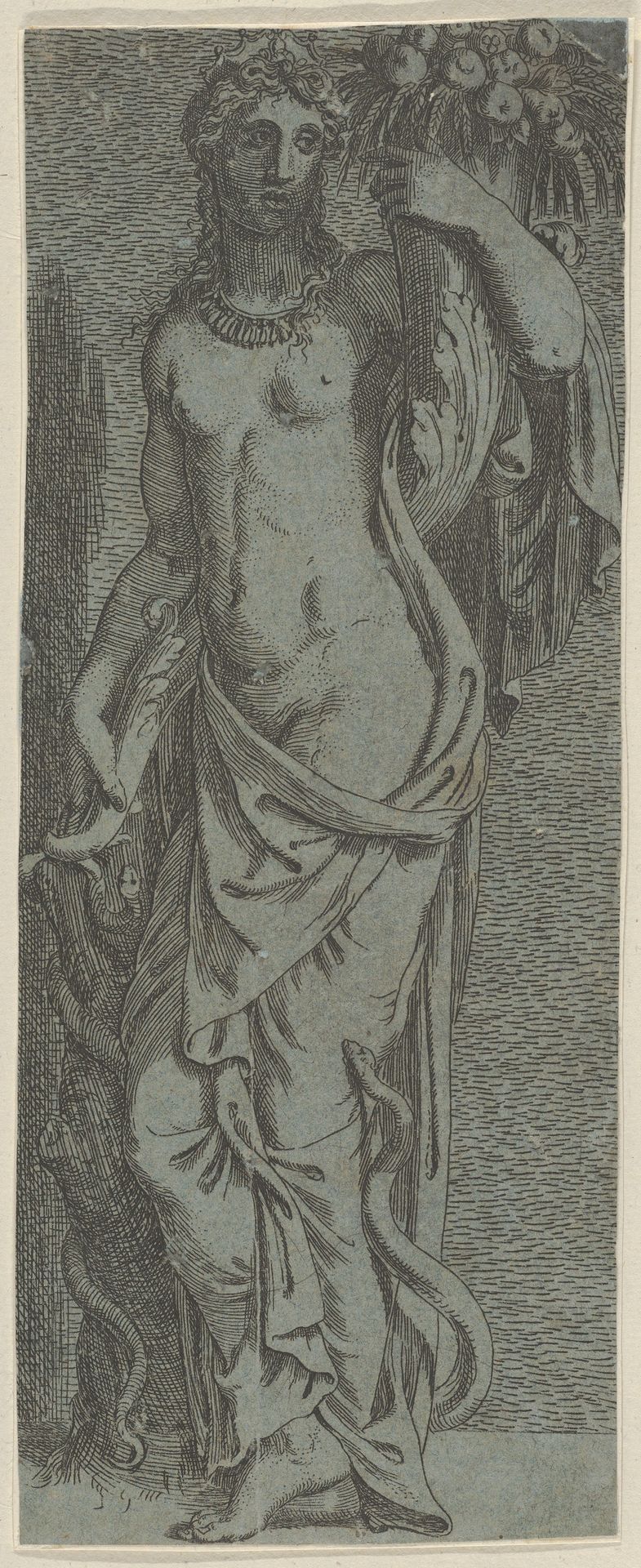
Battista Angolo del Moro created this engraving titled 'Summer' sometime between 1515 and 1573. Notice how the figure of Summer is constructed through a network of finely etched lines that define her form and drapery. The composition is vertically oriented, accentuating the figure’s height and giving her a sense of classical monumentality. The lines create subtle gradations of tone, suggesting a play of light and shadow across the figure, which enhances the three-dimensionality. Summer holds a basket overflowing with fruits and flowers, symbols of seasonal abundance. The formal arrangement directs our eyes to the symbolic and allegorical content related to the seasons and natural cycles. This print invites contemplation not only of aesthetic beauty but also of the broader Renaissance interest in humanism, classical forms, and the natural world.
Summer
1530 - 1573

Battista Angolo del Moro
1515 - 1573
The Metropolitan Museum of Art
Metropolitan Museum of Art, New York, NYArtwork details
- Medium
- drawing, print
- Dimensions
- Sheet: 9 3/8 × 3 3/4 in. (23.8 × 9.5 cm)
- Location
- Metropolitan Museum of Art, New York, NY
- Copyright
- Public Domain
Tags
drawing
mannerism
figuration
11_renaissance
female-nude
history-painting
nude
male-nude
Comments
Be the first to share your thoughts about this work.
About this artwork
Battista Angolo del Moro created this engraving titled 'Summer' sometime between 1515 and 1573. Notice how the figure of Summer is constructed through a network of finely etched lines that define her form and drapery. The composition is vertically oriented, accentuating the figure’s height and giving her a sense of classical monumentality. The lines create subtle gradations of tone, suggesting a play of light and shadow across the figure, which enhances the three-dimensionality. Summer holds a basket overflowing with fruits and flowers, symbols of seasonal abundance. The formal arrangement directs our eyes to the symbolic and allegorical content related to the seasons and natural cycles. This print invites contemplation not only of aesthetic beauty but also of the broader Renaissance interest in humanism, classical forms, and the natural world.
Comments
Be the first to share your thoughts about this work.