About this artwork
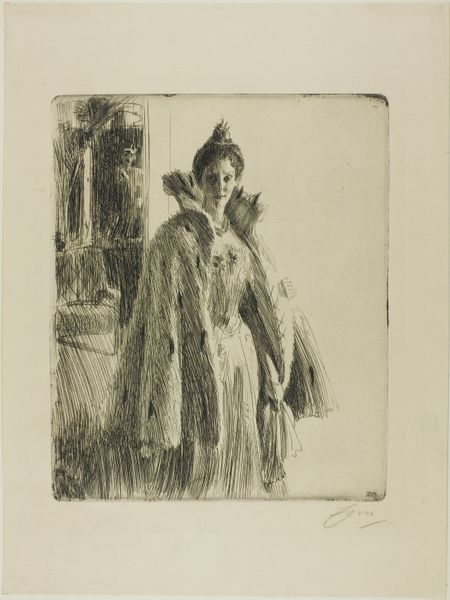
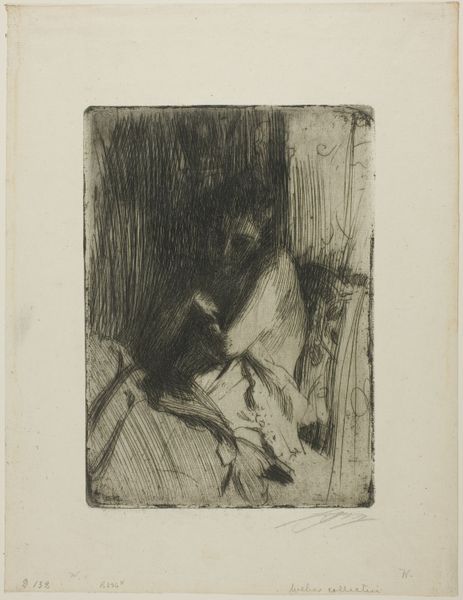
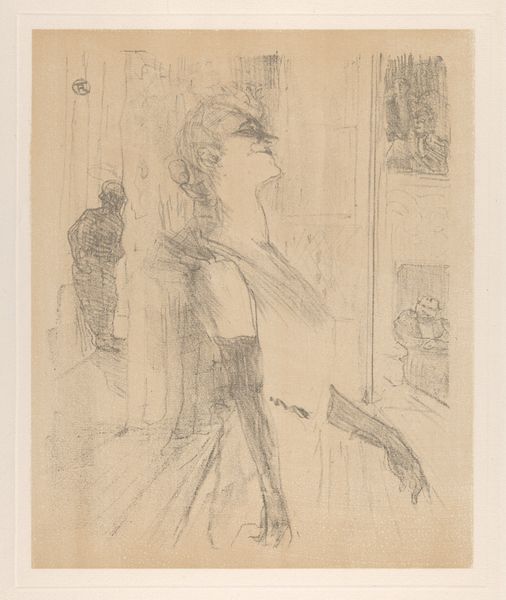
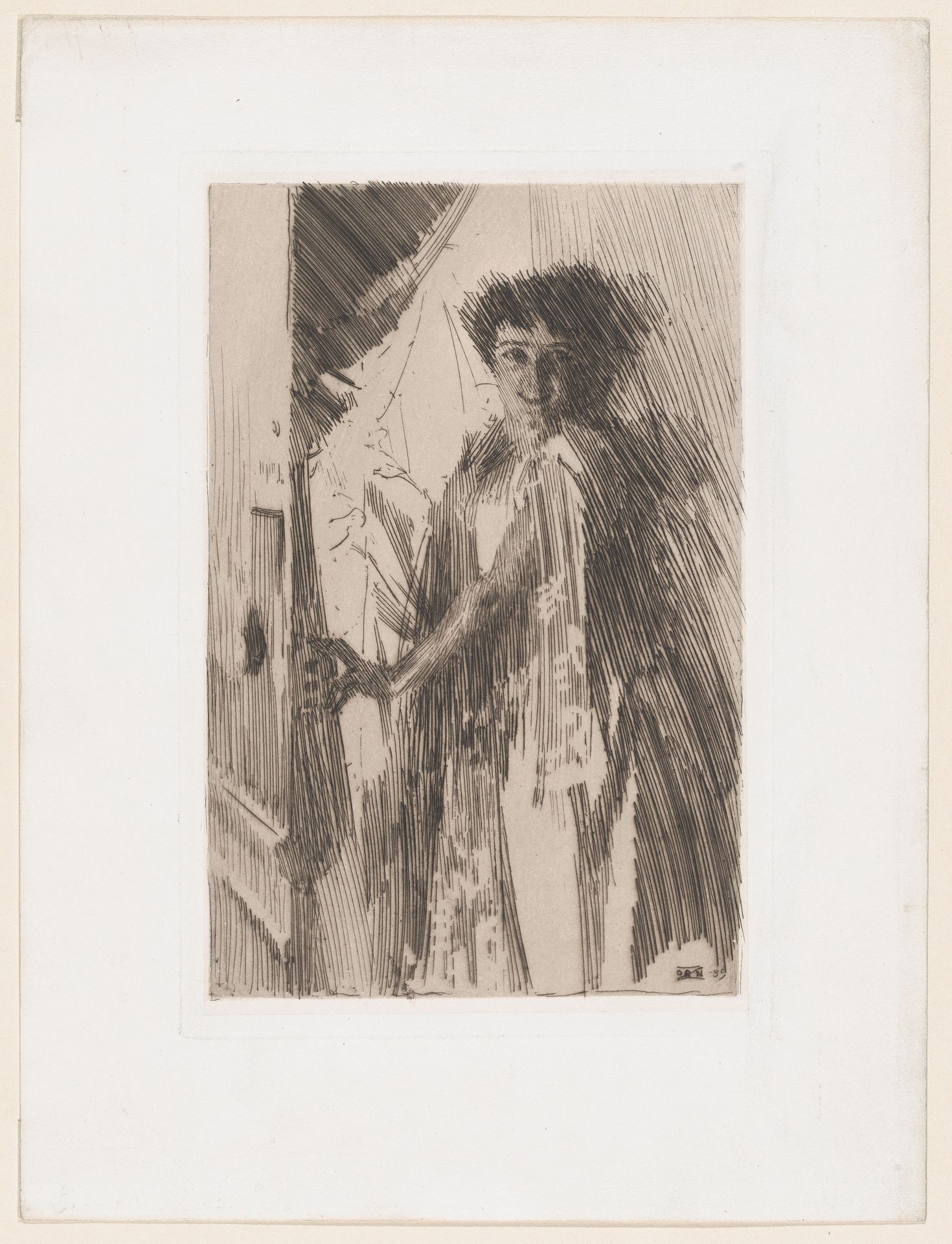
Anders Zorn etched "Rosita Mauri" with a drypoint technique, immortalizing the celebrated dancer. Note how the theatrical curtain and shadowed doorway frame Mauri. The curtain, a potent symbol, has draped across stages and royal portraits alike, signifying revelation and drama. It suggests the performative aspect of identity, echoing through time from ancient Greek theatre to Baroque opera. Consider Bernini's sculptures, where stone drapery evokes intense emotion, mirroring the dancer's implied movement and the emotional currents beneath the surface. Here, the curtain partially conceals, heightening the viewer's anticipation. This motif, passed down through epochs, reflects our collective fascination with unveiling and concealment, a dance between the seen and unseen. Mauri’s coy gaze, combined with the partial doorway view, engages viewers on a deep, subconscious level. This act of controlled revelation resonates with the cyclical nature of symbols, resurfacing, evolving, and taking on new meanings across history.
Rosita Mauri
1889


Artwork details
- Medium
- drawing, print, etching, paper
- Dimensions
- Plate: 9 7/16 × 6 1/4 in. (24 × 15.9 cm) Sheet: 12 11/16 × 9 9/16 in. (32.2 × 24.3 cm)
- Location
- Metropolitan Museum of Art, New York, NY
- Copyright
- Public Domain
Tags
Comments
Share your thoughts
About this artwork
Anders Zorn etched "Rosita Mauri" with a drypoint technique, immortalizing the celebrated dancer. Note how the theatrical curtain and shadowed doorway frame Mauri. The curtain, a potent symbol, has draped across stages and royal portraits alike, signifying revelation and drama. It suggests the performative aspect of identity, echoing through time from ancient Greek theatre to Baroque opera. Consider Bernini's sculptures, where stone drapery evokes intense emotion, mirroring the dancer's implied movement and the emotional currents beneath the surface. Here, the curtain partially conceals, heightening the viewer's anticipation. This motif, passed down through epochs, reflects our collective fascination with unveiling and concealment, a dance between the seen and unseen. Mauri’s coy gaze, combined with the partial doorway view, engages viewers on a deep, subconscious level. This act of controlled revelation resonates with the cyclical nature of symbols, resurfacing, evolving, and taking on new meanings across history.
Comments
Share your thoughts