
Curatorial notes
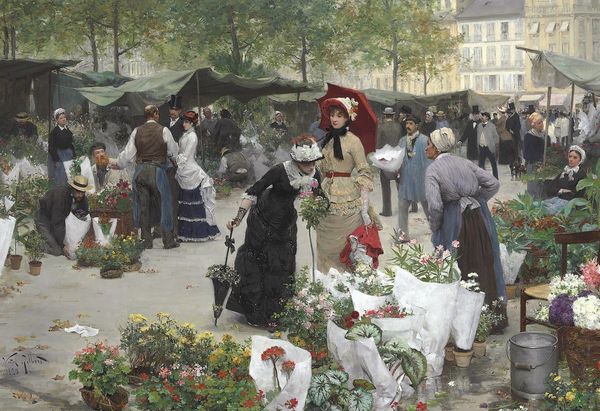
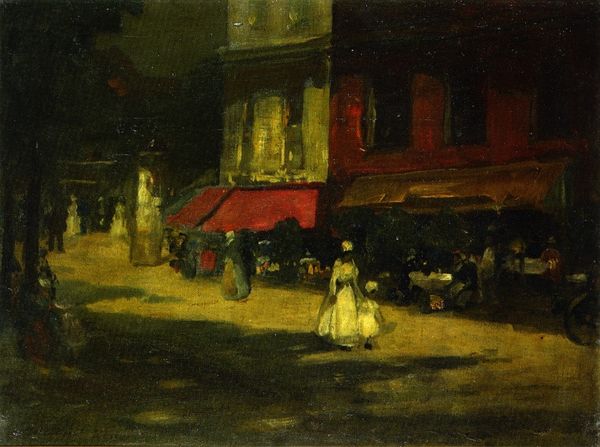
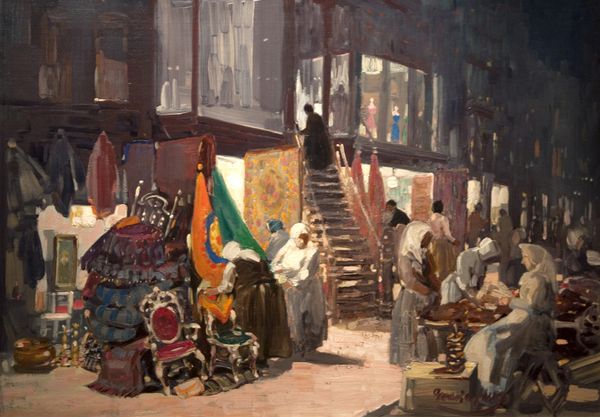
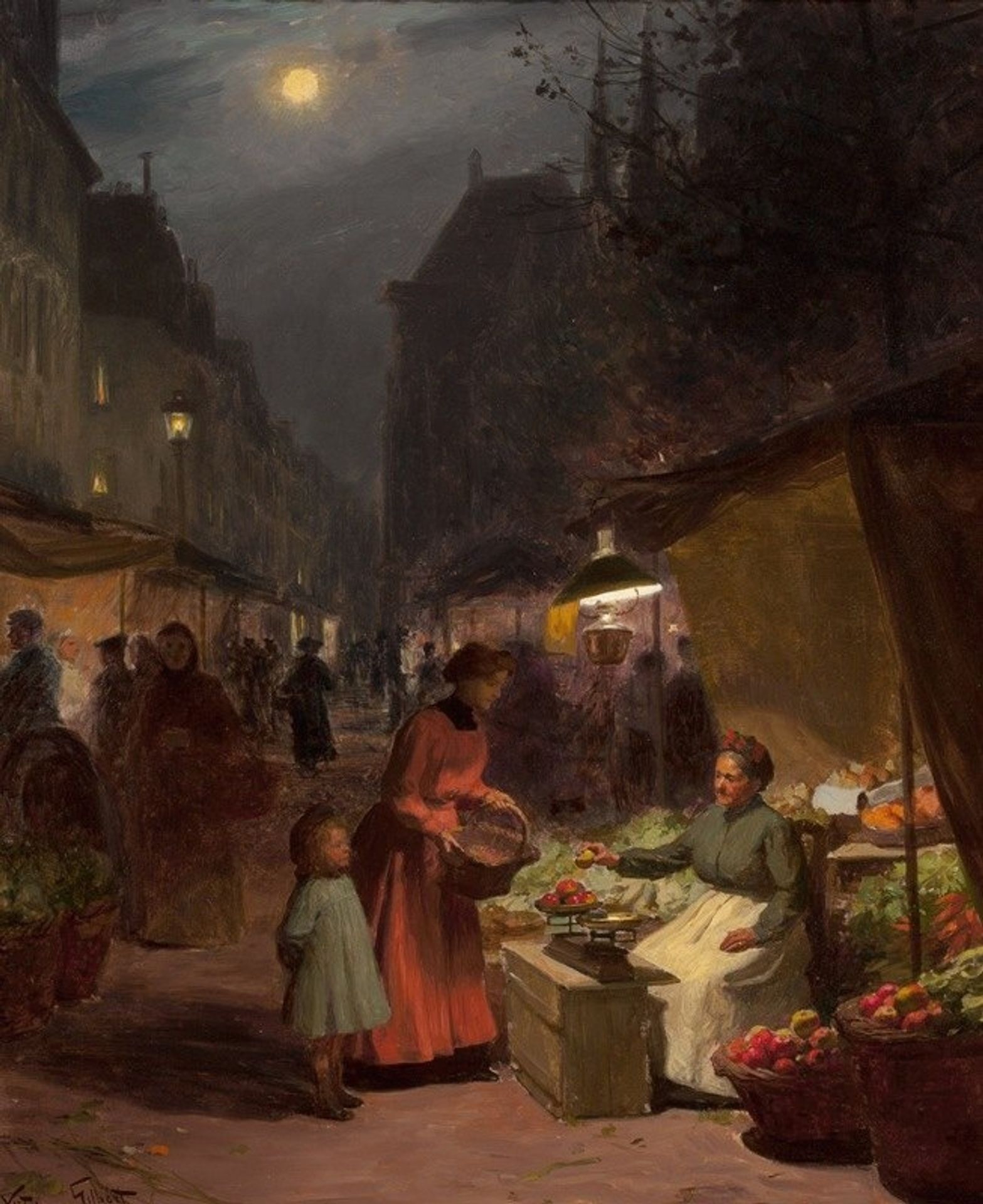
Editor: We’re looking at “The Fruit Seller,” an oil painting by Victor Gabriel Gilbert. It depicts a nighttime market scene, bustling but dim. What strikes me is how the lamplight highlights the exchange between the seller and her customer. What do you see in this piece? Curator: Immediately, I consider the conditions of its creation. What were Gilbert's working conditions? What kind of paint and brushes could he afford? This wasn't a commission for the elite; it seems intended for a different market, one possibly eager for scenes of everyday life. Notice the stark contrast in how labor is portrayed—the seller's toil versus the customer's transaction. What does this suggest about the societal views on work and consumption? Editor: That's interesting, I was more focused on the narrative. How might the location - perhaps a poorer neighborhood - affect how we understand that interaction? Curator: Precisely. The city context provides us with valuable understanding of economic status. And think about the labor of representing this scene. How does Gilbert choose to portray this fruit seller’s work? What techniques does he use to show labor? Is there a sense of romanticism versus stark reality in his portrayal? These choices expose the material realities both within and behind the painting. Editor: So, it’s about looking at the painting itself and understanding how it reflects a moment of exchange and societal work dynamics. Curator: Exactly. Examining the painting in its materiality, combined with the social and historical forces at play, shows how art production relates directly to broader material culture and power relations. Editor: That gives me a lot to consider regarding the role of art reflecting socioeconomic dynamics. Curator: And vice versa. The materials and the process behind its creation have an undeniable story to tell.