c. 1809 - 1814
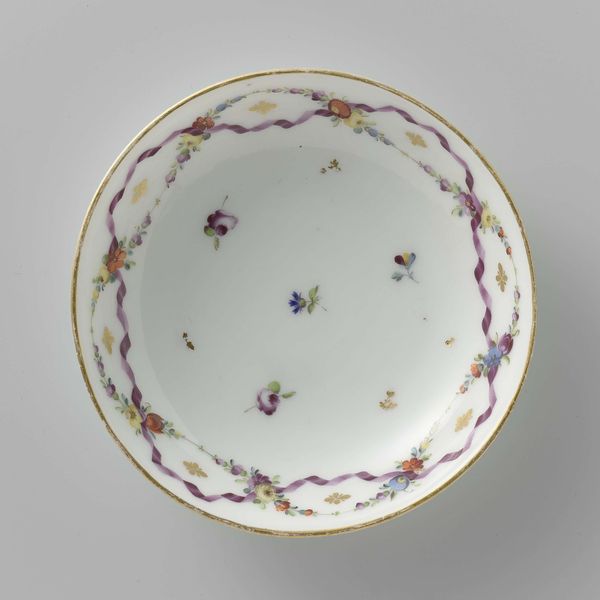
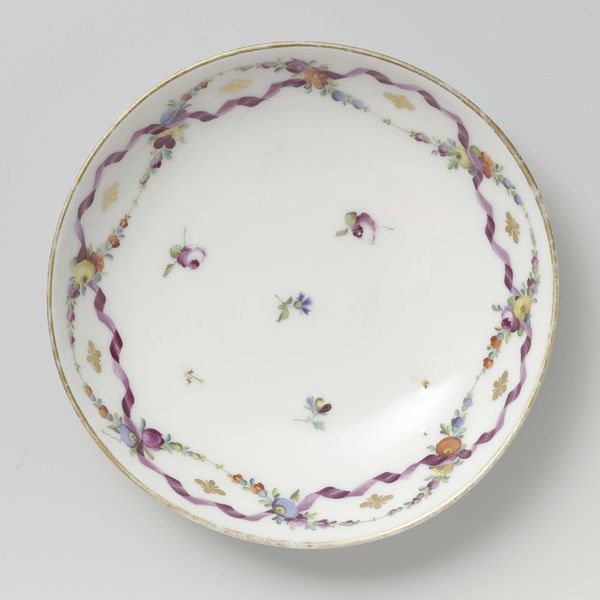
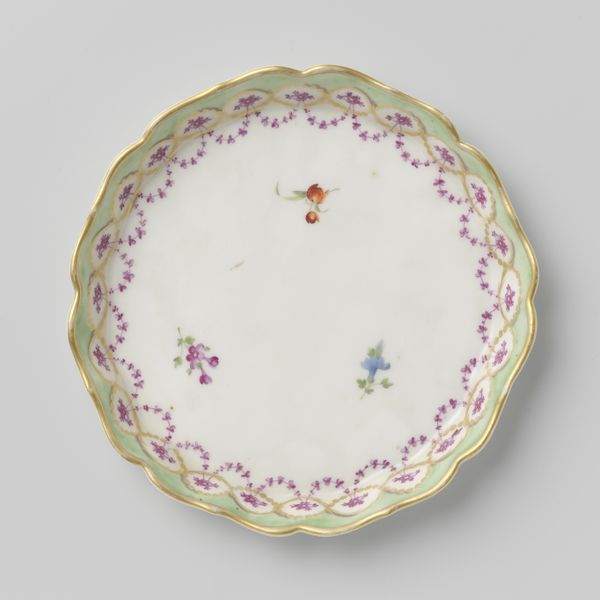
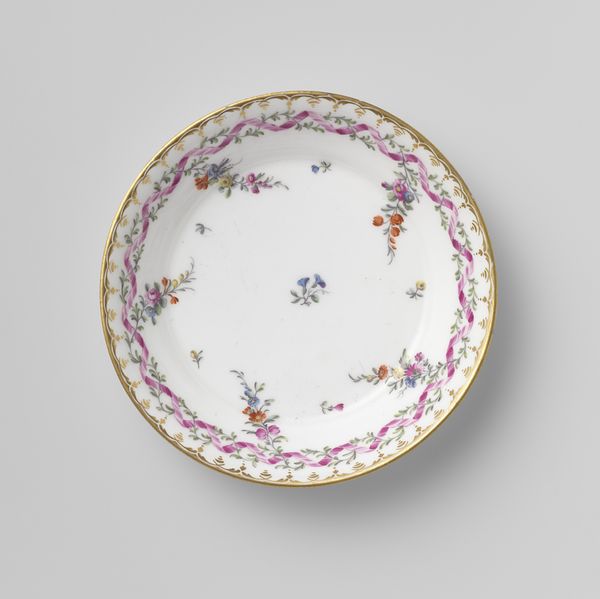
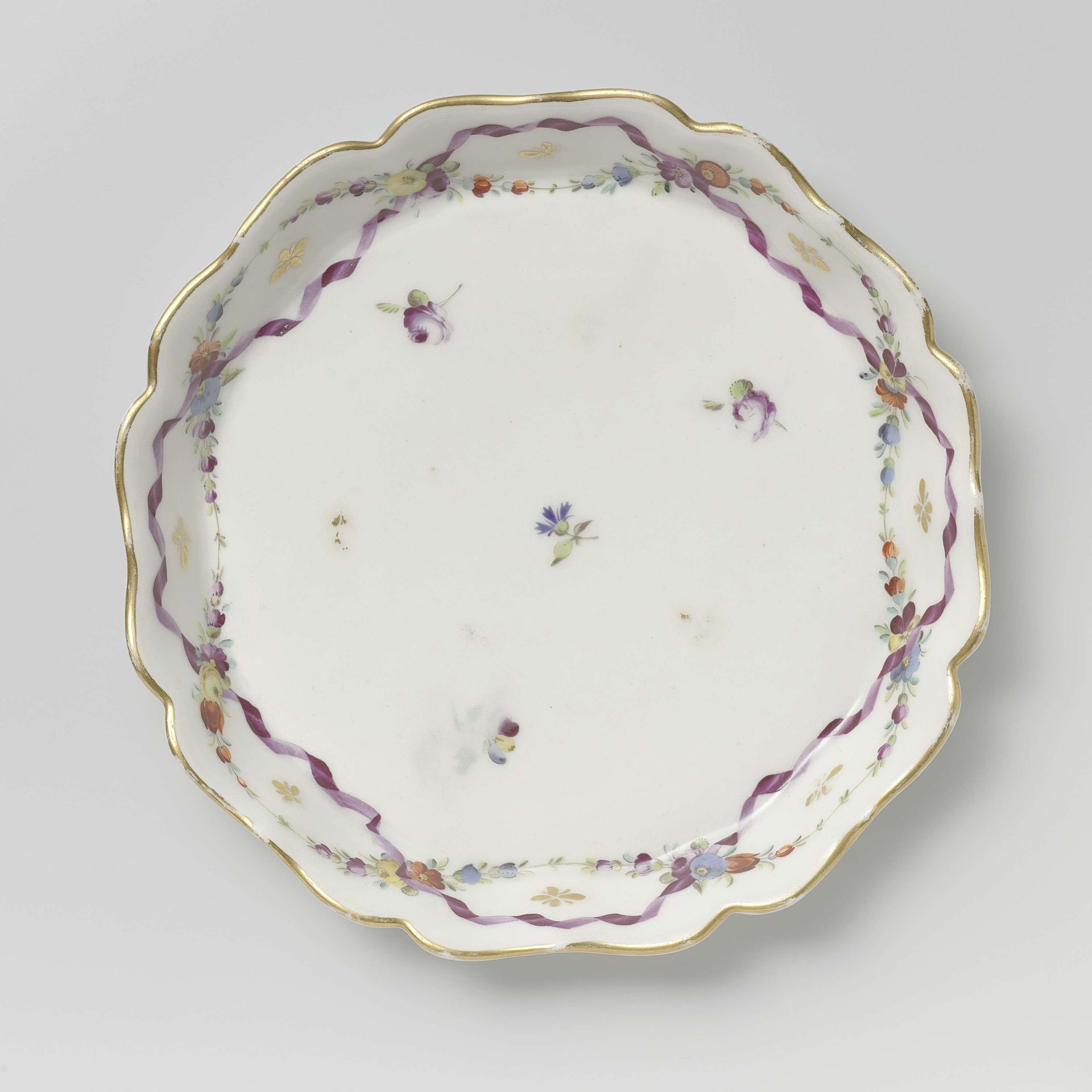
Pattipan, beschilderd met strooibloemen en gouden lovertjes

Listen to curator's interpretation
Curatorial notes
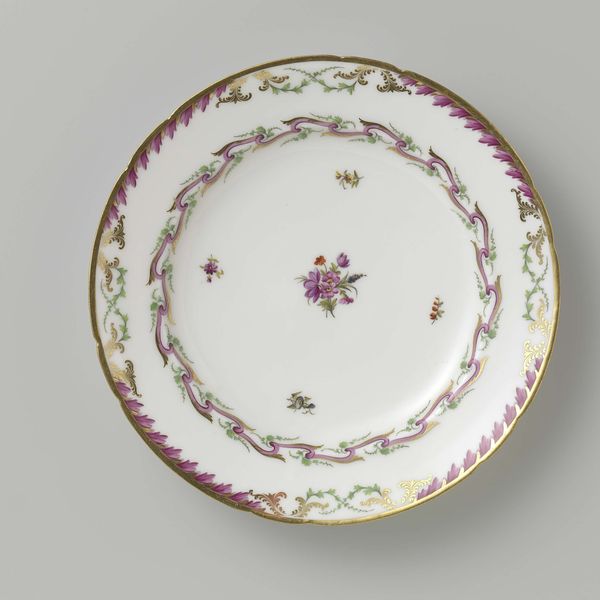
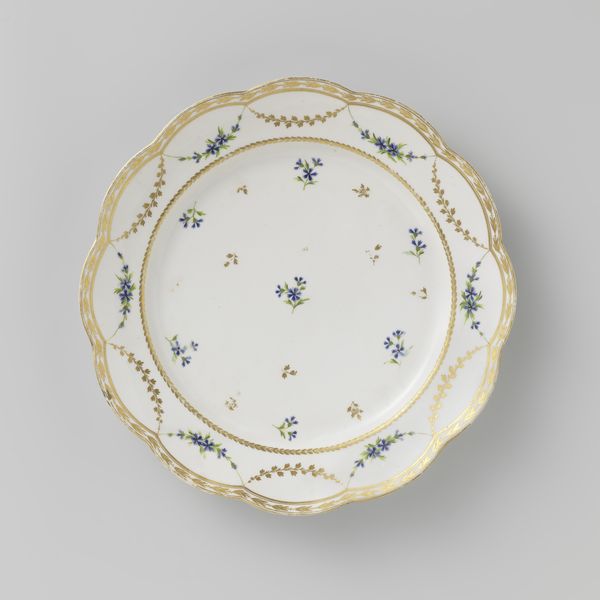
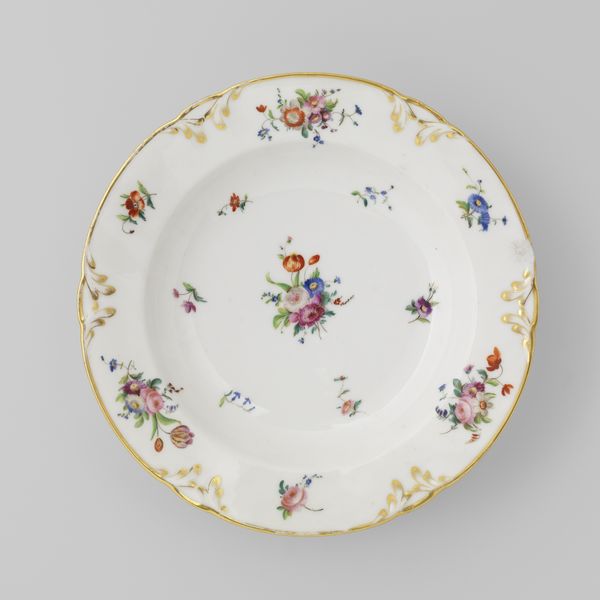
Editor: This Pattipan, or small dish, was created around 1809-1814 by the Koninklijke Porseleinfabriek Dommer & Co. It's ceramic and decorated with painted flowers and little gold embellishments. It feels so delicate and refined, almost like something from a fairy tale. What catches your eye about this piece? Curator: The enduring symbolism of flowers is immediately apparent, isn't it? Consider how each bloom, each placement, could represent unspoken sentiments. During the Neoclassical era, this yearning for a symbolic visual language flourished. What emotions or values do you think the floral motifs and gold leafing might have evoked? Editor: I suppose the flowers and gold could signify wealth or luxury. Maybe the different flowers held specific meanings, like love or remembrance? Curator: Precisely. Floral language was sophisticated. The ribbons weaving through the flowers, what might they symbolize? Ribbons often denote connection, promise, even constraint depending on their rendering. In a period defined by social decorum, consider how the symbolism encoded in decorative objects was integral to everyday interaction. How might possessing such a Pattipan communicate social standing? Editor: It's amazing how much could be conveyed through something as simple as a decorative dish! Owning such a piece must have been a powerful statement of refinement and social status. I'll definitely look at decorative art differently from now on. Curator: Yes. It highlights the human impulse to imbue objects with cultural weight, telling intricate stories through delicate imagery, demonstrating the staying power of visual language.