About this artwork
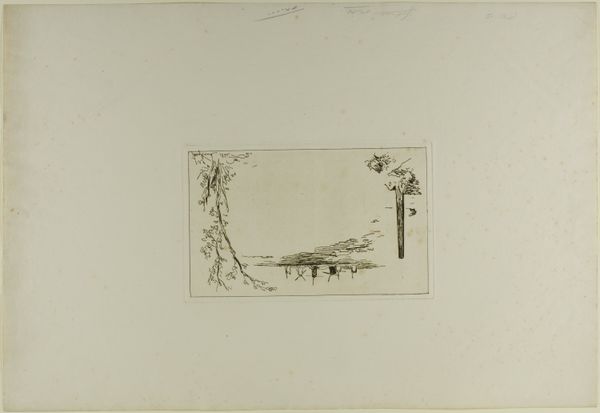
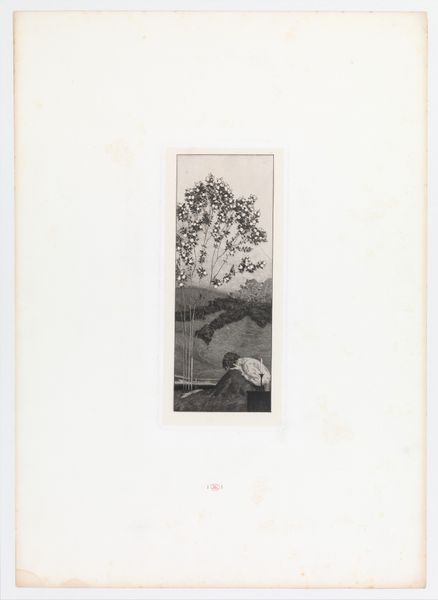
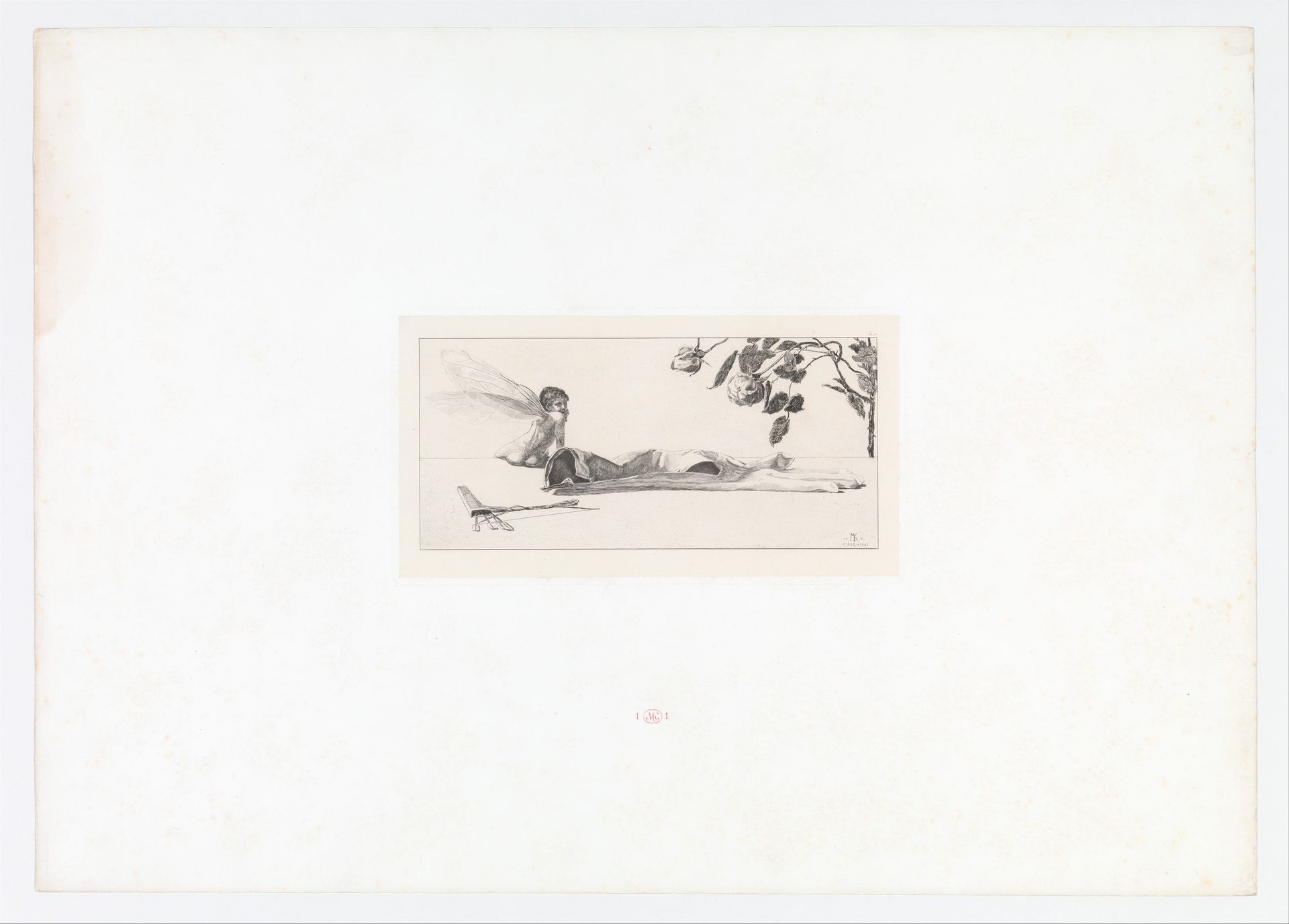
Max Klinger etched this plate called Amor as part of his Glove series. In it we see Cupid, that winged imp of love, and a glove—a curious emblem laden with meaning. Since antiquity, Eros, or Cupid, has represented desire, affection, and even irrationality. Here, he perches near a discarded glove, an object that once encased a hand, once touched, once connected. Gloves, like relics, are fragments imbued with the aura of what is absent, what is desired. Consider Botticelli’s Venus, wringing out her hair: the gesture speaks of sensuality, of the awakening of life. Similarly, the glove suggests intimacy and yearning. From antiquity to the Renaissance and beyond, gestures and objects recur, each time colored by new contexts, yet retaining a primal echo. Klinger taps into our collective memory, reminding us of the enduring power of symbols to evoke profound, often subconscious, emotions. These images are not linear; they spiral, resurfacing in unexpected guises, their emotional resonance echoing across time.
Amor (Cupid) from Ein Handschuh (A Glove). Cyclus von zehn Compositionen radirt. Rad. Opus VI, Plate X. First edition
1881


Artwork details
- Medium
- drawing, print, etching
- Dimensions
- Overall: 18 5/16 x 26 in. (46.5 x 66 cm)
- Location
- Metropolitan Museum of Art, New York, NY
- Copyright
- Public Domain
Tags
drawing
etching
landscape
figuration
symbolism
academic-art
Comments
Be the first to share your thoughts about this work.
About this artwork
Max Klinger etched this plate called Amor as part of his Glove series. In it we see Cupid, that winged imp of love, and a glove—a curious emblem laden with meaning. Since antiquity, Eros, or Cupid, has represented desire, affection, and even irrationality. Here, he perches near a discarded glove, an object that once encased a hand, once touched, once connected. Gloves, like relics, are fragments imbued with the aura of what is absent, what is desired. Consider Botticelli’s Venus, wringing out her hair: the gesture speaks of sensuality, of the awakening of life. Similarly, the glove suggests intimacy and yearning. From antiquity to the Renaissance and beyond, gestures and objects recur, each time colored by new contexts, yet retaining a primal echo. Klinger taps into our collective memory, reminding us of the enduring power of symbols to evoke profound, often subconscious, emotions. These images are not linear; they spiral, resurfacing in unexpected guises, their emotional resonance echoing across time.
Comments
Be the first to share your thoughts about this work.