About this artwork
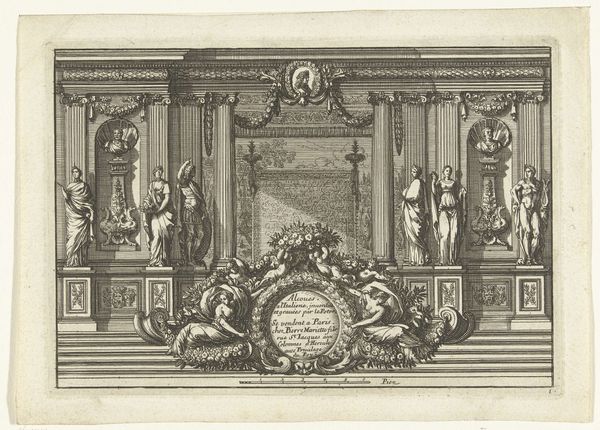
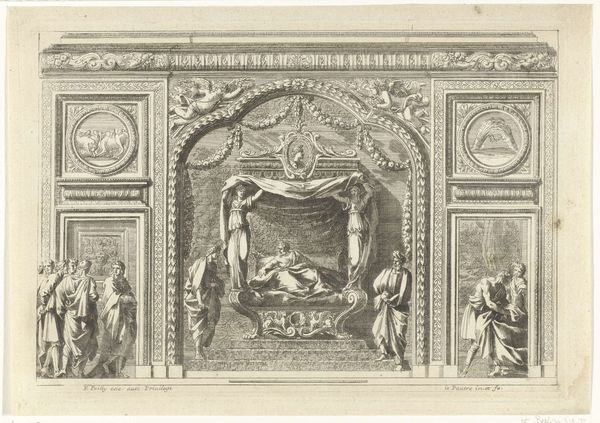
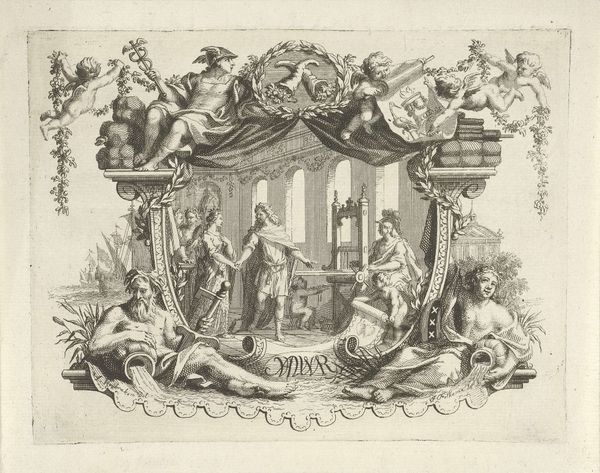
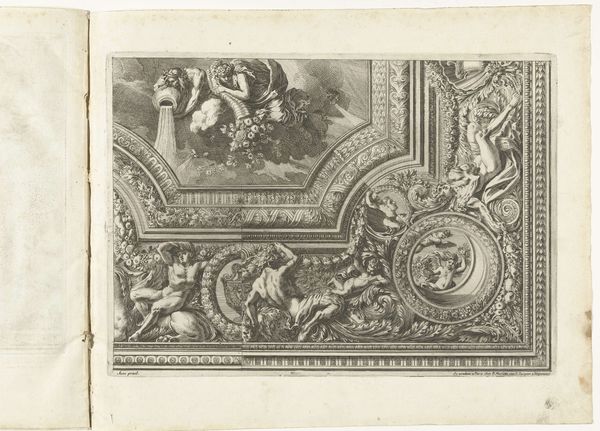
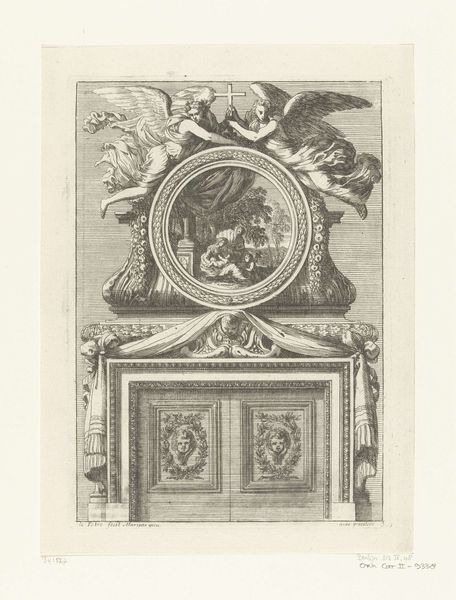
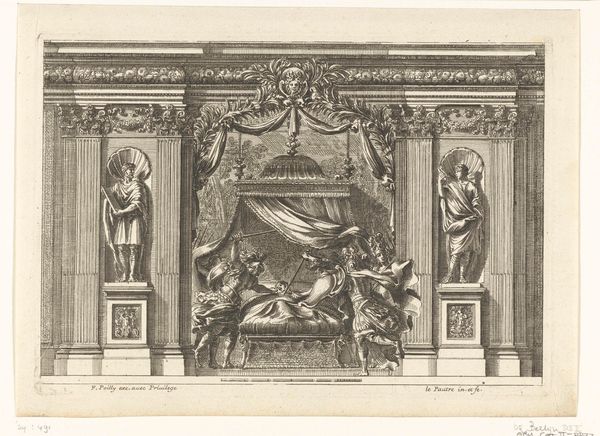
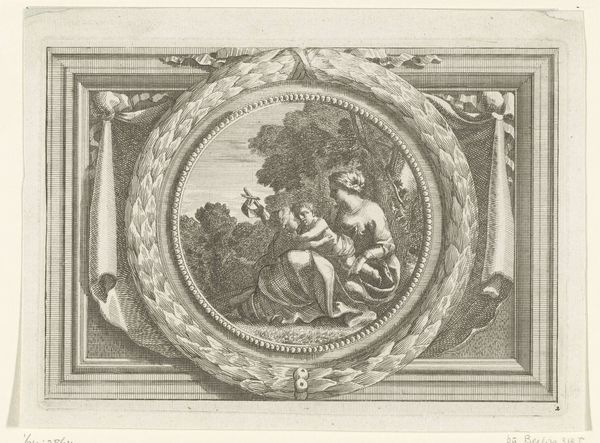
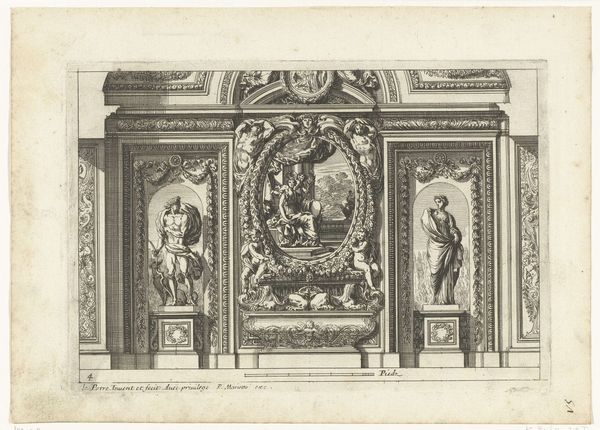
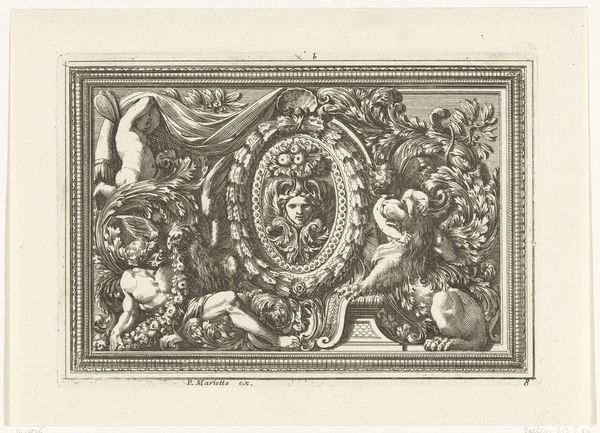
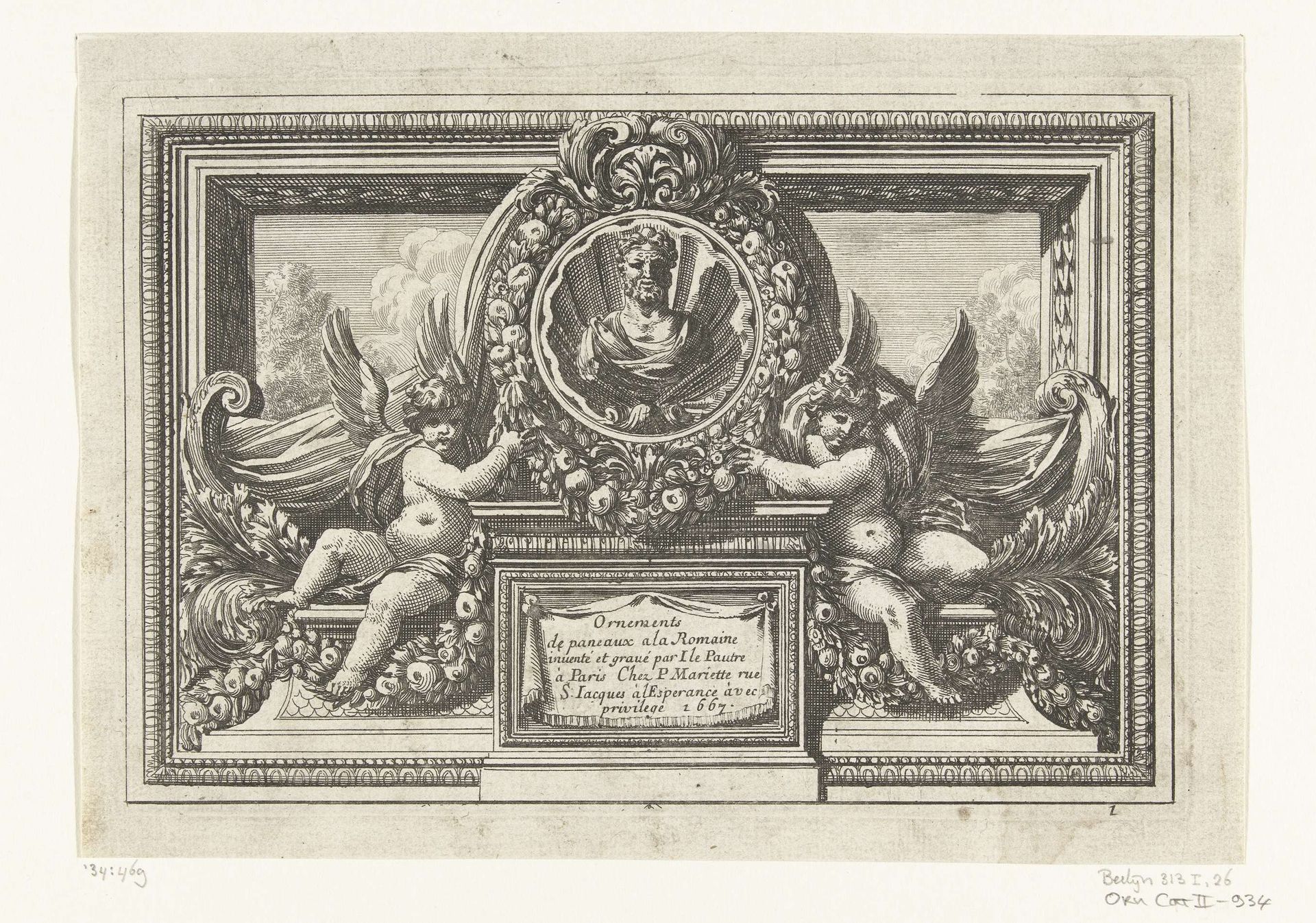
Jean Le Pautre’s ornamental panel, rendered in ink, presents a delightful array of symbols echoing classical antiquity. Note the winged cherubs, those playful putti, flanking a central bust wreathed in foliage. These cherubs, symbols of divine love, are not merely decorative; they are inheritors of a lineage stretching back to ancient Greece, where Eros and his counterparts embodied the primal force of attraction. The bust, encircled by flowers, evokes the Roman tradition of honoring ancestors, a practice intertwined with rituals of remembrance and familial continuity. Consider how these motifs persist and transform. The cherub, reborn in the Renaissance, becomes a fixture in Baroque art, imbued with a new spiritual intensity. Flowers, emblems of fleeting beauty, speak to the eternal cycle of life, death, and rebirth, a concept that has resonated across cultures and epochs. This work is not only a display of aesthetic refinement, but an expression of humankind’s attempt to confront mortality and imbue the world with enduring meaning.
Titelblad: Ornements de paneaux a la Romaine 1667

Jean Lepautre
1618 - 1682Location
RijksmuseumArtwork details
- Medium
- drawing, ornament, print, pen, engraving
- Dimensions
- height 135 mm, width 198 mm
- Location
- Rijksmuseum
- Copyright
- Rijks Museum: Open Domain
Tags
drawing
ornament
baroque
pen drawing
pen illustration
figuration
line
pen
history-painting
engraving
Comments
No comments
About this artwork
Jean Le Pautre’s ornamental panel, rendered in ink, presents a delightful array of symbols echoing classical antiquity. Note the winged cherubs, those playful putti, flanking a central bust wreathed in foliage. These cherubs, symbols of divine love, are not merely decorative; they are inheritors of a lineage stretching back to ancient Greece, where Eros and his counterparts embodied the primal force of attraction. The bust, encircled by flowers, evokes the Roman tradition of honoring ancestors, a practice intertwined with rituals of remembrance and familial continuity. Consider how these motifs persist and transform. The cherub, reborn in the Renaissance, becomes a fixture in Baroque art, imbued with a new spiritual intensity. Flowers, emblems of fleeting beauty, speak to the eternal cycle of life, death, and rebirth, a concept that has resonated across cultures and epochs. This work is not only a display of aesthetic refinement, but an expression of humankind’s attempt to confront mortality and imbue the world with enduring meaning.
Comments
No comments