About this artwork
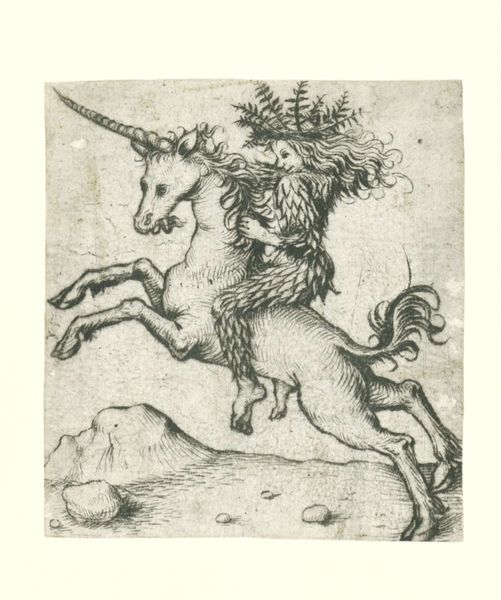
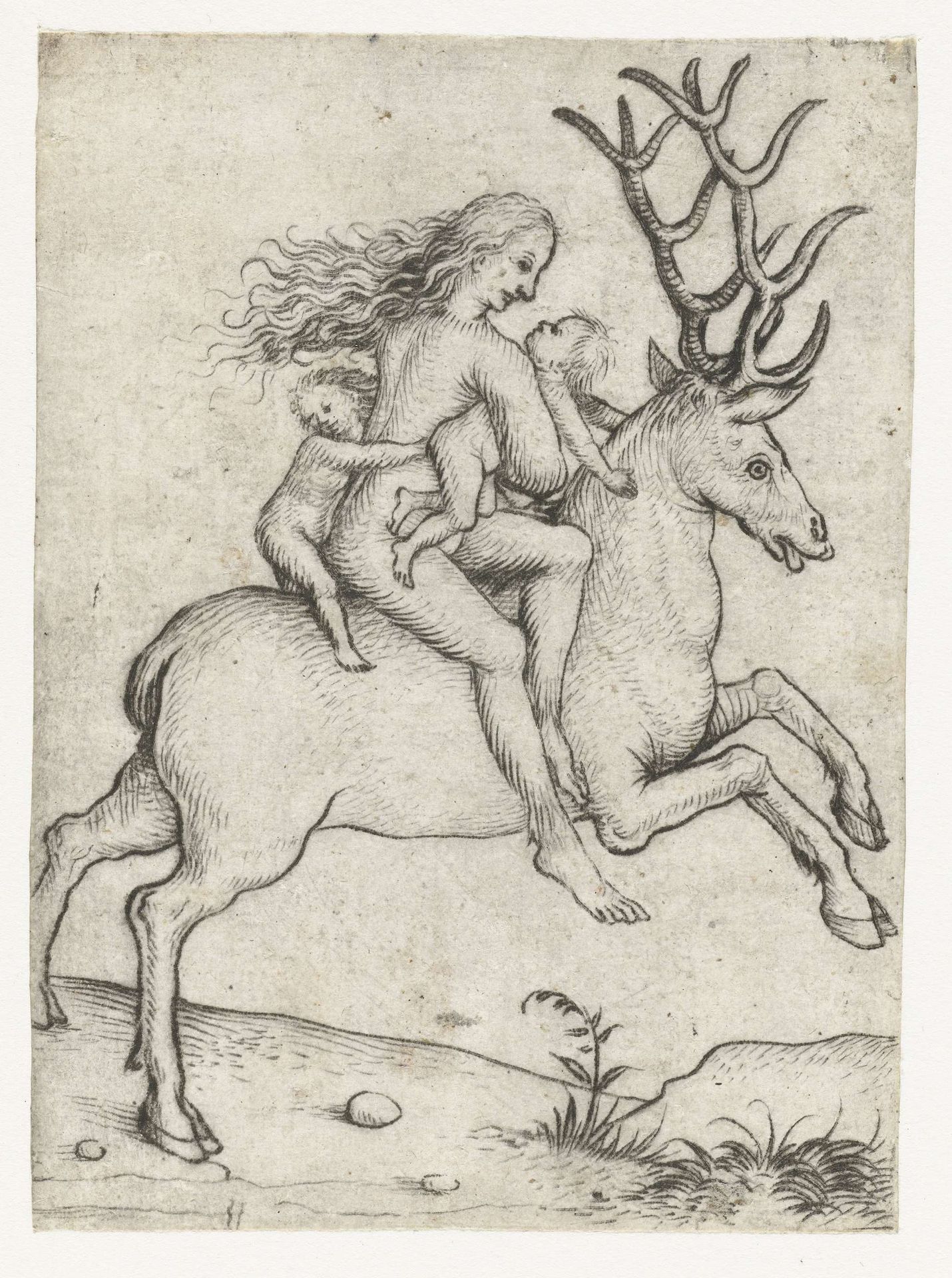
This engraving by the Master of the Amsterdam Cabinet depicts a wild woman with children riding a stag. These so-called 'wild people', or 'wild men' were a recurring theme in European art and literature, particularly during the medieval and Renaissance periods. Often imagined as living outside the boundaries of civilization, they symbolized the untamed aspects of human nature. In this context, the wild woman, frequently depicted nude or partially clothed, embodies a primal, maternal force. The image presents a compelling view on gender roles, motherhood, and the relationship between humanity and nature. The woman's exposed body defies traditional representations of female modesty, aligning her instead with the wilderness. This deliberate choice may challenge societal norms and expectations surrounding women's bodies and behavior. At the same time, there is something incredibly tender about the scene, as the children cling to their mother. She is the protector and nourisher in a world beyond the constraints of society.
Wildemans-vrouw met kinderen op een hert
1473 - 1477

Artwork details
- Medium
- drawing, pencil, pen
- Dimensions
- height 106 mm, width 77 mm
- Copyright
- Rijks Museum: Open Domain
Tags
Comments
Share your thoughts
About this artwork
This engraving by the Master of the Amsterdam Cabinet depicts a wild woman with children riding a stag. These so-called 'wild people', or 'wild men' were a recurring theme in European art and literature, particularly during the medieval and Renaissance periods. Often imagined as living outside the boundaries of civilization, they symbolized the untamed aspects of human nature. In this context, the wild woman, frequently depicted nude or partially clothed, embodies a primal, maternal force. The image presents a compelling view on gender roles, motherhood, and the relationship between humanity and nature. The woman's exposed body defies traditional representations of female modesty, aligning her instead with the wilderness. This deliberate choice may challenge societal norms and expectations surrounding women's bodies and behavior. At the same time, there is something incredibly tender about the scene, as the children cling to their mother. She is the protector and nourisher in a world beyond the constraints of society.
Comments
Share your thoughts