About this artwork
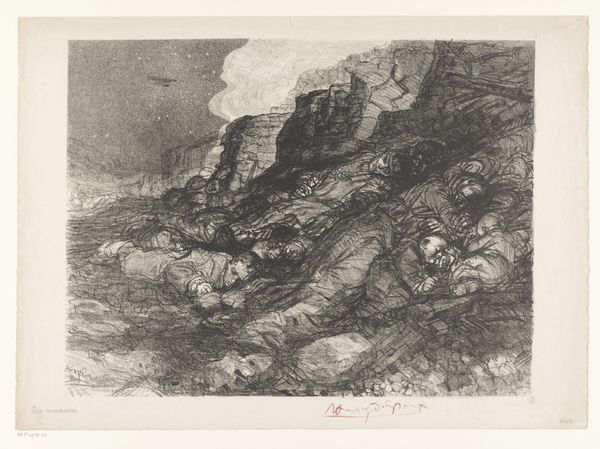
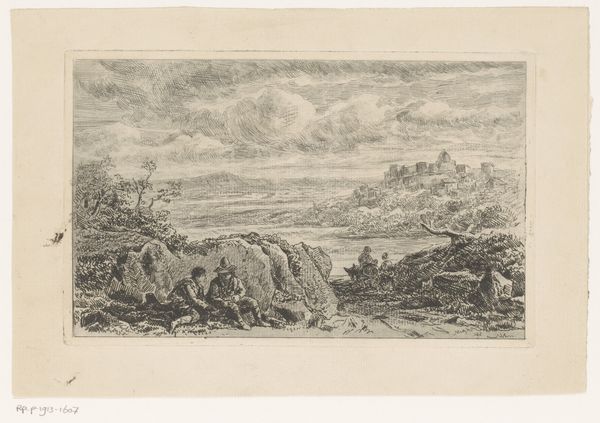
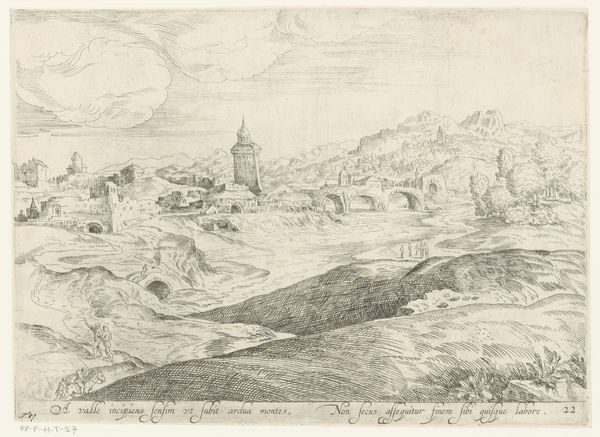
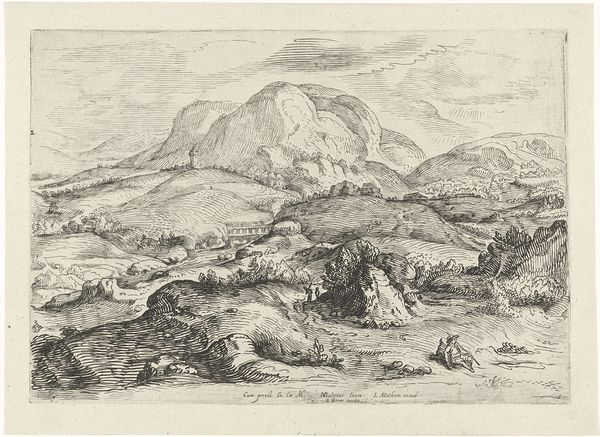
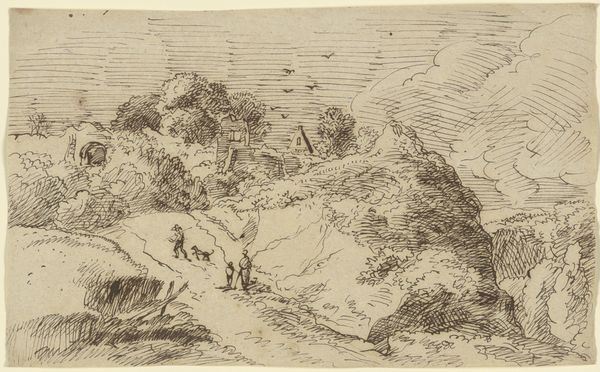
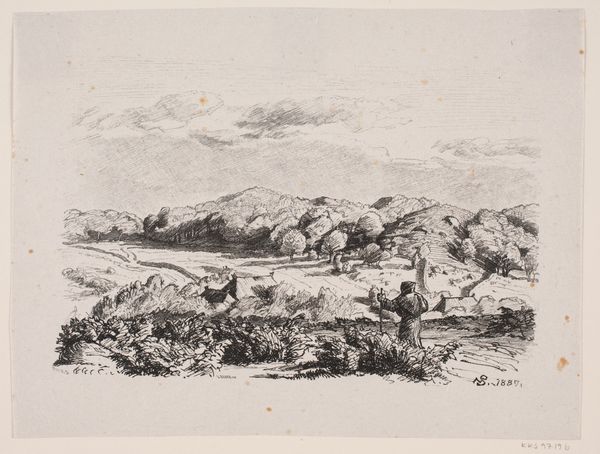
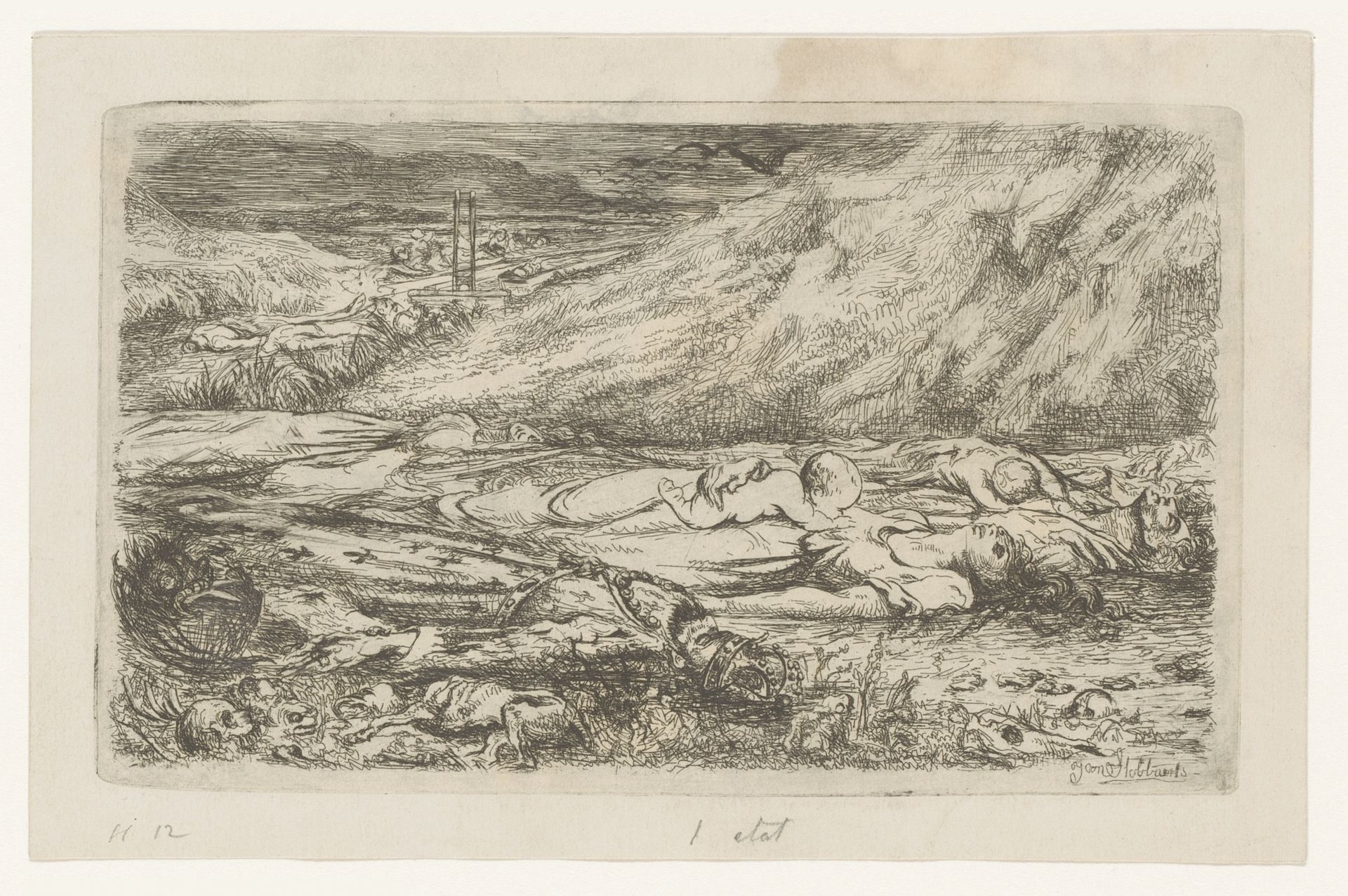
Jan Stobbaerts etched this bleak landscape, filled with bodies, including a mother and child, and what appears to be a king. Note the guilotine perched on a hilltop in the background. The guilotine became a symbol of revolutionary justice, but also of indiscriminate state-sponsored violence. The child clinging to the mother becomes a pietà, echoing the many depictions of Mary holding the dead Christ. This motif transcends its religious origins, becoming a universal symbol of grief, and perhaps of the disruption of the natural order. The image evokes powerful emotions tied to death and mourning, engaging viewers on a primal, subconscious level. As we reflect on the symbols, remember that their meanings evolve. Like a snake shedding its skin, the symbol continues its non-linear, cyclical progression through our collective consciousness.
Landschap met lichamen waaronder dat van een vrouw met baby en een koning
1848 - 1879

Artwork details
- Dimensions
- height 98 mm, width 162 mm
- Copyright
- Rijks Museum: Open Domain
Comments
Share your thoughts
About this artwork
Jan Stobbaerts etched this bleak landscape, filled with bodies, including a mother and child, and what appears to be a king. Note the guilotine perched on a hilltop in the background. The guilotine became a symbol of revolutionary justice, but also of indiscriminate state-sponsored violence. The child clinging to the mother becomes a pietà, echoing the many depictions of Mary holding the dead Christ. This motif transcends its religious origins, becoming a universal symbol of grief, and perhaps of the disruption of the natural order. The image evokes powerful emotions tied to death and mourning, engaging viewers on a primal, subconscious level. As we reflect on the symbols, remember that their meanings evolve. Like a snake shedding its skin, the symbol continues its non-linear, cyclical progression through our collective consciousness.
Comments
Share your thoughts