About this artwork
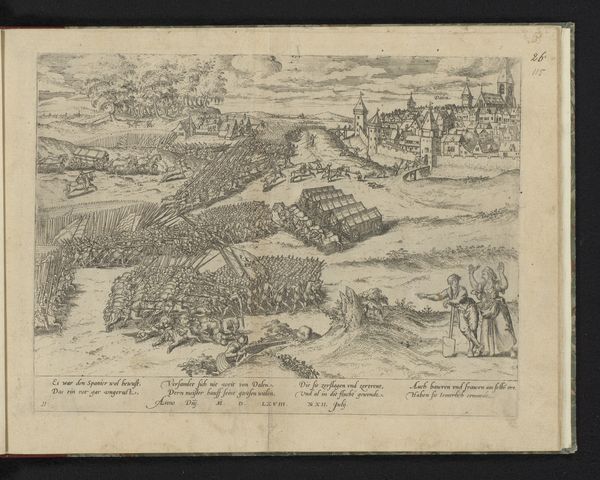
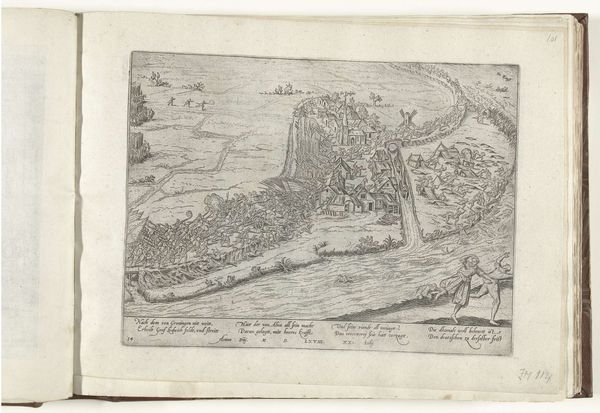
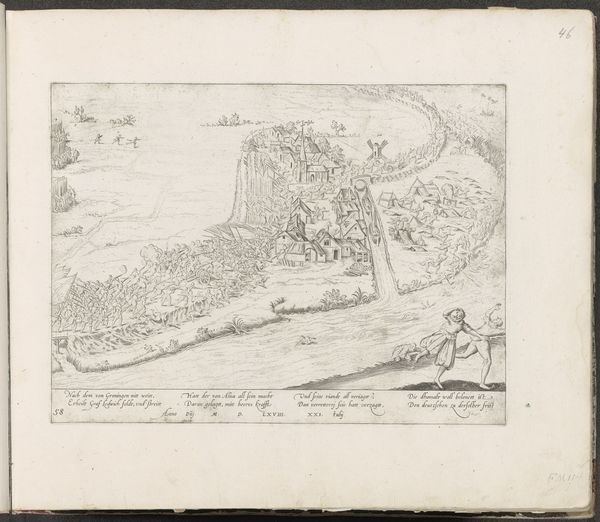
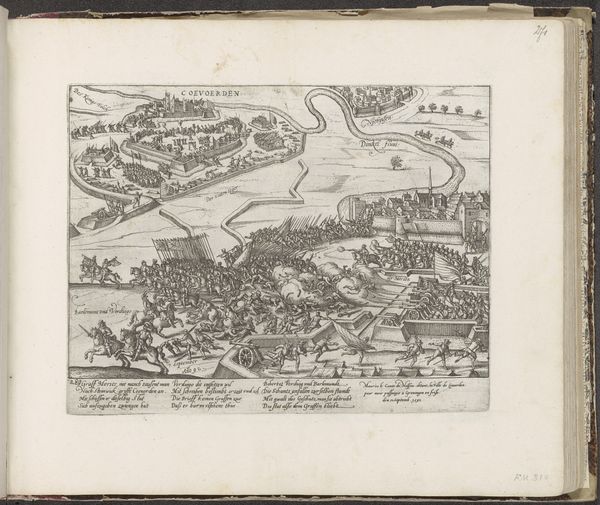
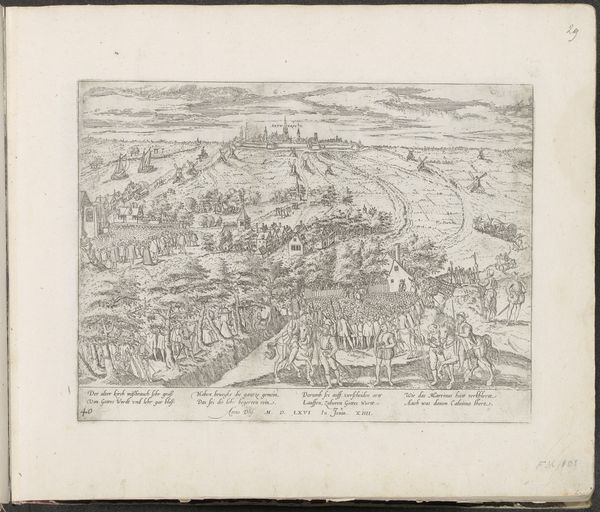
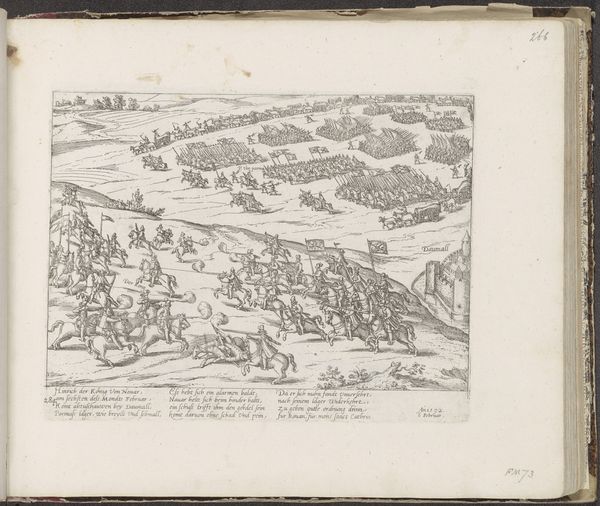
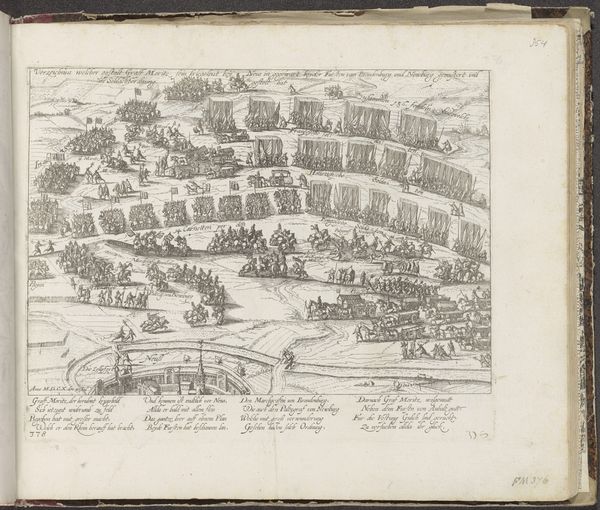
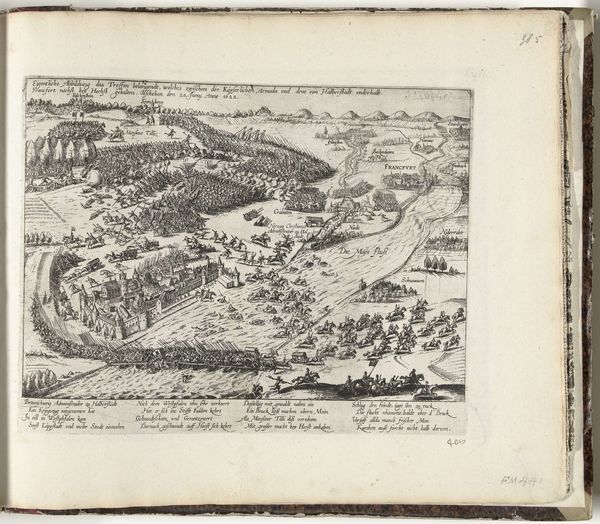
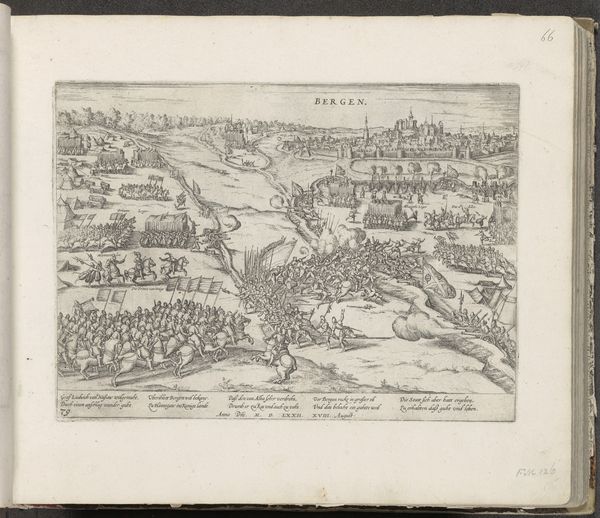
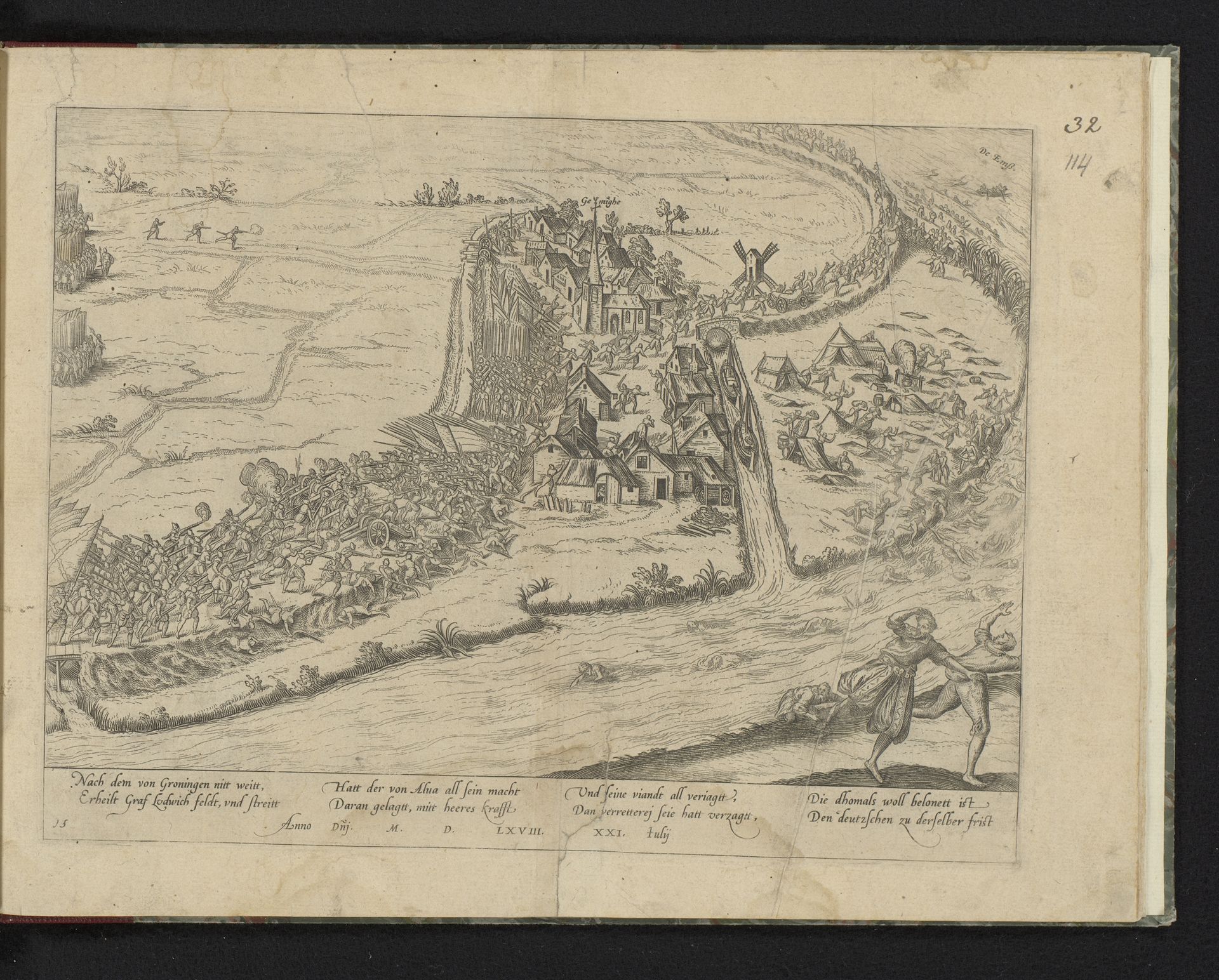
Editor: This is "Slag bij Jemmingen, 1568," or "Battle of Jemmingen, 1568," a print made by Frans Hogenberg around 1568-1570. It looks like an engraving, and it depicts quite a chaotic scene, presumably the battle. The level of detail is really striking. How do you interpret this work in the context of its time? Curator: Looking at this print, I’m immediately drawn to the way Hogenberg visualizes power and conflict within a very specific socio-political context. Consider the backdrop of the Eighty Years' War: a revolt against the Habsburg rule, deeply rooted in religious and economic grievances. Editor: Right, so this isn’t just a battle scene, but a representation of a pivotal moment in a larger struggle for Dutch independence? Curator: Precisely. The print, therefore, functions as propaganda. Who does it aim to valorize, and at whose expense? Notice the detailed depiction of the landscape versus the generalized portrayal of the bodies engaged in combat. How might that contribute to the narrative being constructed? It almost diminishes individual suffering in service of a larger territorial claim. Editor: That’s a powerful point. It’s like the land itself becomes a symbol of freedom, overshadowing the human cost of the battle. Do you think that Hogenberg’s choice of printmaking – a medium capable of mass production – reinforces this propagandistic intent? Curator: Absolutely. The accessibility of prints allowed for widespread dissemination of specific viewpoints. We need to critically examine whose perspectives were amplified and whose were silenced during this period of conflict. Thinking about issues of representation and visibility, who benefits from this retelling? Editor: This makes me see the piece in a totally new light! I was just focused on the composition. Now I recognize its embedded politics. Curator: Exactly. Analyzing art through a socio-political lens allows us to decode its layers of meaning.

Artwork details
- Medium
- print, engraving
- Dimensions
- height 210 mm, width 278 mm
- Location
- Rijksmuseum
- Copyright
- Rijks Museum: Open Domain
Tags
landscape
history-painting
northern-renaissance
engraving
Comments
No comments
About this artwork
Editor: This is "Slag bij Jemmingen, 1568," or "Battle of Jemmingen, 1568," a print made by Frans Hogenberg around 1568-1570. It looks like an engraving, and it depicts quite a chaotic scene, presumably the battle. The level of detail is really striking. How do you interpret this work in the context of its time? Curator: Looking at this print, I’m immediately drawn to the way Hogenberg visualizes power and conflict within a very specific socio-political context. Consider the backdrop of the Eighty Years' War: a revolt against the Habsburg rule, deeply rooted in religious and economic grievances. Editor: Right, so this isn’t just a battle scene, but a representation of a pivotal moment in a larger struggle for Dutch independence? Curator: Precisely. The print, therefore, functions as propaganda. Who does it aim to valorize, and at whose expense? Notice the detailed depiction of the landscape versus the generalized portrayal of the bodies engaged in combat. How might that contribute to the narrative being constructed? It almost diminishes individual suffering in service of a larger territorial claim. Editor: That’s a powerful point. It’s like the land itself becomes a symbol of freedom, overshadowing the human cost of the battle. Do you think that Hogenberg’s choice of printmaking – a medium capable of mass production – reinforces this propagandistic intent? Curator: Absolutely. The accessibility of prints allowed for widespread dissemination of specific viewpoints. We need to critically examine whose perspectives were amplified and whose were silenced during this period of conflict. Thinking about issues of representation and visibility, who benefits from this retelling? Editor: This makes me see the piece in a totally new light! I was just focused on the composition. Now I recognize its embedded politics. Curator: Exactly. Analyzing art through a socio-political lens allows us to decode its layers of meaning.
Comments
No comments