1747 - 1757
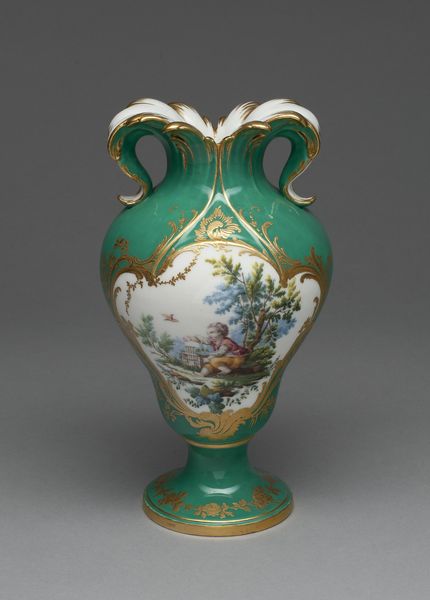
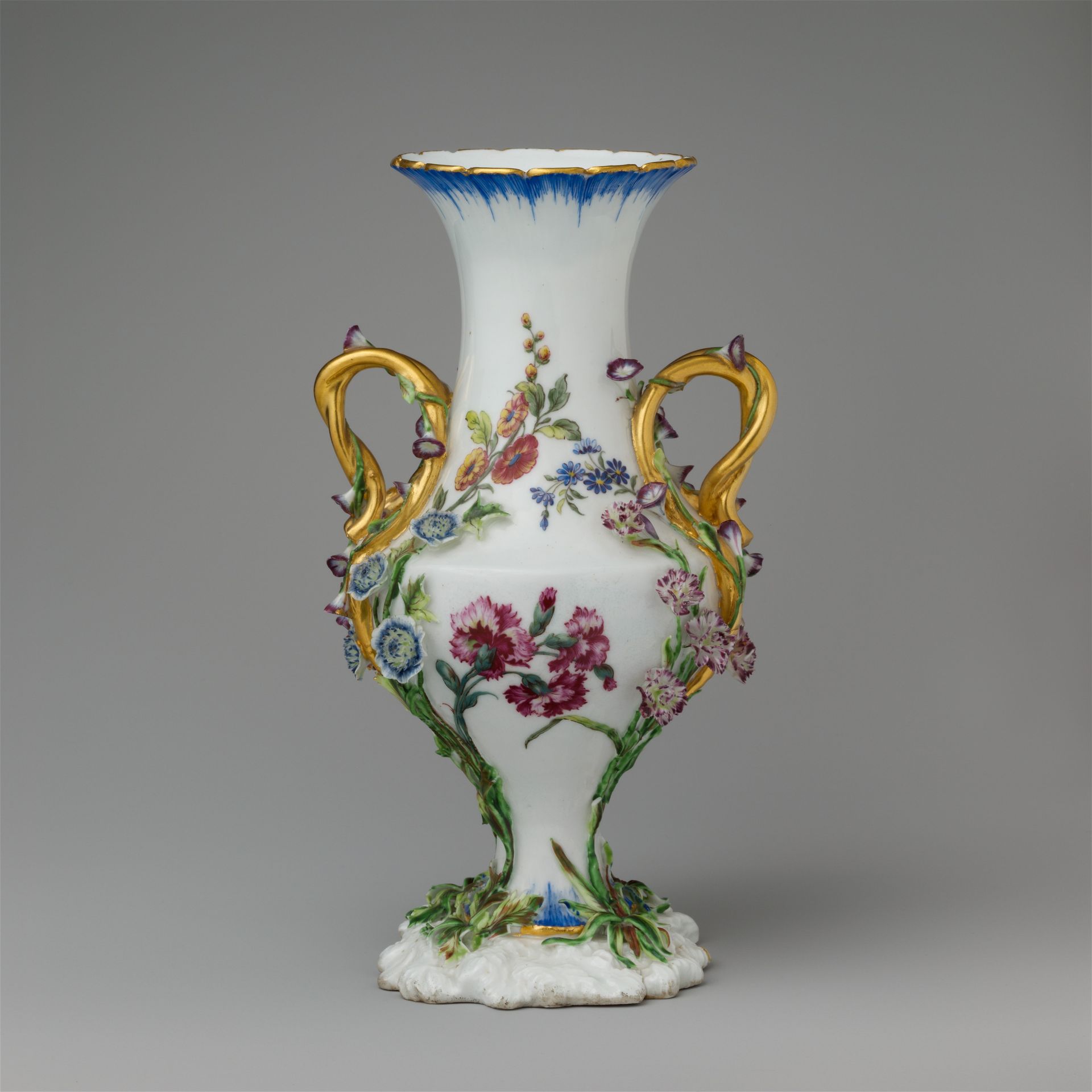
Vase (urne Duplessis) (one of a group of three)

Vincennes Manufactory
1740 - 1756
The Metropolitan Museum of Art
Metropolitan Museum of Art, New York, NYListen to curator's interpretation
Curatorial notes
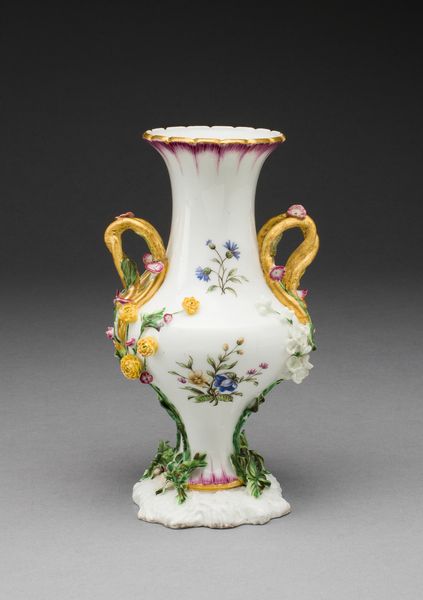
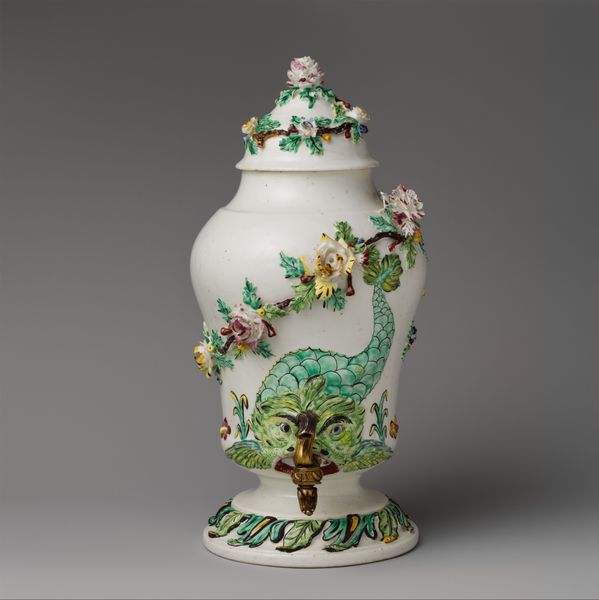
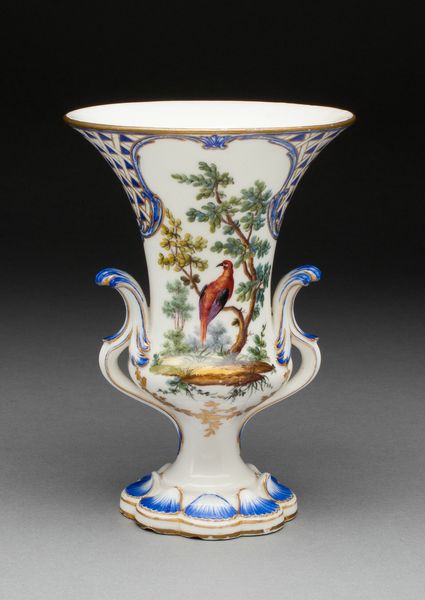
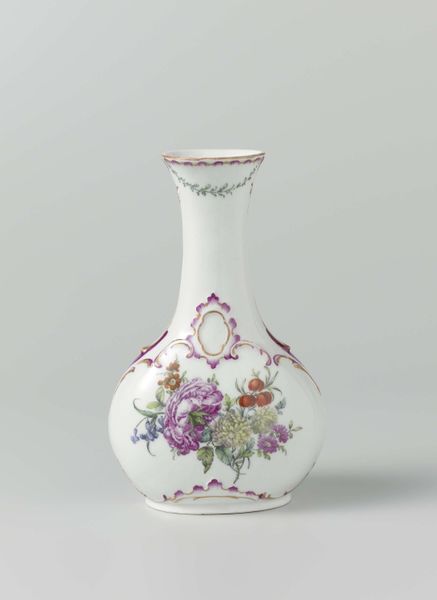
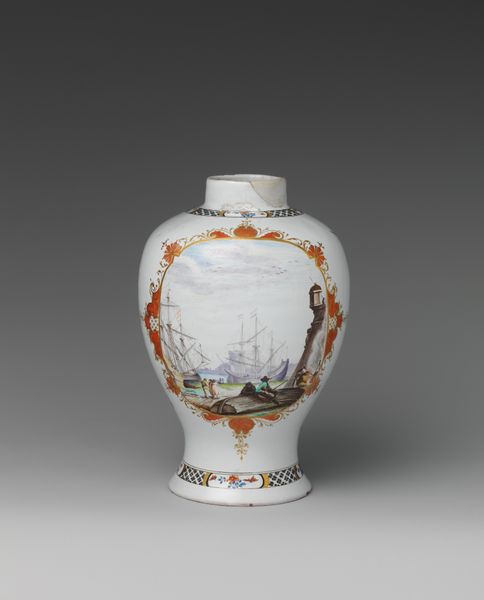
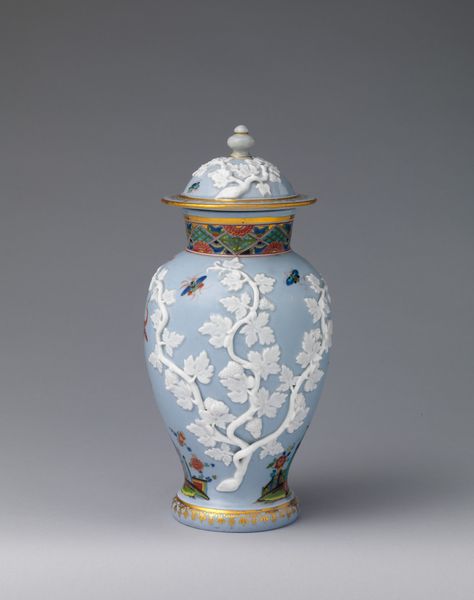
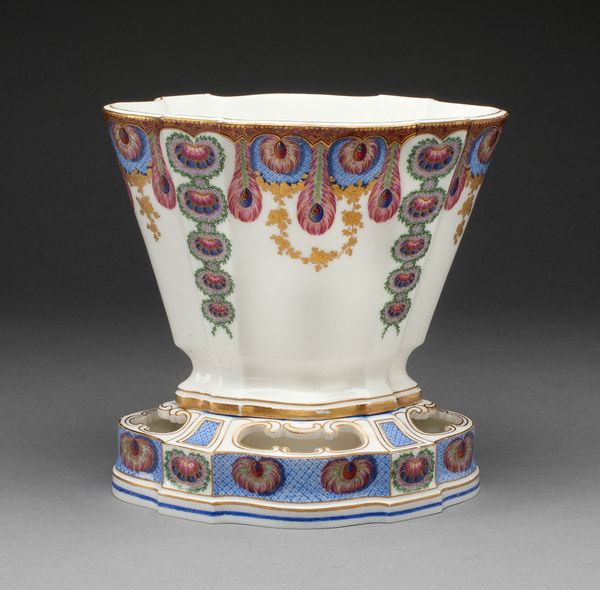
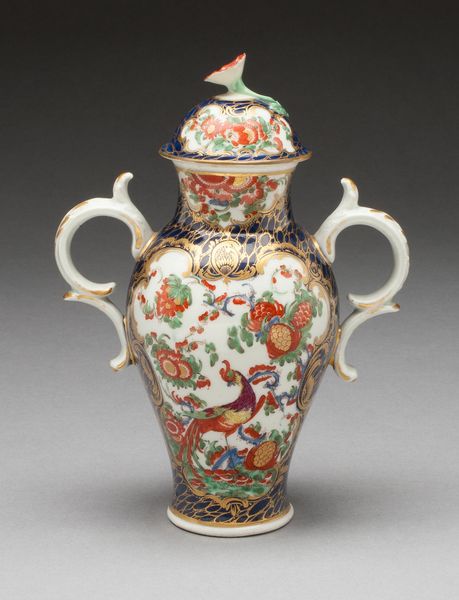
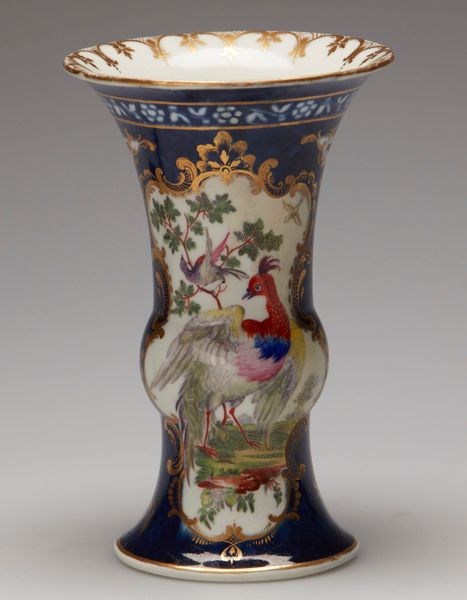
This porcelain vase, known as "urne Duplessis", was crafted at the Vincennes Manufactory in France, sometime between 1740 and 1756. During this period, porcelain production was a source of national pride and royal patronage. These vases reflected the rococo style, characterized by elegance, grace, and an embrace of natural motifs. Its visual splendor served as a symbol of power and wealth within the French court, where elite artistic production like this reinforced social stratification. The vase’s delicate floral decorations, however, also reveal a subtle tension. As the French aristocracy enjoyed the artifice of courtly life, the seeds of revolution were being sown. Porcelain, often associated with femininity and fragility, stands in stark contrast to the revolutionary fervor that would soon grip France. It's as if this vase is whispering secrets of a world on the brink of transformation.