About this artwork
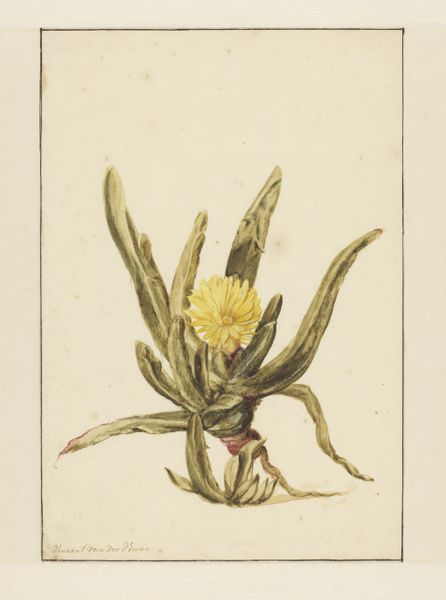
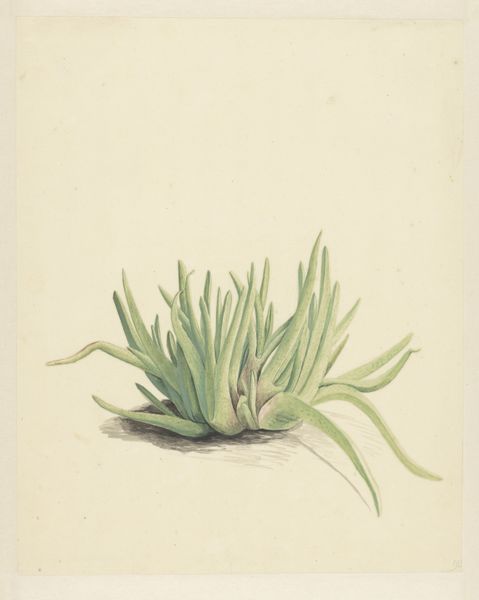
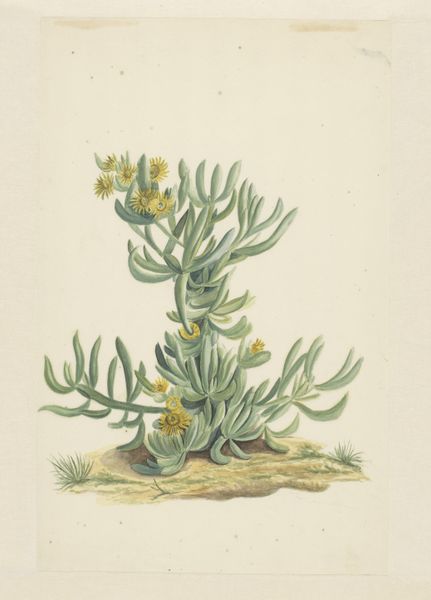
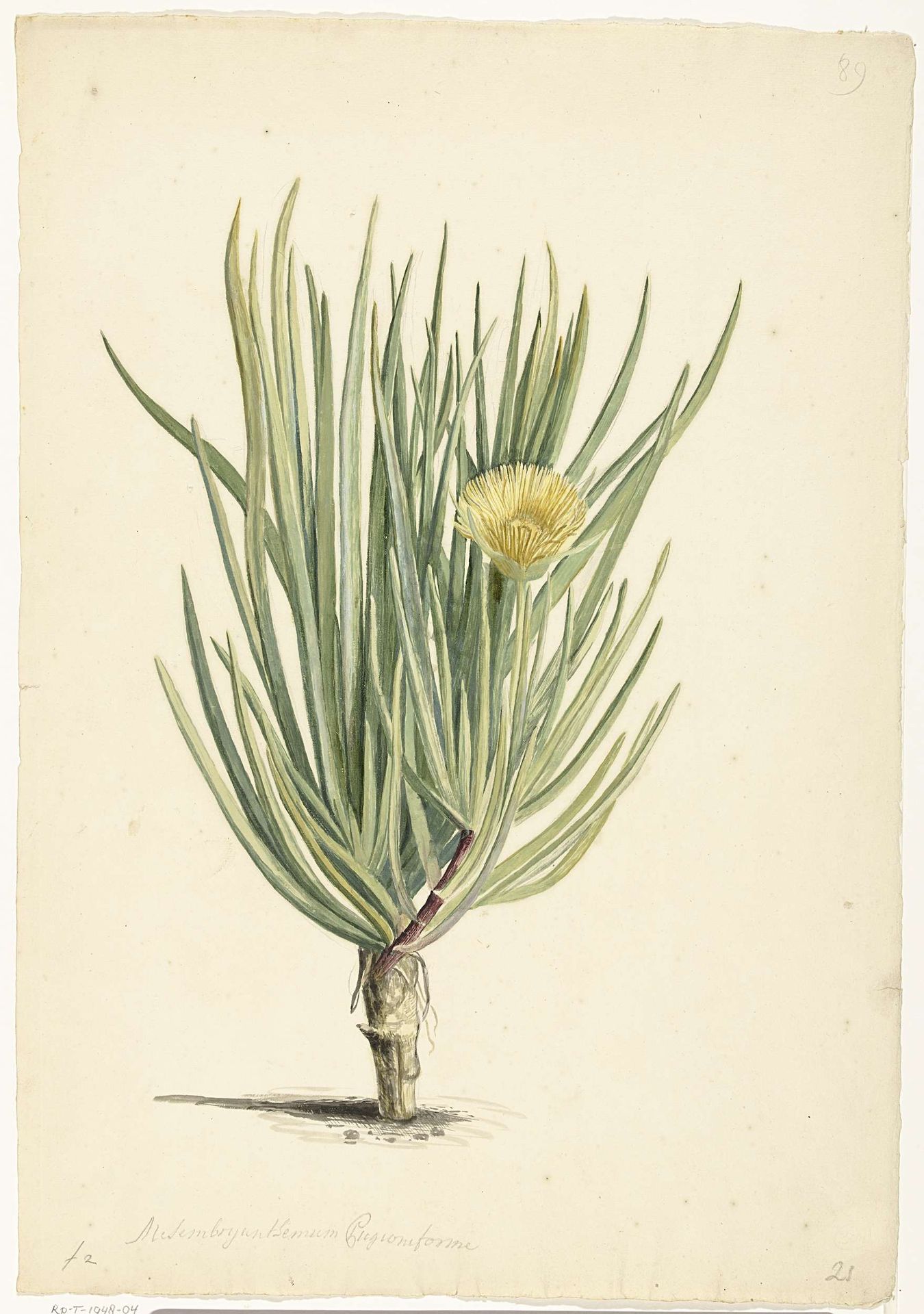
Laurens van der Vinne made this watercolor of a Narrow-leaved Iceplant in Bloom. The artist deployed traditional materials of paper, watercolor and ink to depict the plant with remarkable delicacy. Look closely, and you can see the layered washes of green and yellow which give the leaves their succulent, almost three-dimensional form. The plant is presented in meticulous detail, and you get a sense of the labor involved in this precise work, which borders on scientific illustration. In the 17th century, the Dutch became avid collectors of exotic specimens, particularly botanical ones, from their colonies around the world. Rendered with such care, watercolors like this one served not just as documentation, but also as a celebration of nature’s bounty, and human curiosity. It invites us to reflect on the relationship between art, science, and global exchange.
Narrow-leaved Iceplant in Bloom 1668 - 1729

Laurens Vincentsz. van der Vinne
1658 - 1729Location
RijksmuseumArtwork details
- Medium
- drawing, watercolor
- Dimensions
- height 530 mm, width 370 mm
- Location
- Rijksmuseum
- Copyright
- Rijks Museum: Open Domain
Tags
drawing
dutch-golden-age
botanical illustration
watercolor
botanical drawing
watercolour illustration
realism
Comments
No comments
About this artwork
Laurens van der Vinne made this watercolor of a Narrow-leaved Iceplant in Bloom. The artist deployed traditional materials of paper, watercolor and ink to depict the plant with remarkable delicacy. Look closely, and you can see the layered washes of green and yellow which give the leaves their succulent, almost three-dimensional form. The plant is presented in meticulous detail, and you get a sense of the labor involved in this precise work, which borders on scientific illustration. In the 17th century, the Dutch became avid collectors of exotic specimens, particularly botanical ones, from their colonies around the world. Rendered with such care, watercolors like this one served not just as documentation, but also as a celebration of nature’s bounty, and human curiosity. It invites us to reflect on the relationship between art, science, and global exchange.
Comments
No comments