About this artwork
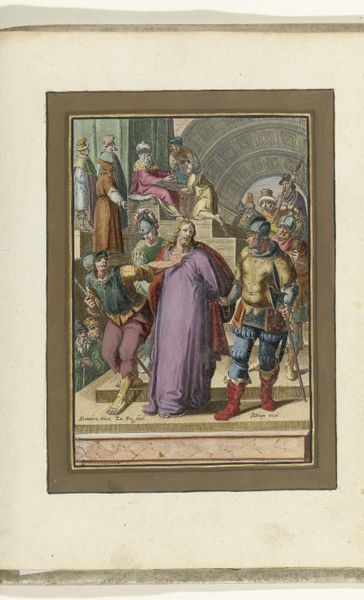
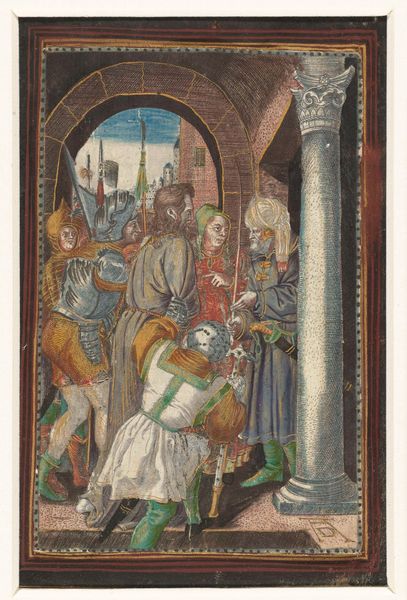
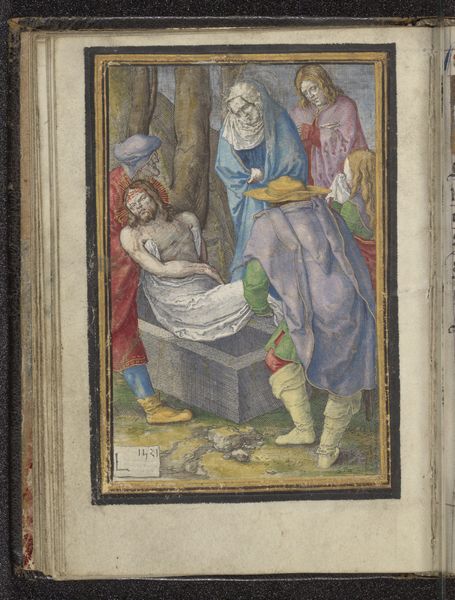
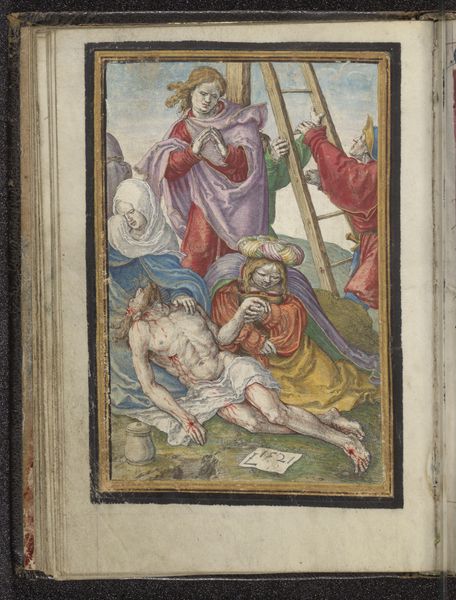
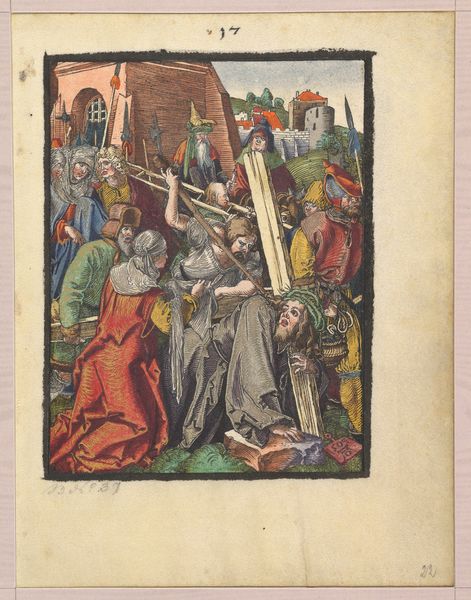
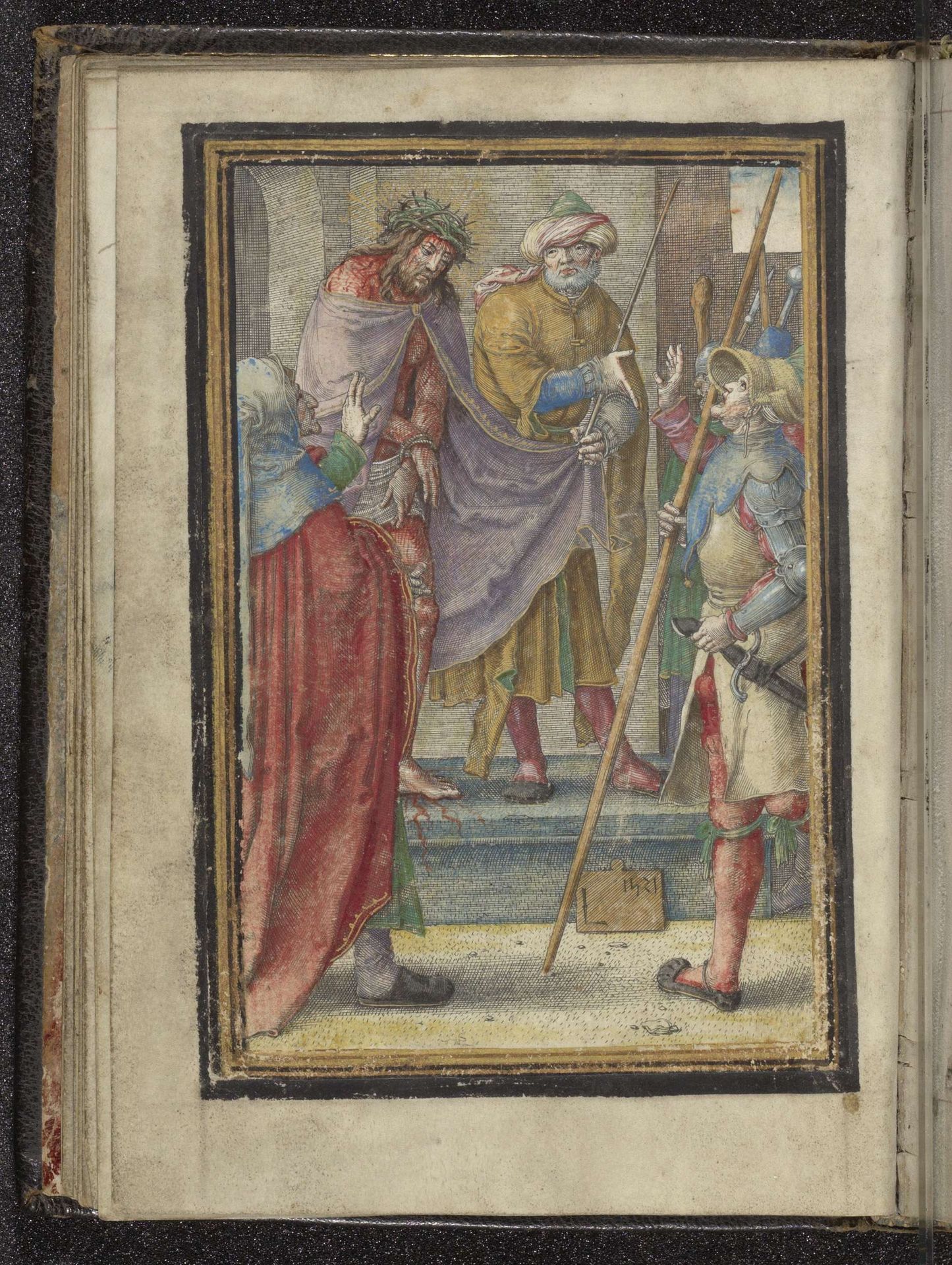
Lucas van Leyden created this small but powerful rendering of ‘Ecce Homo’ using pen and watercolor. It's a composition dominated by vertical lines, which emphasize the human figures and direct our gaze upwards. The color palette is muted, lending a somber tone, with subtle gradations that suggest a sense of depth. Van Leyden challenges traditional representations of religious narrative through his focus on the immediate and corporeal. Christ is not idealized but presented with a stark realism that engages with the physical and emotional aspects of suffering. Notice how the composition invites the viewer to engage directly with the scene. The figures are arranged almost theatrically, prompting questions about the nature of justice, authority, and human cruelty. The date '1533' inscribed on a stone in the foreground, serves as a stark reminder of the historicity and ongoing relevance of this scene. It underscores the artwork's intent not just as a depiction of the past but as a mirror reflecting present human conditions.
Christus aan het volk getoond (Ecce Homo) 1521

Lucas van Leyden
1494 - 1533Location
RijksmuseumArtwork details
- Medium
- drawing, coloured-pencil, watercolor
- Dimensions
- height 149 mm, width 105 mm
- Location
- Rijksmuseum
- Copyright
- Rijks Museum: Open Domain
Tags
drawing
coloured-pencil
water colours
narrative-art
figuration
watercolor
coloured pencil
history-painting
northern-renaissance
Comments
No comments
About this artwork
Lucas van Leyden created this small but powerful rendering of ‘Ecce Homo’ using pen and watercolor. It's a composition dominated by vertical lines, which emphasize the human figures and direct our gaze upwards. The color palette is muted, lending a somber tone, with subtle gradations that suggest a sense of depth. Van Leyden challenges traditional representations of religious narrative through his focus on the immediate and corporeal. Christ is not idealized but presented with a stark realism that engages with the physical and emotional aspects of suffering. Notice how the composition invites the viewer to engage directly with the scene. The figures are arranged almost theatrically, prompting questions about the nature of justice, authority, and human cruelty. The date '1533' inscribed on a stone in the foreground, serves as a stark reminder of the historicity and ongoing relevance of this scene. It underscores the artwork's intent not just as a depiction of the past but as a mirror reflecting present human conditions.
Comments
No comments