About this artwork
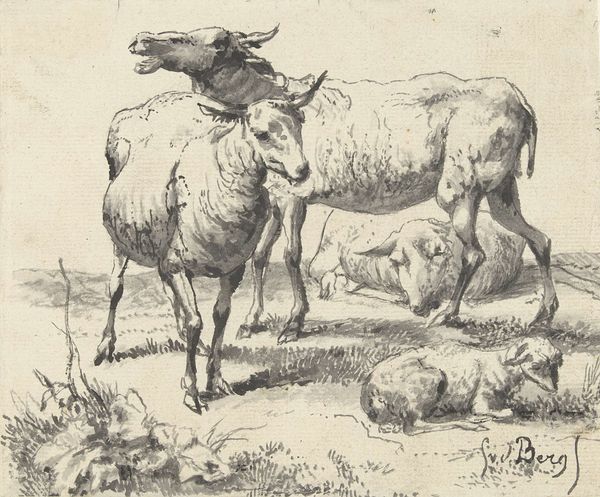
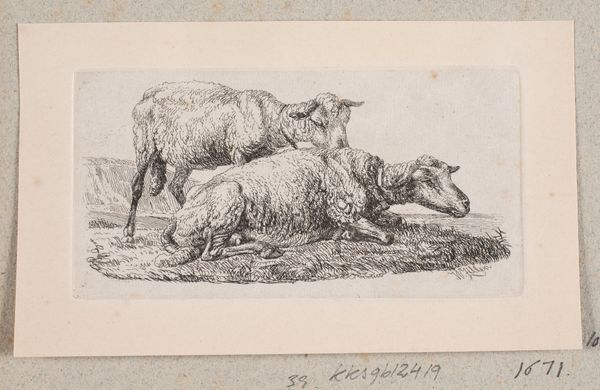
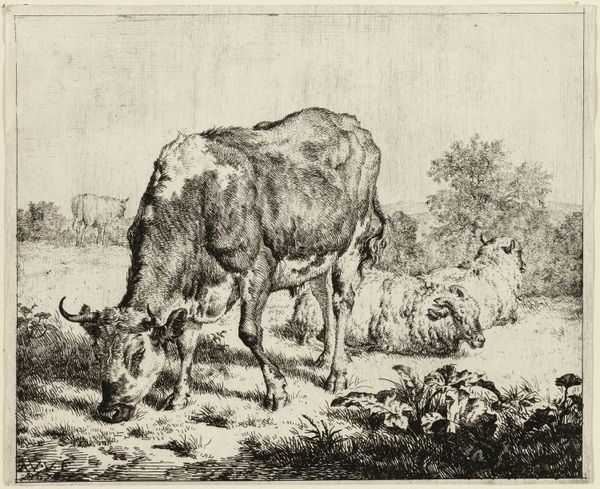
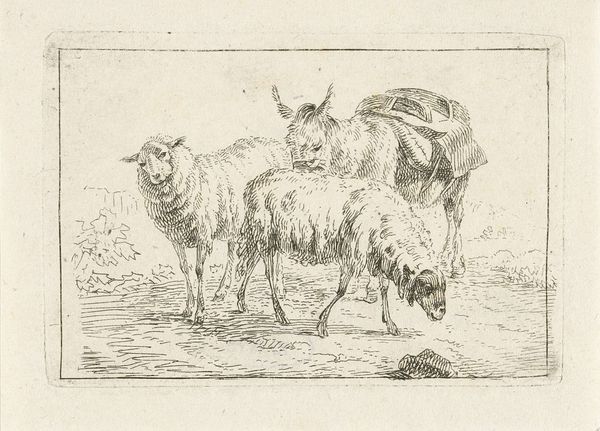
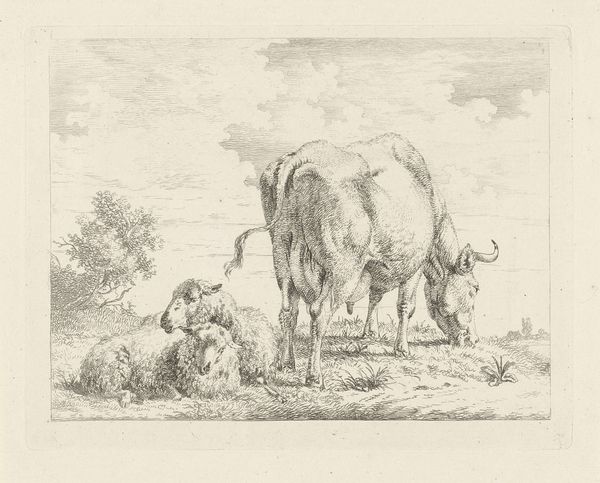
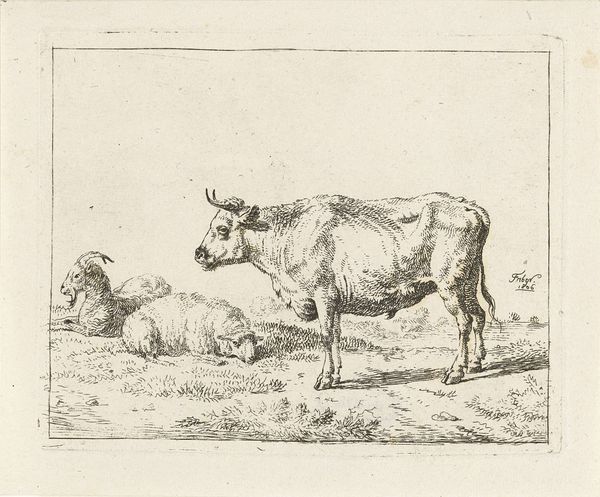
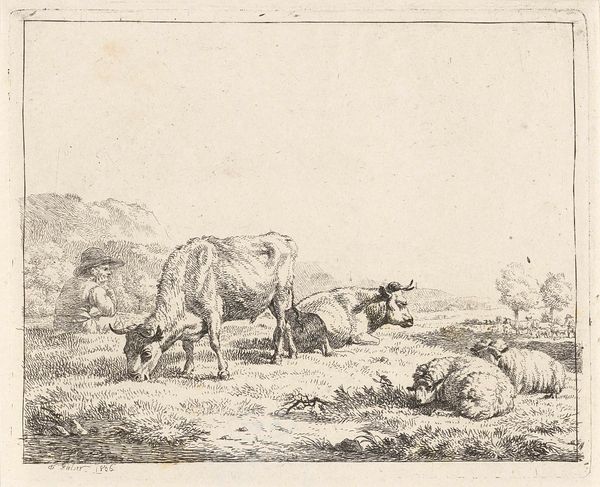
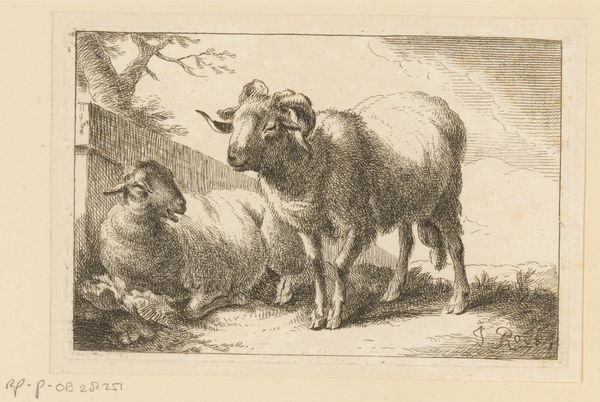
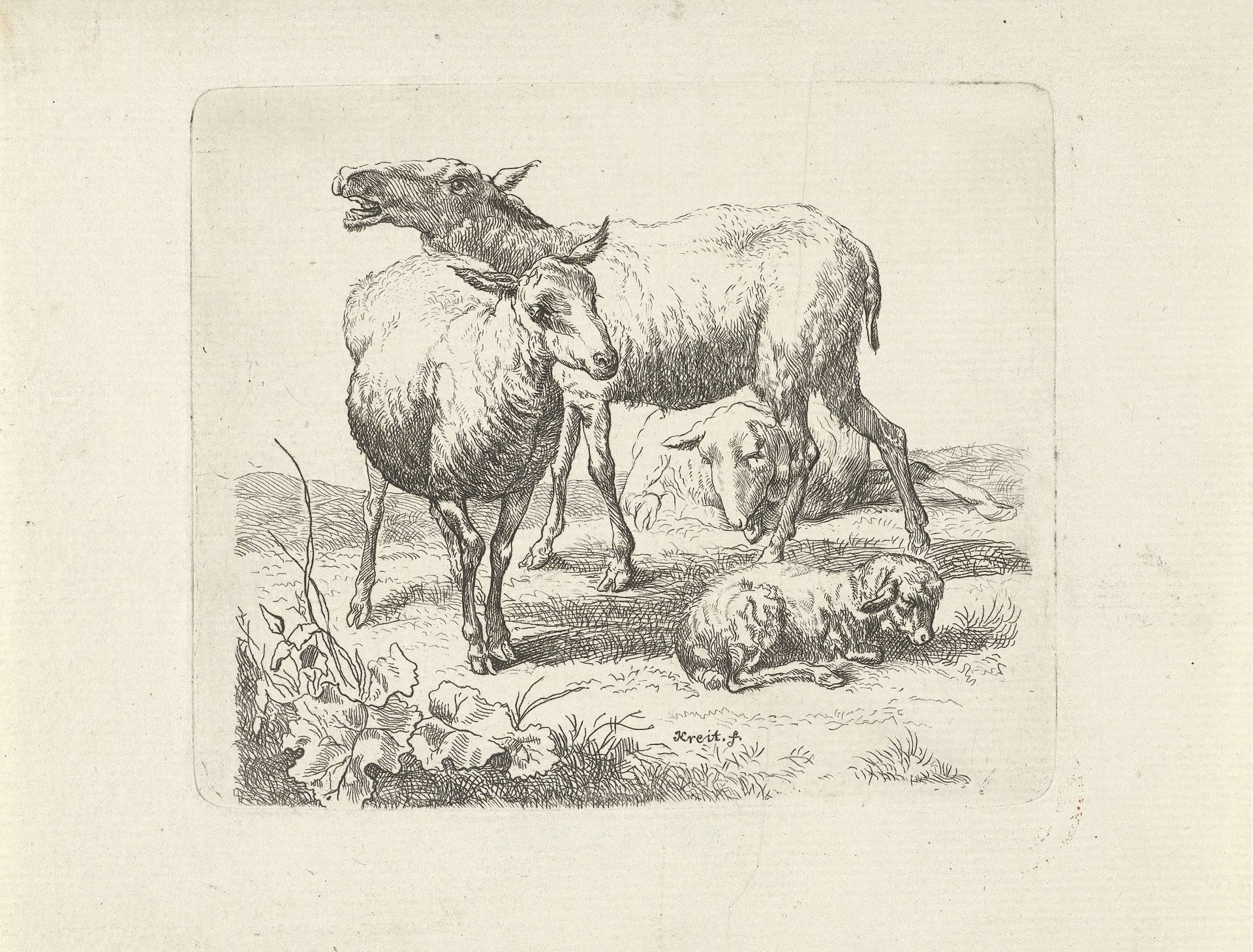
This pastoral scene by Ernst Ludwig Creite presents us with three sheep and a lamb in a meadow, rendered in delicate lines. At first glance, it may seem a simple depiction of rural life. Yet, the sheep, especially the lamb, carry a profound symbolic weight. Throughout history, the lamb has been a symbol of innocence, purity, and sacrifice, deeply rooted in religious and mythological narratives. Consider the "Agnus Dei," the Lamb of God, a symbol of Christ's sacrifice in Christian iconography. This motif is not confined to Christian art; it echoes in pagan traditions where lambs were offered to the gods. The image of a sheep, particularly a lamb, evokes a sense of vulnerability and gentleness, engaging viewers on a deep, subconscious level. This collective memory, passed down through generations, imbues the image with a powerful emotional charge. The image of the sheep is a palimpsest, a layering of meanings that continues to evolve. What was once a symbol of sacrifice has also become associated with peace and tranquility. A cyclical progression that resurfaces, evolves, and takes on new meanings across time.

Artwork details
- Medium
- print, etching
- Dimensions
- height 98 mm, width 117 mm
- Copyright
- Rijks Museum: Open Domain
Tags
Comments
Share your thoughts
About this artwork
This pastoral scene by Ernst Ludwig Creite presents us with three sheep and a lamb in a meadow, rendered in delicate lines. At first glance, it may seem a simple depiction of rural life. Yet, the sheep, especially the lamb, carry a profound symbolic weight. Throughout history, the lamb has been a symbol of innocence, purity, and sacrifice, deeply rooted in religious and mythological narratives. Consider the "Agnus Dei," the Lamb of God, a symbol of Christ's sacrifice in Christian iconography. This motif is not confined to Christian art; it echoes in pagan traditions where lambs were offered to the gods. The image of a sheep, particularly a lamb, evokes a sense of vulnerability and gentleness, engaging viewers on a deep, subconscious level. This collective memory, passed down through generations, imbues the image with a powerful emotional charge. The image of the sheep is a palimpsest, a layering of meanings that continues to evolve. What was once a symbol of sacrifice has also become associated with peace and tranquility. A cyclical progression that resurfaces, evolves, and takes on new meanings across time.
Comments
Share your thoughts