About this artwork
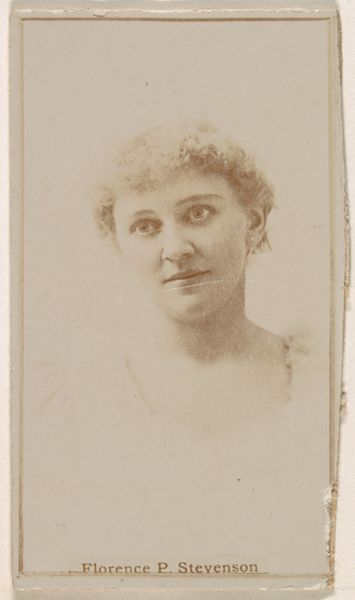
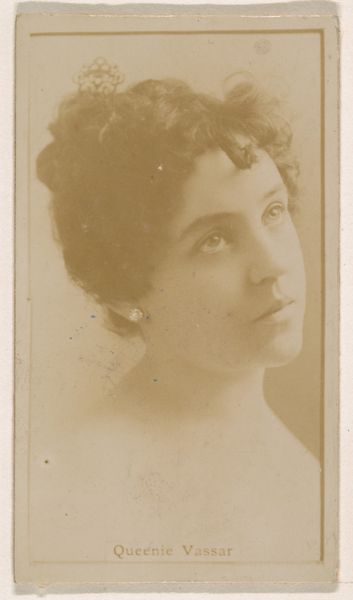
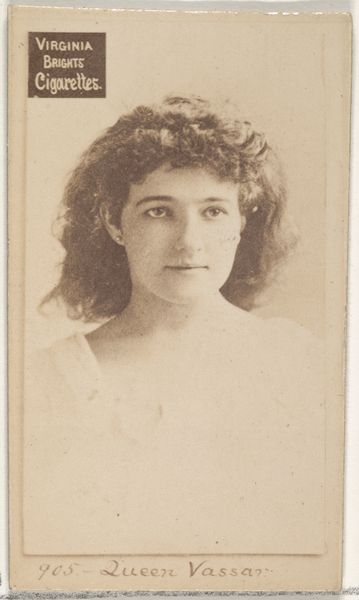
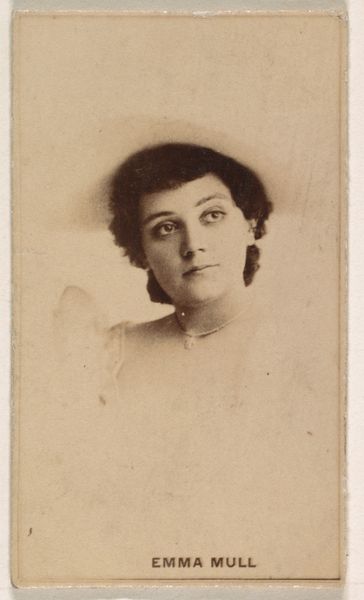
This photograph of Cora Macy comes from a series of actresses, printed around the turn of the 20th century by Kinney Brothers Tobacco Company as promotional material for Sweet Caporal Cigarettes. Photographs like this one, known as trade cards, were made using industrial processes like lithography and mass printing, reflecting the rise of consumer culture and the mass media industry. The sepia tone is a result of the developing chemicals used on the photosensitive paper at the time. The thin card stock paper is mechanically cut, which has resulted in its slightly irregular edges. While mass-produced, these cards offer a fascinating insight into the cult of celebrity and the relationship between consumerism and popular culture. The image is not only a portrait of an actress, but also a commodity circulated as a marketing tool. Appreciating this photograph in its material and social context helps to bridge the gap between commercial ephemera and artistic expression.
Cora Macy, from the Actresses series (N245) issued by Kinney Brothers to promote Sweet Caporal Cigarettes 1890

Kinney Brothers Tobacco Company
1869 - 2011
The Metropolitan Museum of Art
Metropolitan Museum of Art, New York, NYArtwork details
- Medium
- print, photography, albumen-print
- Dimensions
- Sheet: 2 1/2 × 1 7/16 in. (6.4 × 3.7 cm)
- Location
- Metropolitan Museum of Art, New York, NY
- Copyright
- Public Domain
Tags
portrait
photography
albumen-print
Comments
No comments
About this artwork
This photograph of Cora Macy comes from a series of actresses, printed around the turn of the 20th century by Kinney Brothers Tobacco Company as promotional material for Sweet Caporal Cigarettes. Photographs like this one, known as trade cards, were made using industrial processes like lithography and mass printing, reflecting the rise of consumer culture and the mass media industry. The sepia tone is a result of the developing chemicals used on the photosensitive paper at the time. The thin card stock paper is mechanically cut, which has resulted in its slightly irregular edges. While mass-produced, these cards offer a fascinating insight into the cult of celebrity and the relationship between consumerism and popular culture. The image is not only a portrait of an actress, but also a commodity circulated as a marketing tool. Appreciating this photograph in its material and social context helps to bridge the gap between commercial ephemera and artistic expression.
Comments
No comments