About this artwork
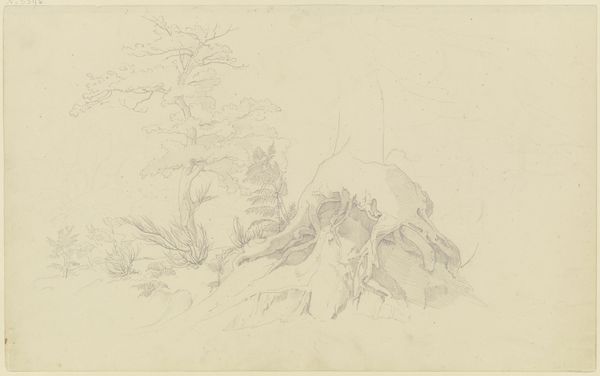
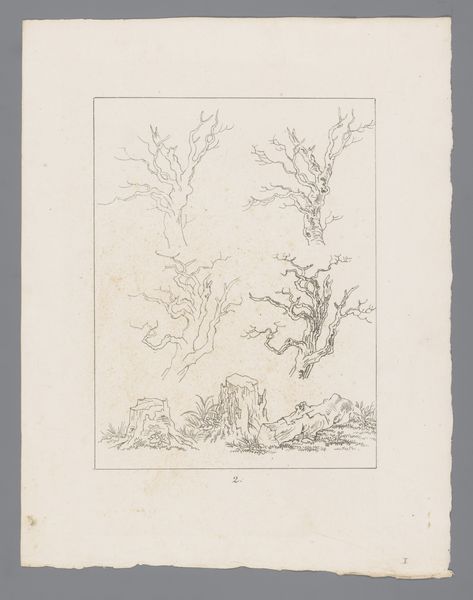
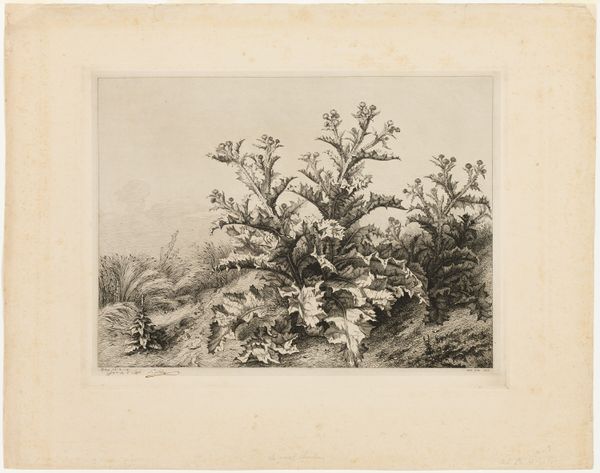
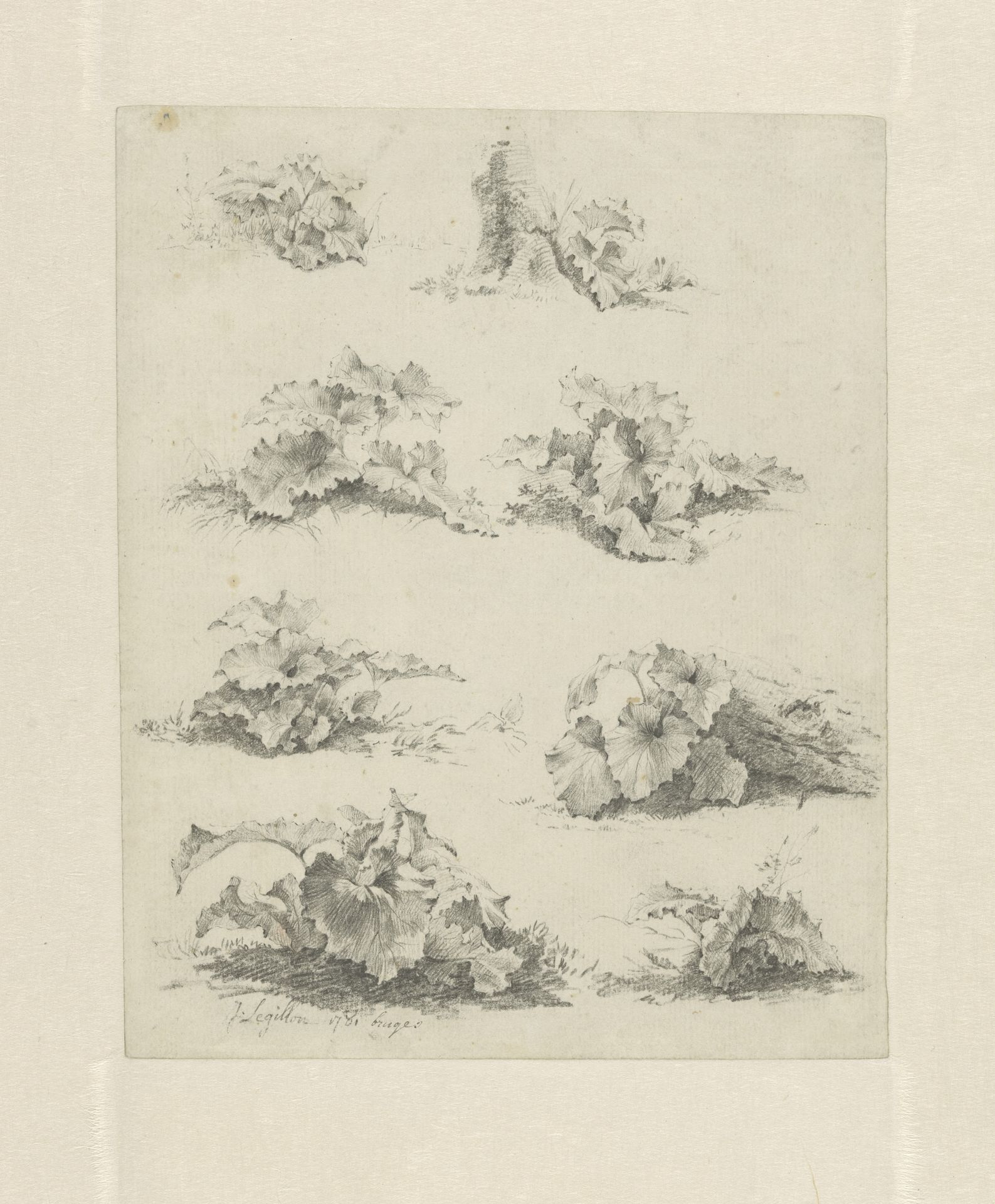
Jan Frans Legillon's delicate drawing offers us eight studies of broad-leafed, low-lying plants. These botanical sketches, rendered in subtle shades, echo a rich visual lexicon. The plants' large leaves and ground-hugging forms suggest not just botanical accuracy, but deeper symbolic resonance. Consider how similar foliage appears in medieval tapestries, symbolizing the "locus amoenus," an idyllic retreat. These depictions often represented purity and spiritual solace. Yet, such symbols are never static. They are imbued with new meaning over time. The intimate observation of nature recalls the Renaissance's rediscovery of the classical world. I'm reminded of the acanthus leaves ornamenting ancient Roman architecture. From emblems of resilience and growth, they found their way into the visual language of power. Here, Legillon's detailed study evokes a sense of quiet contemplation. The image is rooted in our shared human experience of nature's beauty.

Artwork details
- Medium
- drawing, paper, pencil
- Dimensions
- height 232 mm, width 186 mm
- Copyright
- Rijks Museum: Open Domain
Tags
Comments
Share your thoughts
About this artwork
Jan Frans Legillon's delicate drawing offers us eight studies of broad-leafed, low-lying plants. These botanical sketches, rendered in subtle shades, echo a rich visual lexicon. The plants' large leaves and ground-hugging forms suggest not just botanical accuracy, but deeper symbolic resonance. Consider how similar foliage appears in medieval tapestries, symbolizing the "locus amoenus," an idyllic retreat. These depictions often represented purity and spiritual solace. Yet, such symbols are never static. They are imbued with new meaning over time. The intimate observation of nature recalls the Renaissance's rediscovery of the classical world. I'm reminded of the acanthus leaves ornamenting ancient Roman architecture. From emblems of resilience and growth, they found their way into the visual language of power. Here, Legillon's detailed study evokes a sense of quiet contemplation. The image is rooted in our shared human experience of nature's beauty.
Comments
Share your thoughts