About this artwork
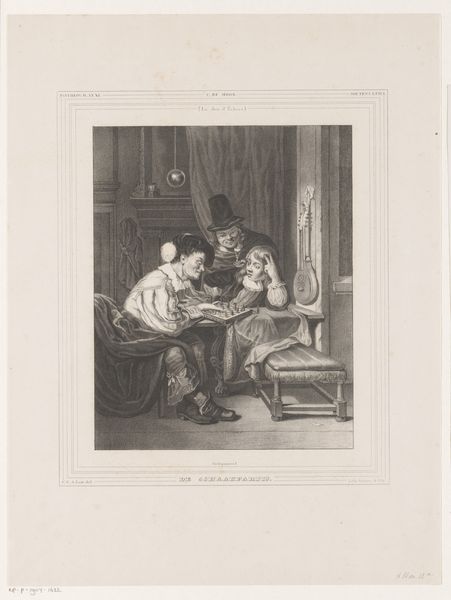
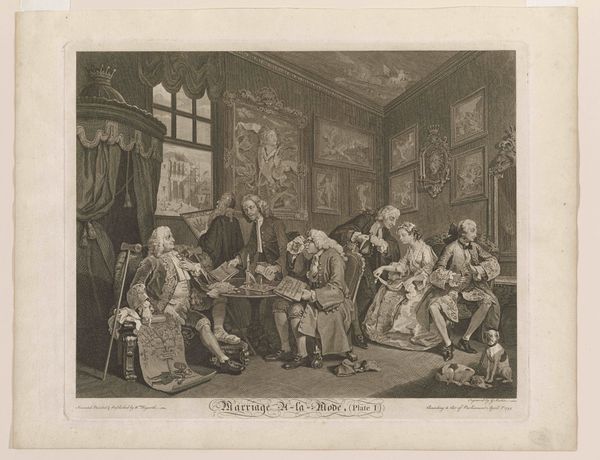
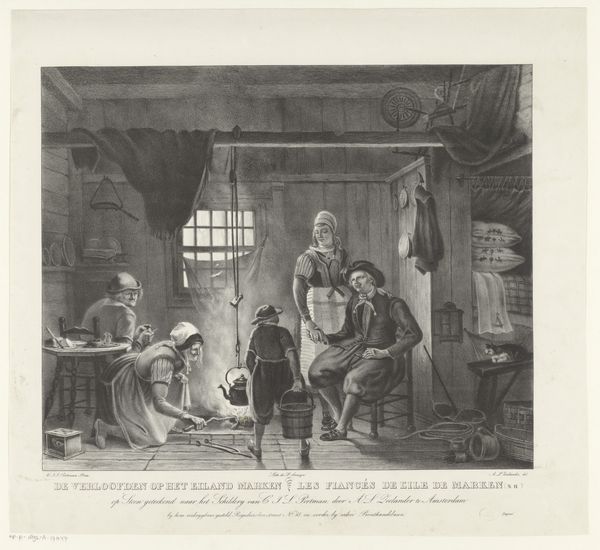
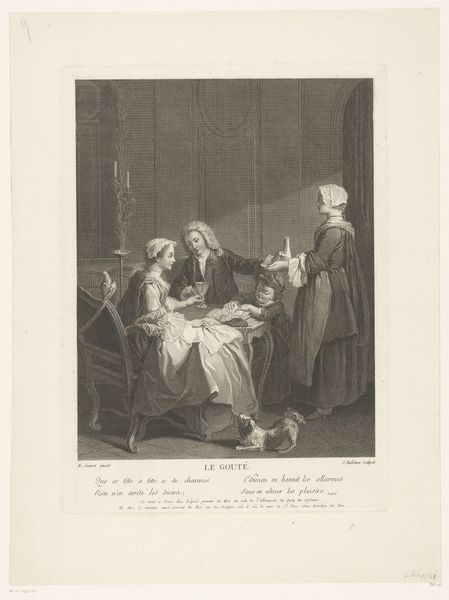
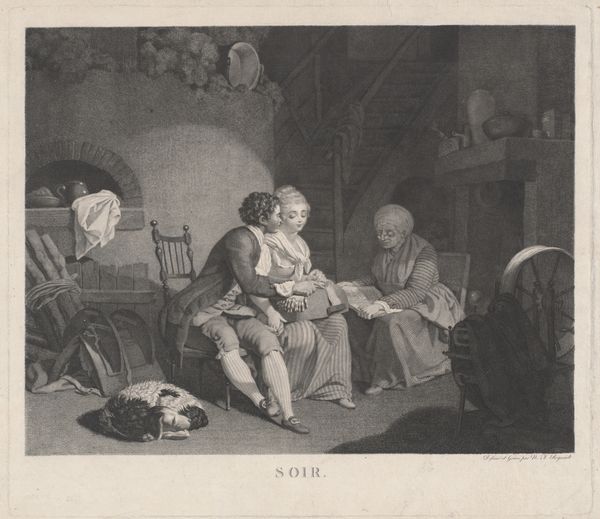
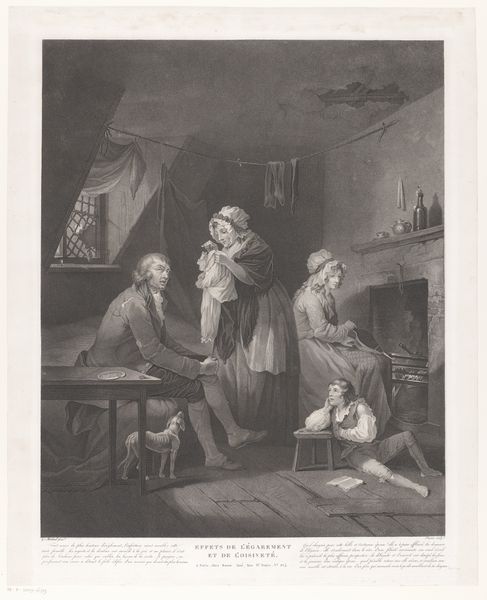
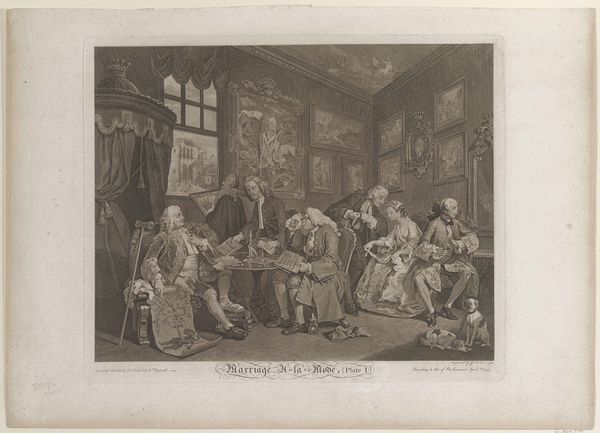
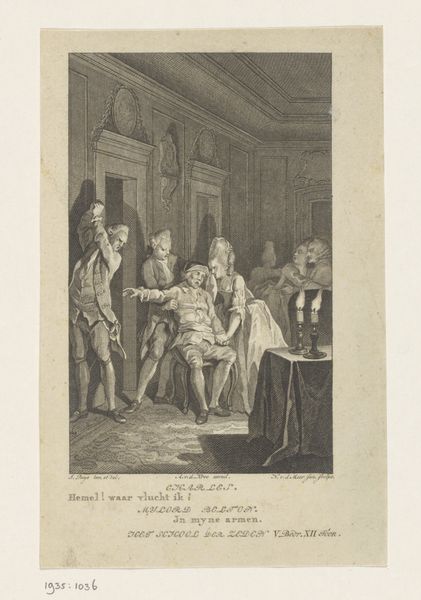
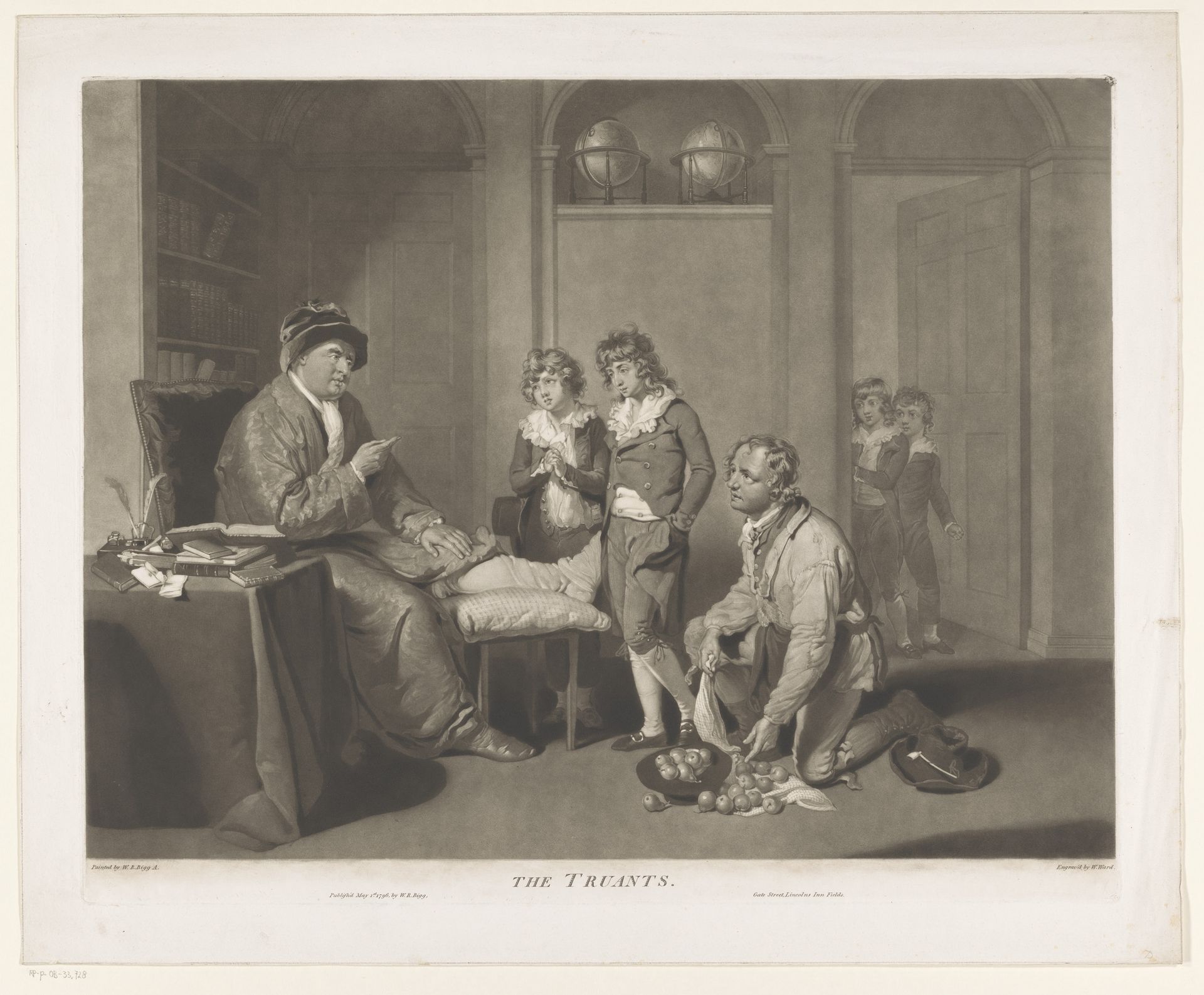
William Ward created this mezzotint titled 'Man berispt kinderen en een geknielde man met peren'–or 'The Truants'–sometime between 1766 and 1826. The image shows a schoolroom scene dominated by the contrast between the dark, imposing figure of the teacher and the lighter, more vulnerable figures of the children. Ward masterfully uses the mezzotint technique to create a rich tonal range, emphasizing texture and shadow to convey the scene's emotional weight. The composition is structured around a diagonal axis, from the teacher's pointed finger to the kneeling man, creating a dynamic tension that draws the viewer's eye through the narrative. Here, the pears scattered on the floor act as signs, revealing the truant's misdeeds but also destabilizing the power dynamic. Ward uses this to prompt us to question established meanings, reminding us that art doesn't offer singular meanings, but it's a site of constant reinterpretation.

Artwork details
- Dimensions
- height 480 mm, width 600 mm
- Copyright
- Rijks Museum: Open Domain
Tags
print photography
photo of handprinted image
wedding photograph
photo restoration
photo element
archive photography
historical photography
old-timey
19th century
celebration photography
Comments
No comments
About this artwork
William Ward created this mezzotint titled 'Man berispt kinderen en een geknielde man met peren'–or 'The Truants'–sometime between 1766 and 1826. The image shows a schoolroom scene dominated by the contrast between the dark, imposing figure of the teacher and the lighter, more vulnerable figures of the children. Ward masterfully uses the mezzotint technique to create a rich tonal range, emphasizing texture and shadow to convey the scene's emotional weight. The composition is structured around a diagonal axis, from the teacher's pointed finger to the kneeling man, creating a dynamic tension that draws the viewer's eye through the narrative. Here, the pears scattered on the floor act as signs, revealing the truant's misdeeds but also destabilizing the power dynamic. Ward uses this to prompt us to question established meanings, reminding us that art doesn't offer singular meanings, but it's a site of constant reinterpretation.
Comments
No comments