About this artwork
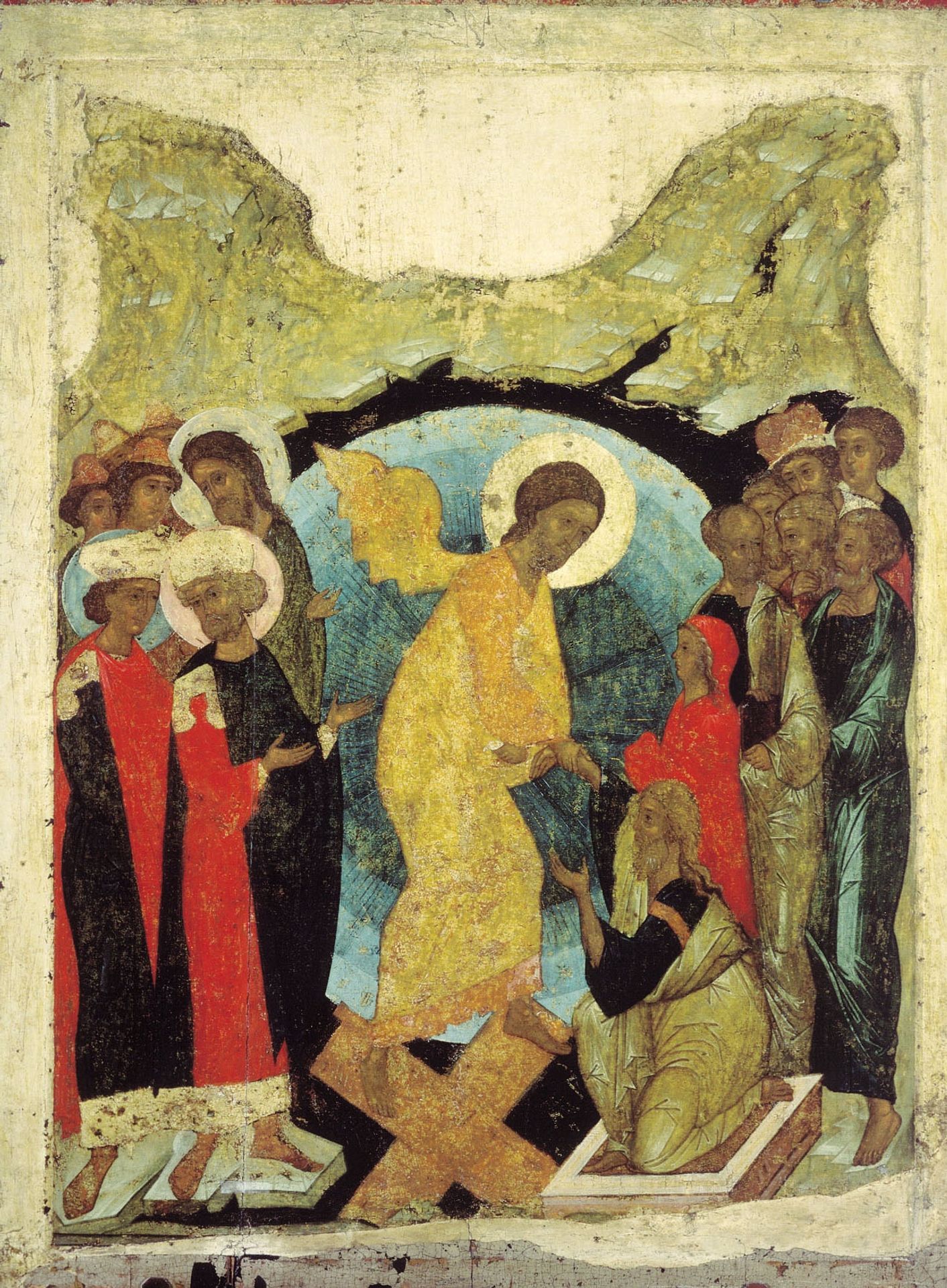
Andrei Rublev, around the 15th century, painted the "Harrowing of Hell," an image rich in symbolism that transcends its immediate context. Here, Christ, radiant in divine light, descends into the underworld, breaking down the gates of hell, depicted as a shattered black void. This act of liberation carries echoes of ancient myths, from Persephone's return to the upper world to tales of heroes rescuing souls from the land of the dead. Notice how Christ pulls Adam and Eve from their tombs, a powerful gesture symbolizing the redemption of humanity. This motif reappears in countless depictions across time, yet its core message remains consistent: the triumph over death and the promise of salvation. The harrowing of hell speaks to our deepest fears and hopes. It serves as a potent reminder of the cyclical nature of life, death, and rebirth, a narrative that continues to resonate in our collective memory.
Harrowing of Hell
1408


Artwork details
- Medium
- tempera, painting
- Dimensions
- 124 x 94 cm
- Location
- Tretyakov Gallery, Moscow, Russia
- Copyright
- Public domain
Tags
byzantine-art
medieval
narrative-art
tempera
painting
figuration
oil painting
jesus-christ
christianity
history-painting
Comments
Be the first to share your thoughts about this work.
About this artwork
Andrei Rublev, around the 15th century, painted the "Harrowing of Hell," an image rich in symbolism that transcends its immediate context. Here, Christ, radiant in divine light, descends into the underworld, breaking down the gates of hell, depicted as a shattered black void. This act of liberation carries echoes of ancient myths, from Persephone's return to the upper world to tales of heroes rescuing souls from the land of the dead. Notice how Christ pulls Adam and Eve from their tombs, a powerful gesture symbolizing the redemption of humanity. This motif reappears in countless depictions across time, yet its core message remains consistent: the triumph over death and the promise of salvation. The harrowing of hell speaks to our deepest fears and hopes. It serves as a potent reminder of the cyclical nature of life, death, and rebirth, a narrative that continues to resonate in our collective memory.
Comments
Be the first to share your thoughts about this work.