About this artwork
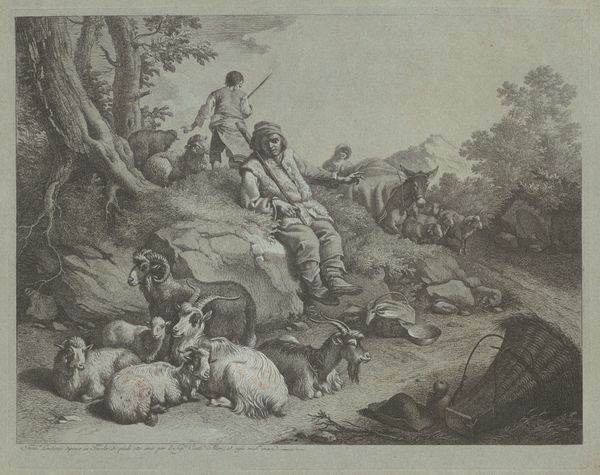
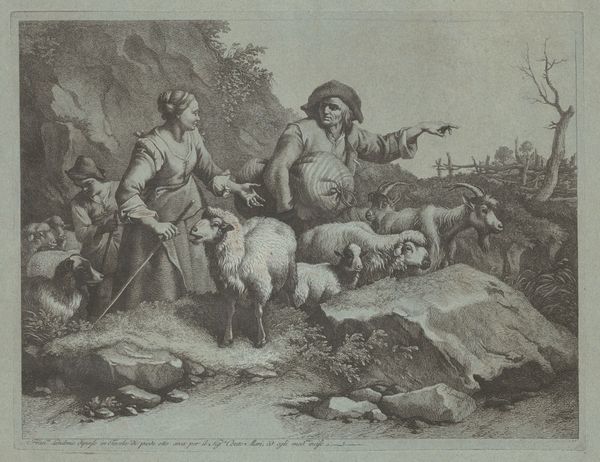
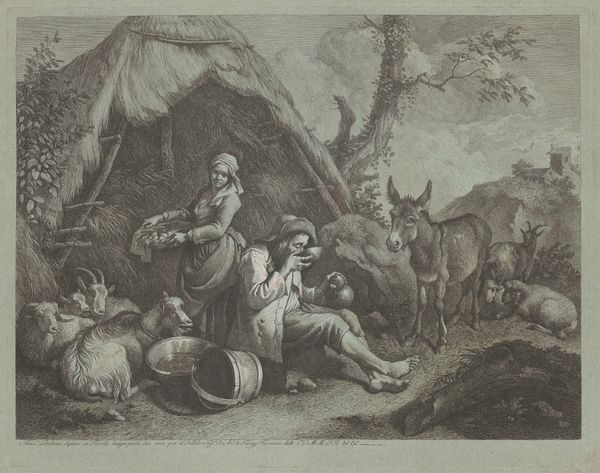
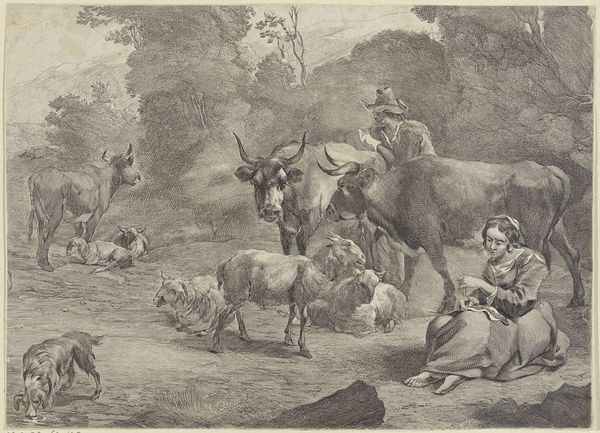
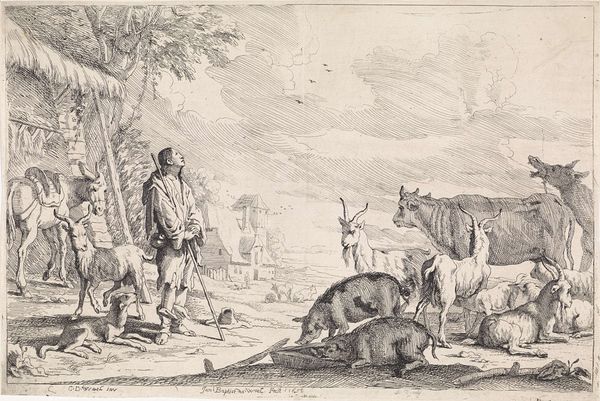
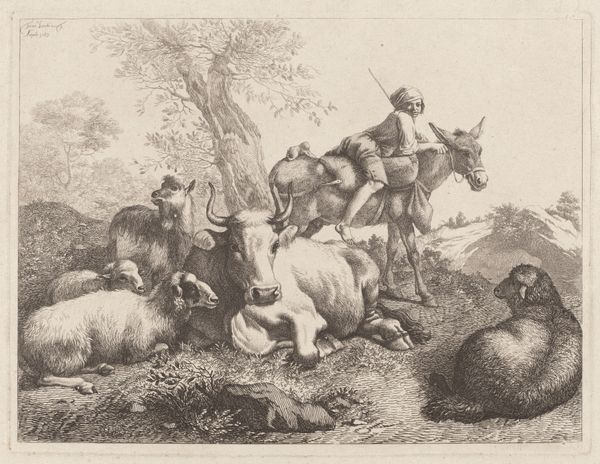
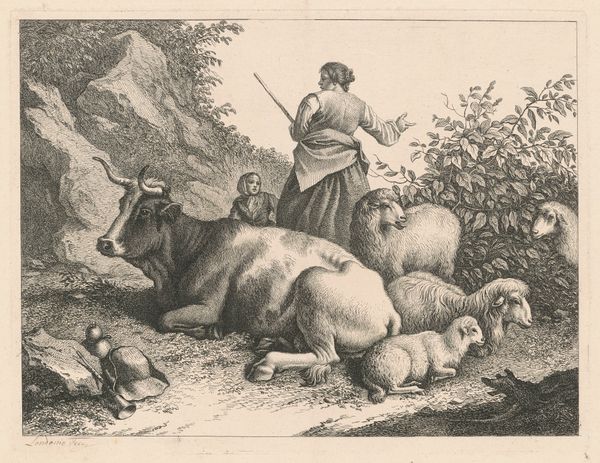
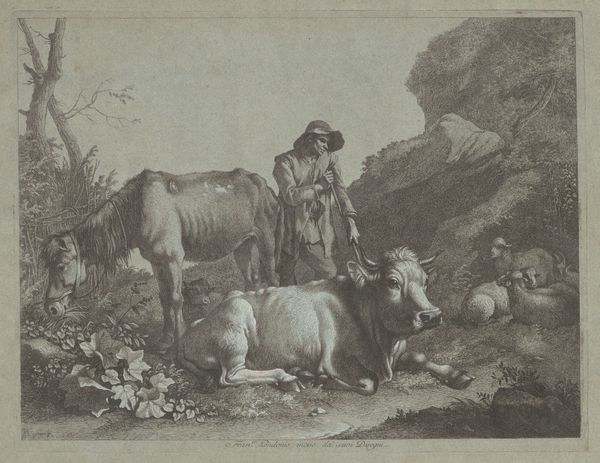
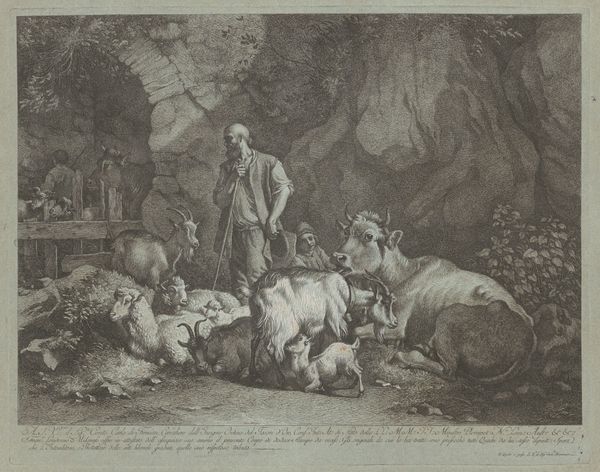
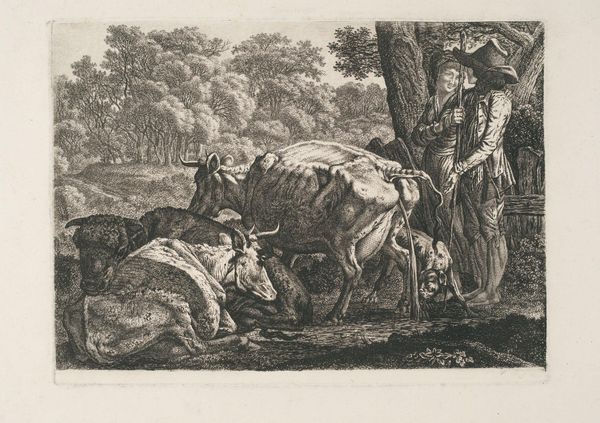
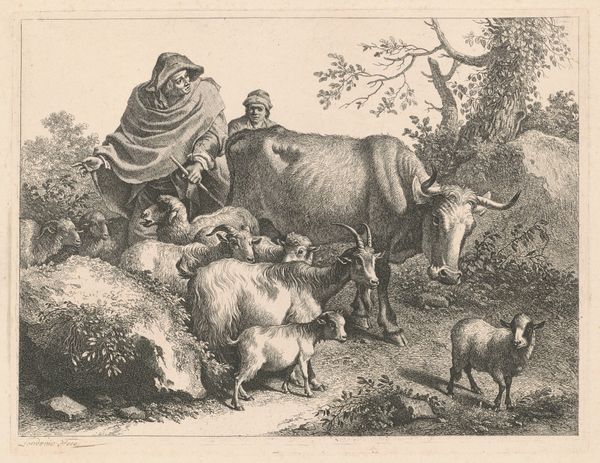
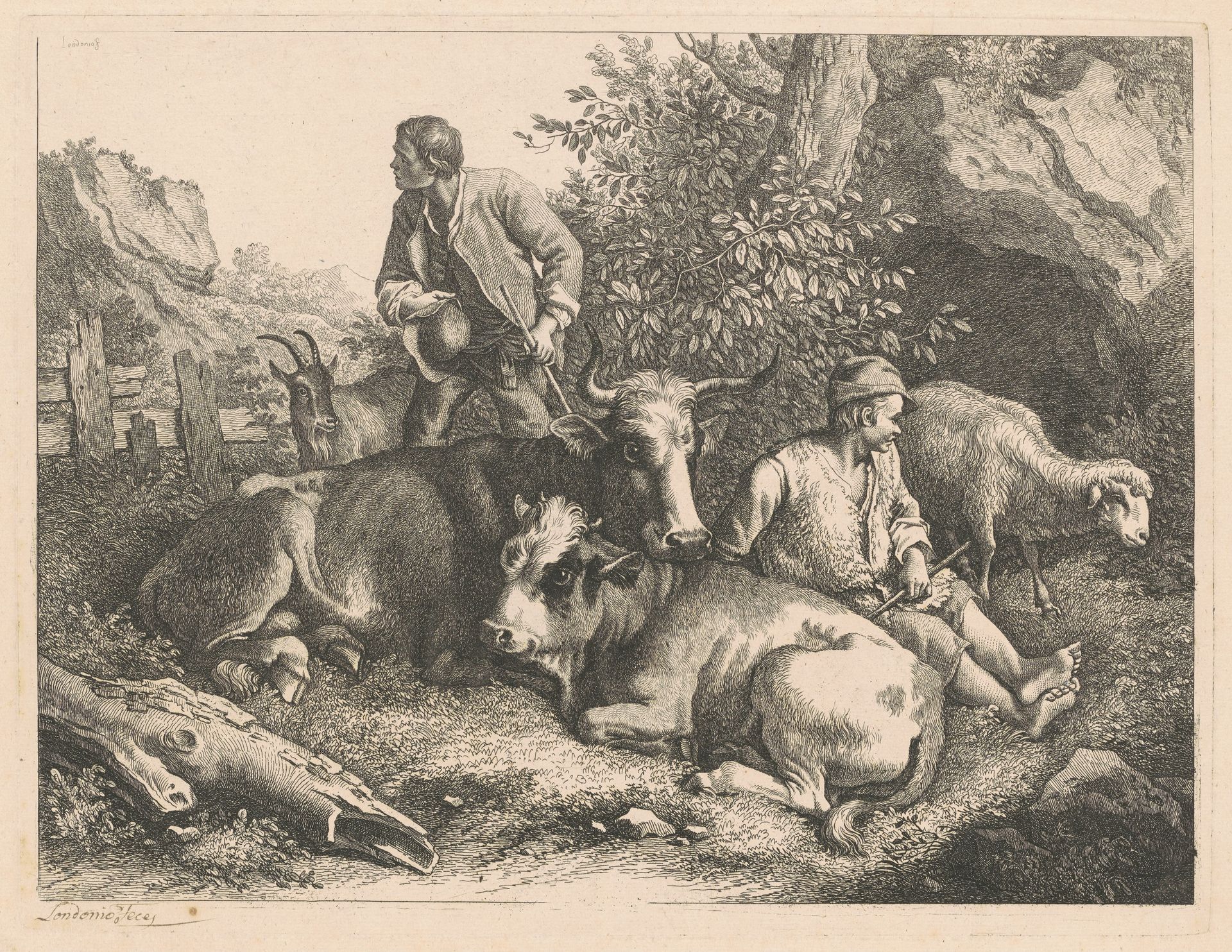
This etching by Francesco Londonio presents a pastoral scene, likely from the late 18th century, featuring shepherds amidst their flock and cattle. The animals, especially the cow, are symbols deeply rooted in cultural memory, representing fertility, nourishment, and the bounty of nature. We see the motif of the shepherd, a figure that transcends time, harking back to biblical and classical antiquity. The shepherd is not merely a herdsman; he is a symbol of care, guidance, and protection. He is the Good Shepherd, an archetype that appears across religions and cultures. Think of the Christian parable, or even the ancient myths of pastoral gods watching over humanity. Here, these humble animals and watchful figures engage us on a primal level, tapping into our collective subconscious. The scene evokes a sense of nostalgia, a yearning for a simpler, more harmonious existence. This yearning, this emotional pull, is a powerful force that has driven artists and audiences alike to return to these bucolic images time and again.
Two Shepherds with a Cow and Calf
after 1776


Artwork details
- Dimensions
- plate: 26.9 × 35.1 cm (10 9/16 × 13 13/16 in.) sheet: 32.5 × 42.1 cm (12 13/16 × 16 9/16 in.)
- Copyright
- National Gallery of Art: CC0 1.0
Comments
Share your thoughts
About this artwork
This etching by Francesco Londonio presents a pastoral scene, likely from the late 18th century, featuring shepherds amidst their flock and cattle. The animals, especially the cow, are symbols deeply rooted in cultural memory, representing fertility, nourishment, and the bounty of nature. We see the motif of the shepherd, a figure that transcends time, harking back to biblical and classical antiquity. The shepherd is not merely a herdsman; he is a symbol of care, guidance, and protection. He is the Good Shepherd, an archetype that appears across religions and cultures. Think of the Christian parable, or even the ancient myths of pastoral gods watching over humanity. Here, these humble animals and watchful figures engage us on a primal level, tapping into our collective subconscious. The scene evokes a sense of nostalgia, a yearning for a simpler, more harmonious existence. This yearning, this emotional pull, is a powerful force that has driven artists and audiences alike to return to these bucolic images time and again.
Comments
Share your thoughts