About this artwork
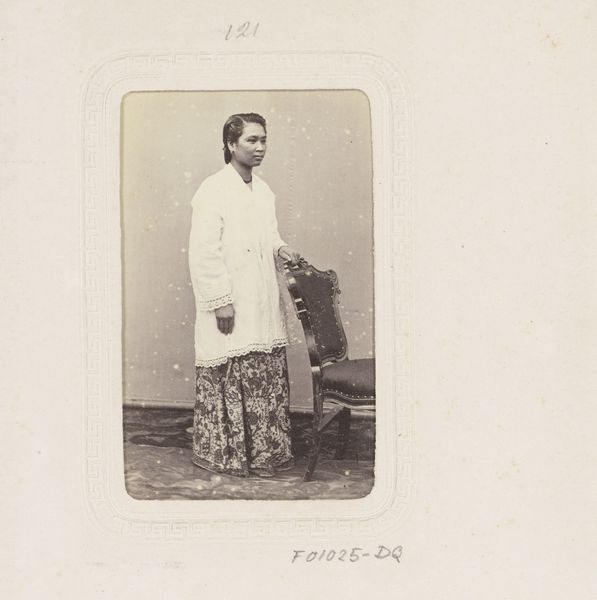
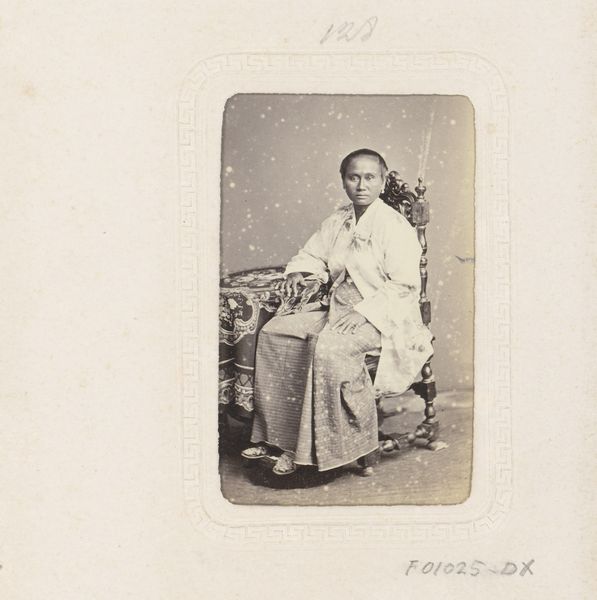
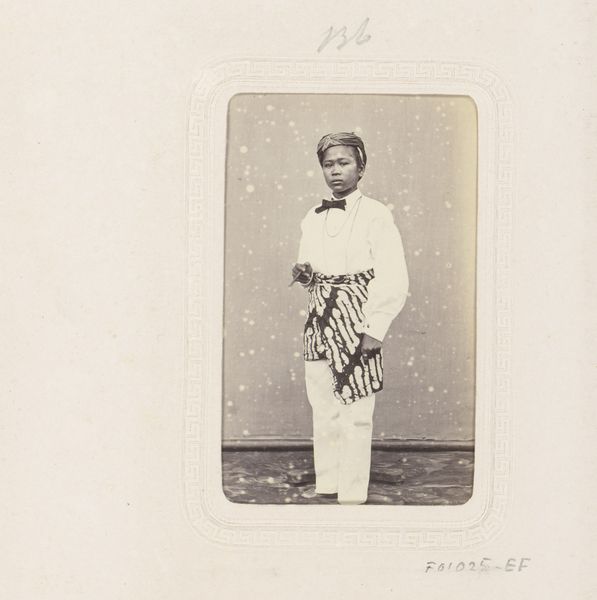
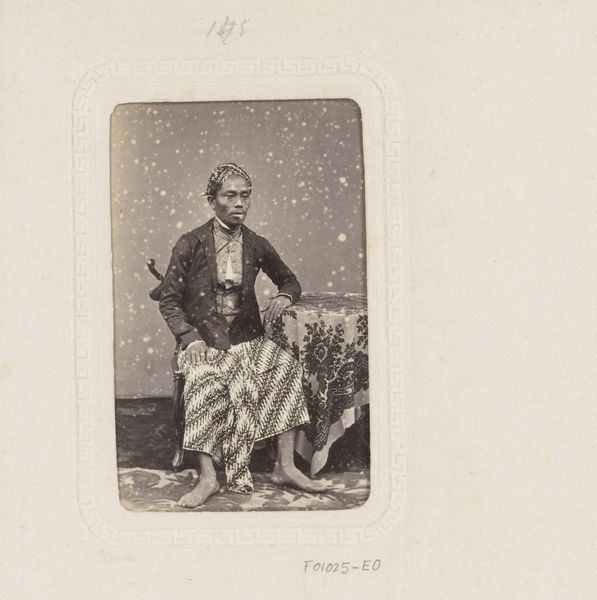
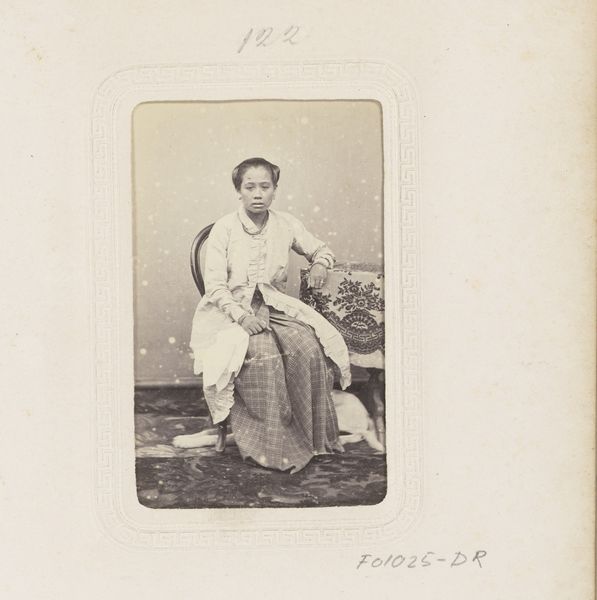
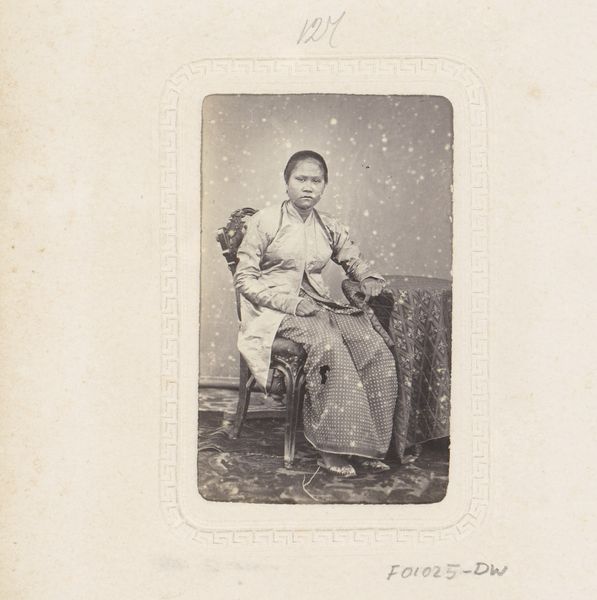
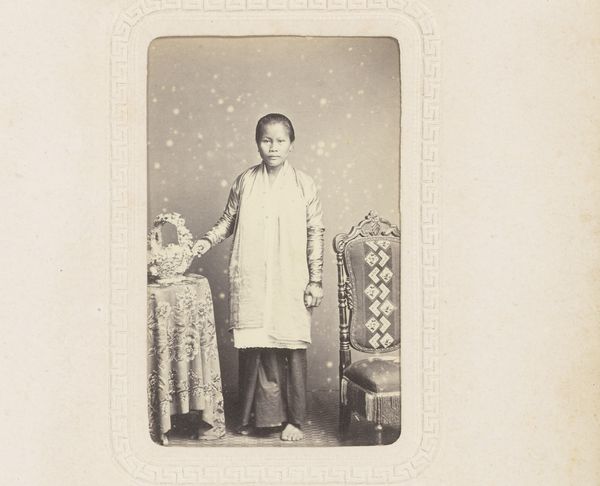
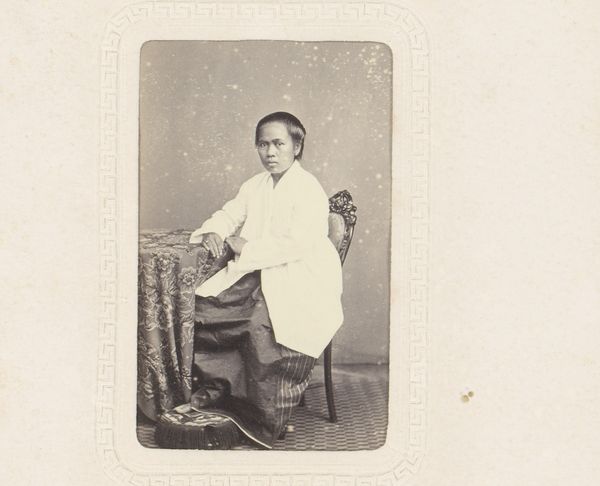
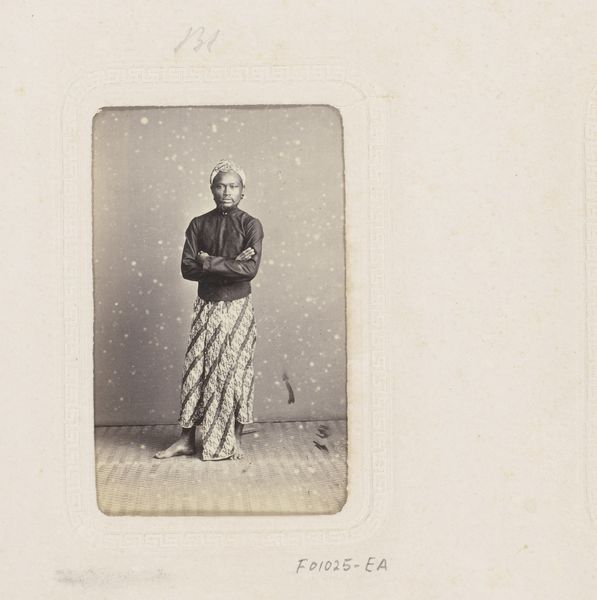
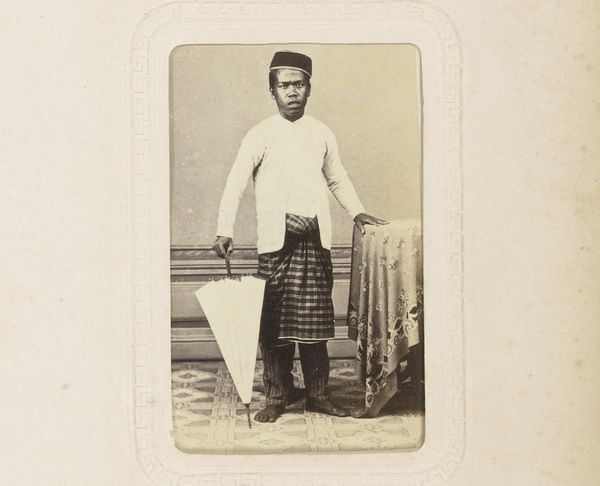
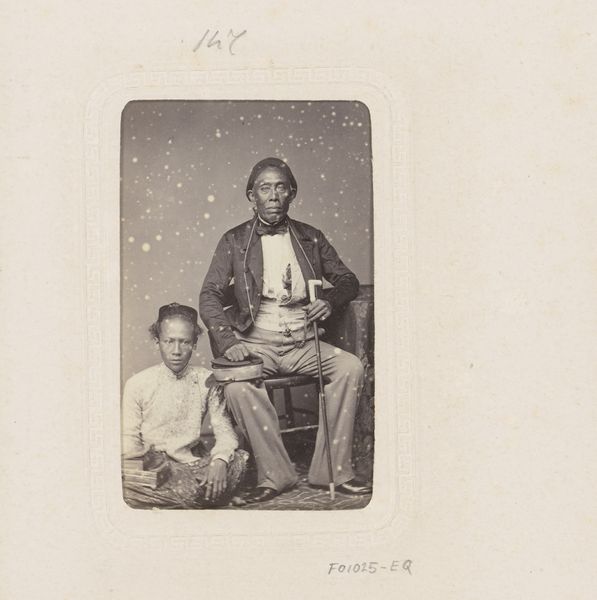
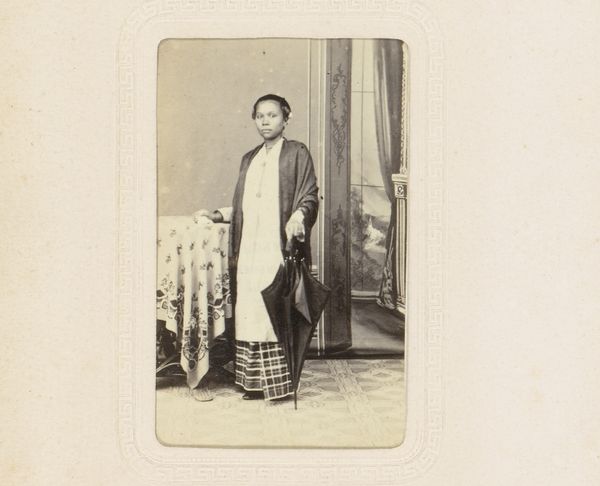
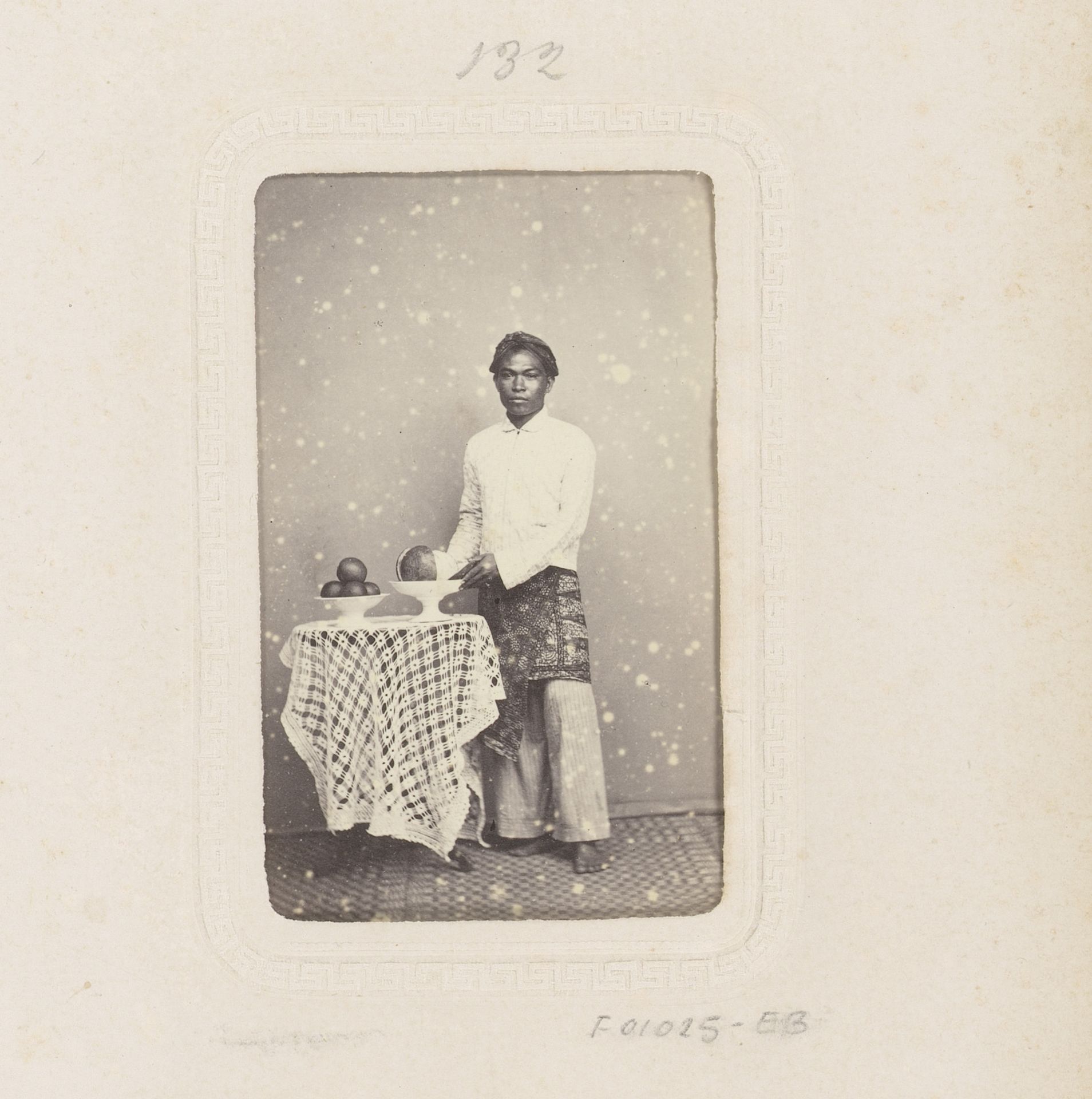
This portrait of a standing Indonesian man was made by Woodbury & Page, using photographic techniques. The albumen print is a direct product of colonial expansion, a technology of documentation but also of control. The inherent qualities of the process—the way light reacts with treated paper, the specific chemical baths required—all conspired to create an image that is both revealing and concealing. Notice the careful staging: the woven mat, the draped table, the fruit placed just so. These are not accidents. Consider the labor involved: not only the photographer's skill in manipulating light and chemistry, but also the sitter's patience, and the unseen work of those who produced the materials. It's a far cry from the instantaneity of modern digital photography. Looking at this image, we must remember that it is not just a record of a person, but a complex artifact born of specific materials, processes, and a particular historical moment. By recognizing this, we move beyond simple observation and begin to understand the deeper layers of meaning embedded within.

Artwork details
- Medium
- photography, albumen-print
- Dimensions
- height 85 mm, height 52 mm
- Copyright
- Rijks Museum: Open Domain
Tags
portrait
asian-art
archive photography
photography
historical photography
orientalism
albumen-print
Comments
Be the first to share your thoughts about this work.
About this artwork
This portrait of a standing Indonesian man was made by Woodbury & Page, using photographic techniques. The albumen print is a direct product of colonial expansion, a technology of documentation but also of control. The inherent qualities of the process—the way light reacts with treated paper, the specific chemical baths required—all conspired to create an image that is both revealing and concealing. Notice the careful staging: the woven mat, the draped table, the fruit placed just so. These are not accidents. Consider the labor involved: not only the photographer's skill in manipulating light and chemistry, but also the sitter's patience, and the unseen work of those who produced the materials. It's a far cry from the instantaneity of modern digital photography. Looking at this image, we must remember that it is not just a record of a person, but a complex artifact born of specific materials, processes, and a particular historical moment. By recognizing this, we move beyond simple observation and begin to understand the deeper layers of meaning embedded within.
Comments
Be the first to share your thoughts about this work.