1859 - 1884
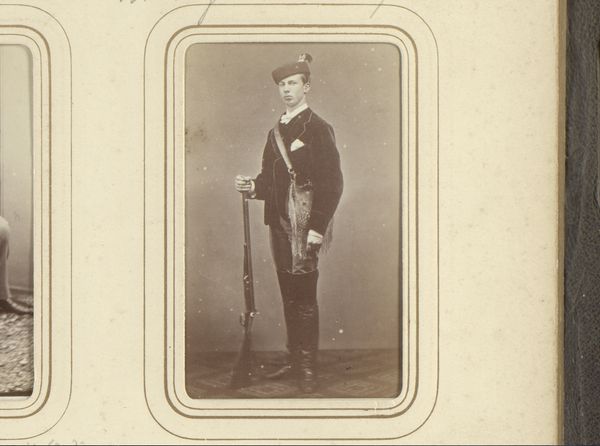
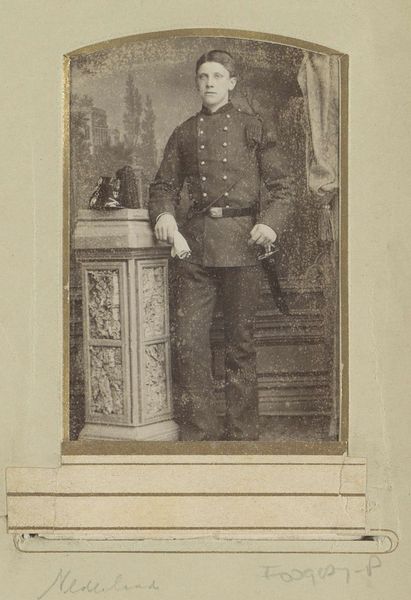
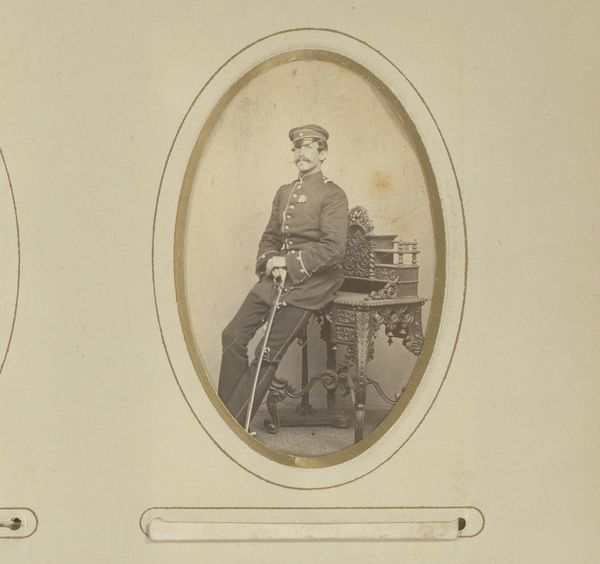
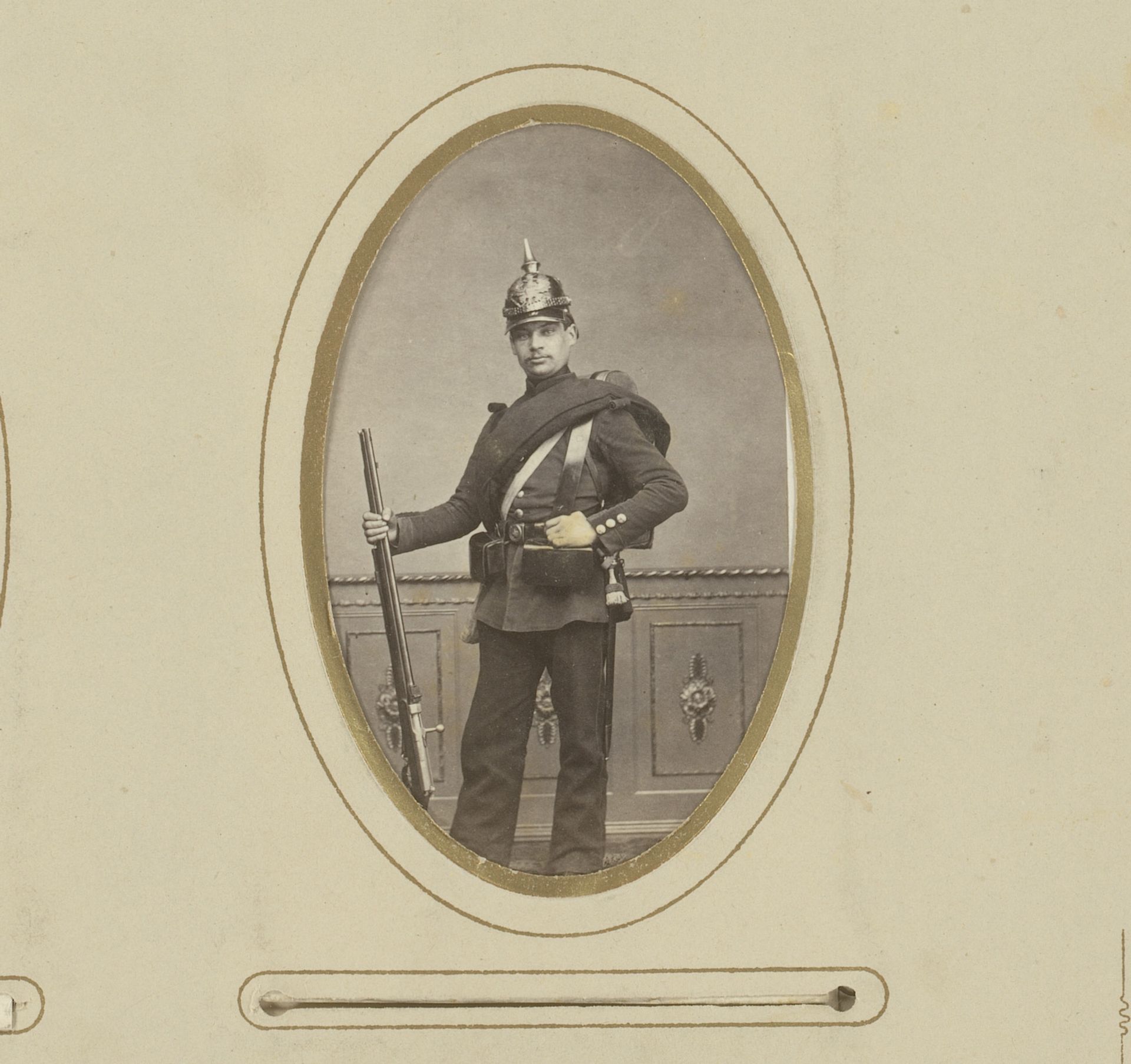
Portret van een man in militair uniform met helm en geweer

Listen to curator's interpretation
Curatorial notes
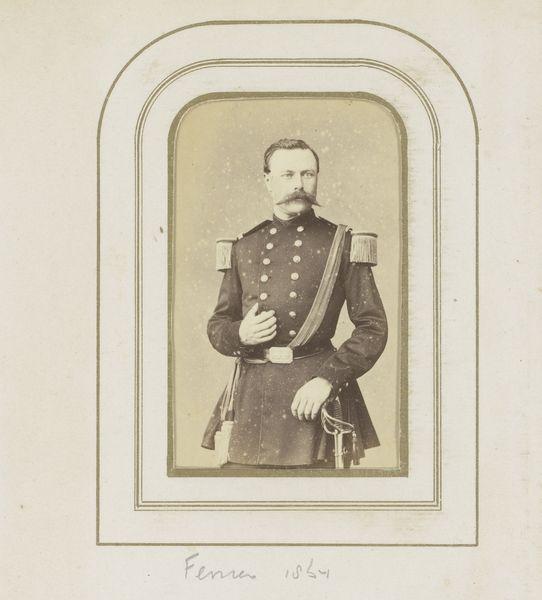
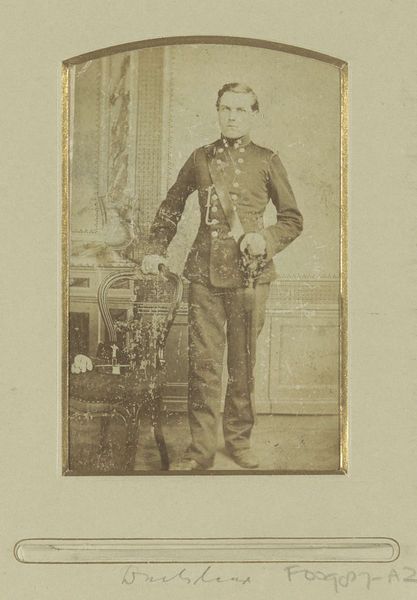
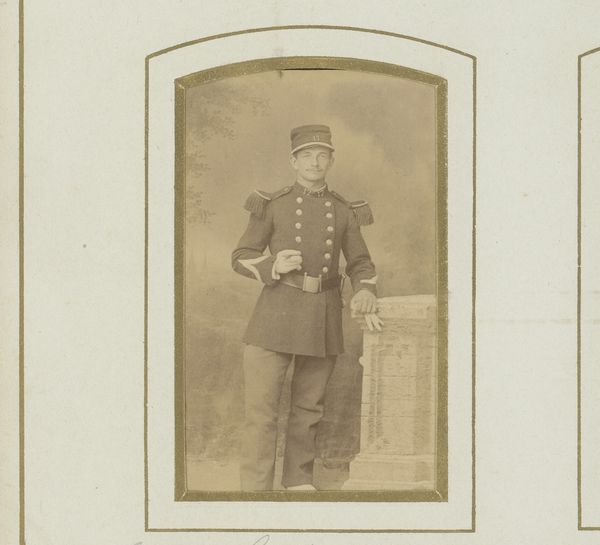
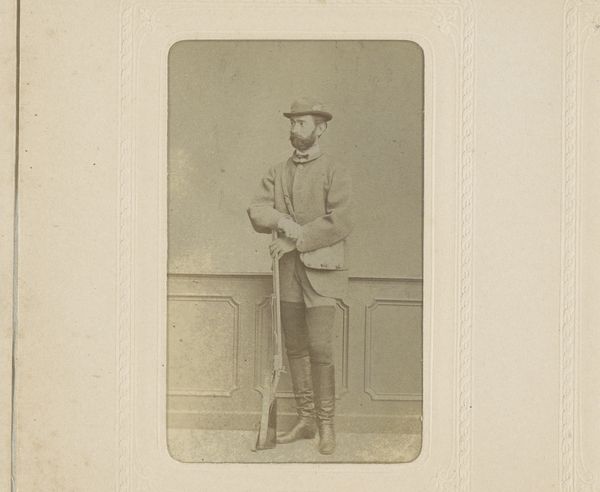
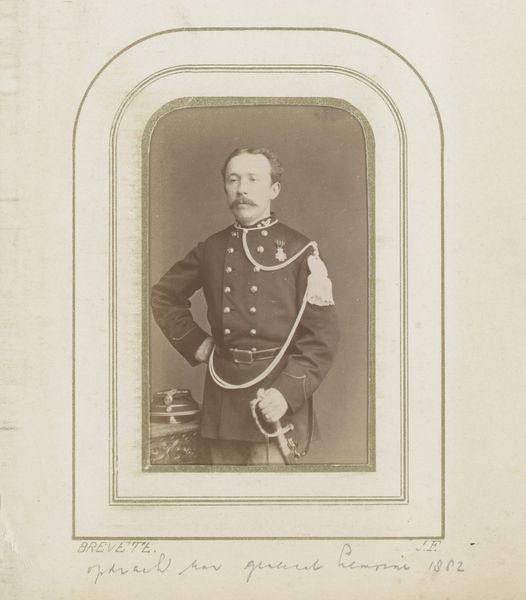
Curator: Before us is "Portret van een man in militair uniform met helm en geweer," a photographic portrait believed to be from between 1859 and 1884, created by C. Hopfner. Editor: It's a striking image; the young man’s gaze projects such a direct solemnity. The high contrast amplifies the stoicism – almost daring you to find any trace of vulnerability. Curator: Indeed. If we deconstruct the composition, notice the oval frame; it constrains the figure, creating a sense of rigid order. The ornate details in the wall behind him offer visual contrast, while his upright stance mirrors the verticality of the rifle he carries. Editor: The rifle, more than just a prop, really serves as an extension of the man himself. That particular style of helmet instantly evokes images of Prussian military prowess. It represents far more than personal identity – ambition and obligation are suggested here too. Curator: Absolutely, and in this context, consider the cultural memory that this photographic style evokes: The precise tonal range and staged pose suggests the prevailing portraiture of that era which, informed heavily the tradition of paintings produced at the time for bourgeois families. Editor: Yes, the visual vocabulary resonates deeply with the notion of duty. You know, one can almost hear the echoes of past conflicts; he appears less a celebration of triumph and more an acknowledgement of the sacrifices tied up in that uniform. Curator: It’s in these historical records where our formal observations and symbolic associations converge: This man becomes emblematic for so many unknown faces, a point of connection bridging personal stories to collective narratives around nation, and even war. Editor: The weight of history, the artist managed to place it all within that oval. The picture offers itself as more than a frozen moment. It evokes timeless themes of sacrifice and honor bound to this uniformed figure standing guard over those ideas. Curator: It underscores how form shapes our comprehension of even ostensibly neutral or purely descriptive depictions, allowing access into the psychological experience of existing within such historically potent semiotic realms.