About this artwork
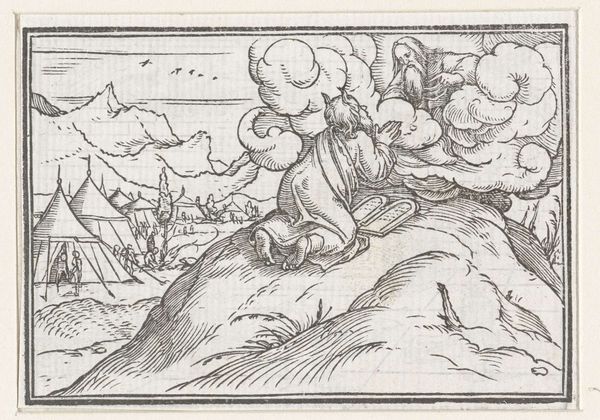
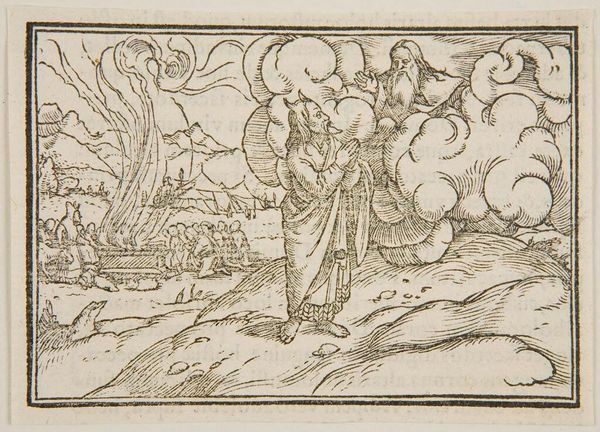
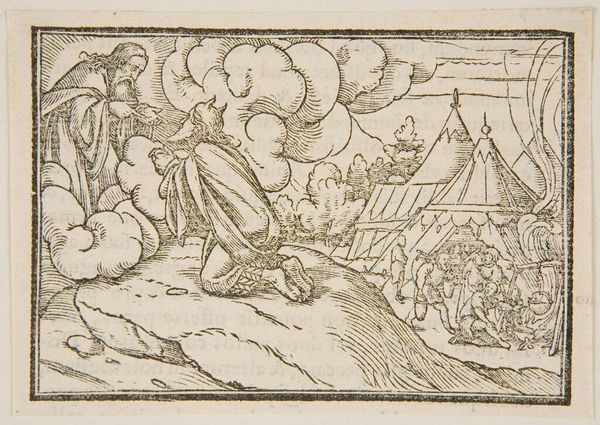
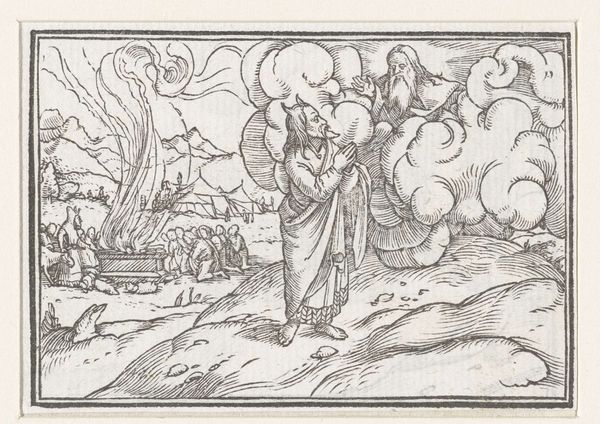
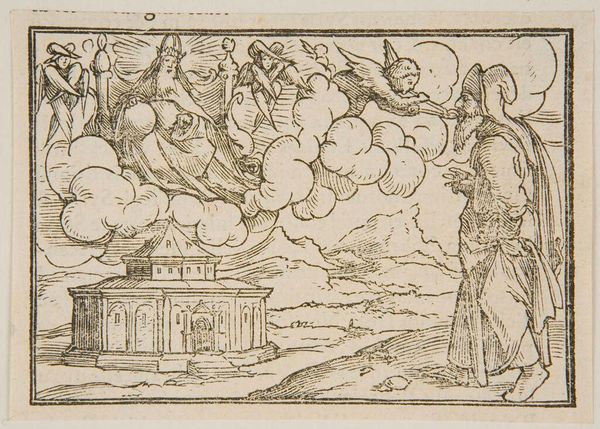
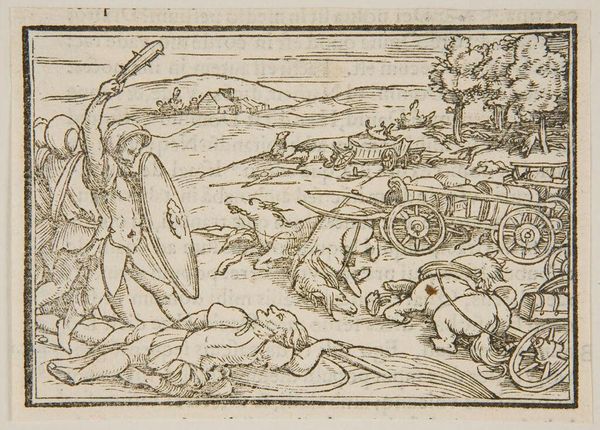
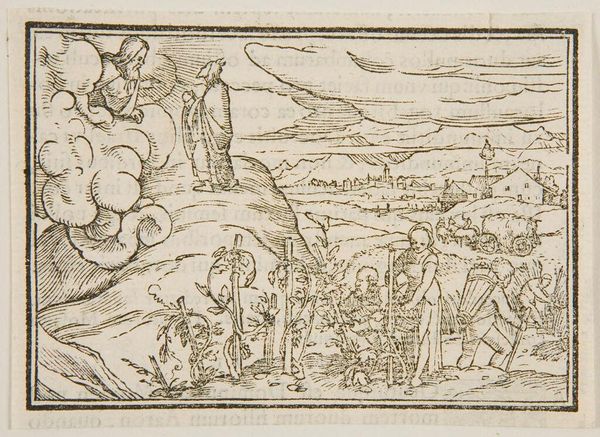
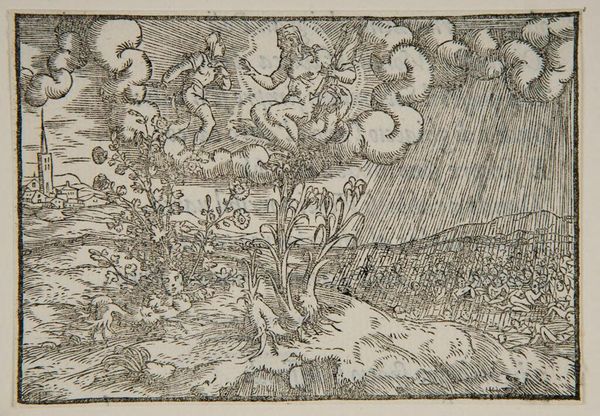
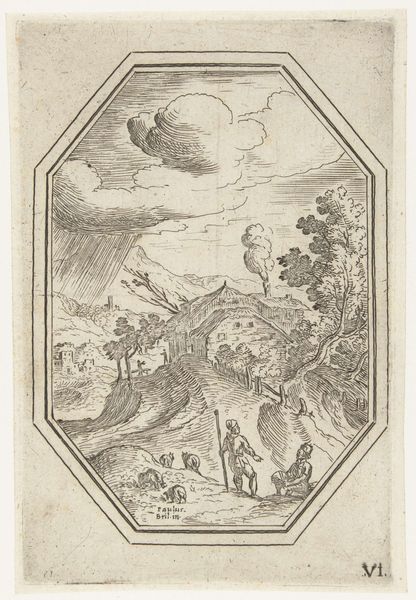
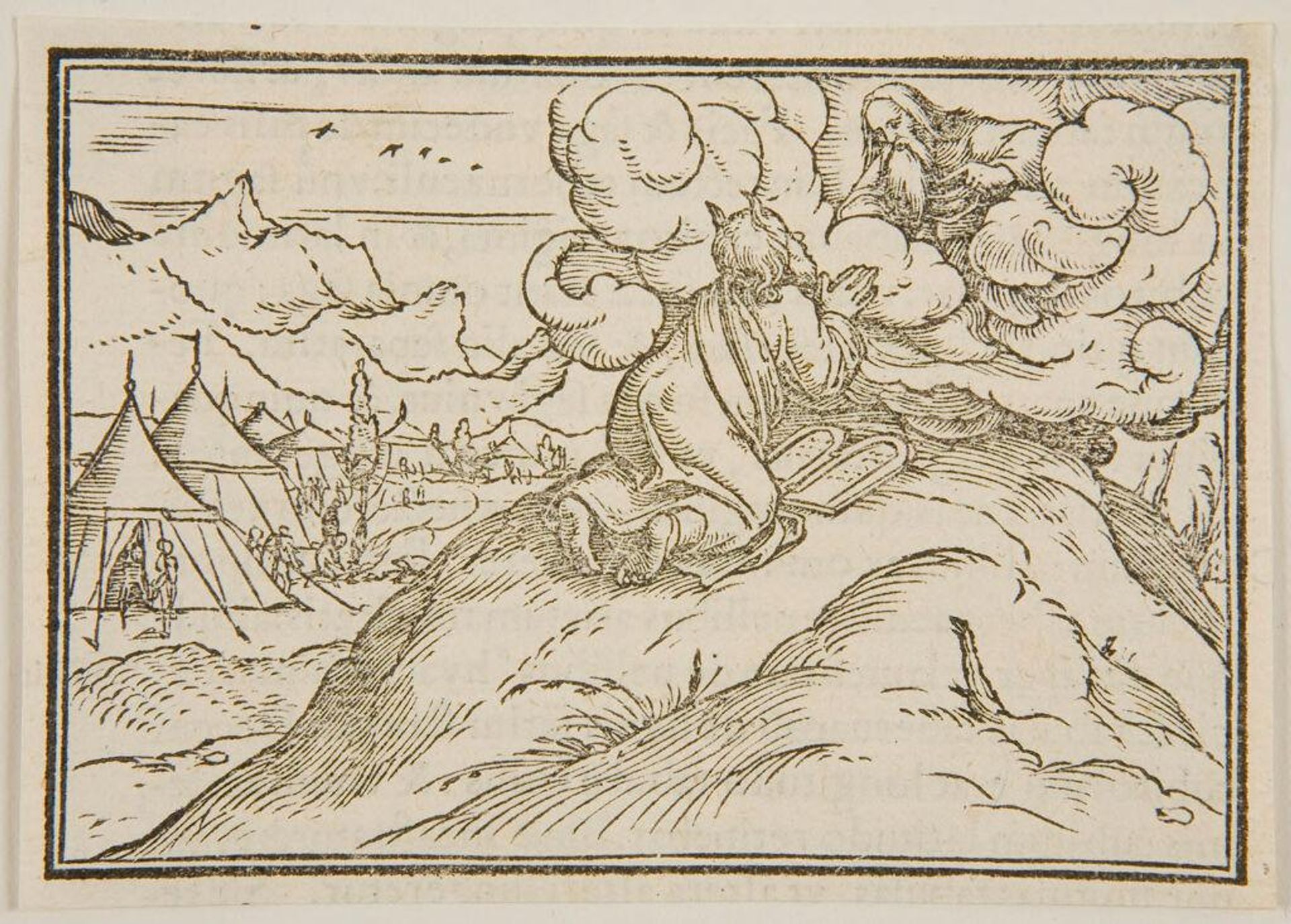
Curator: Holbein the Younger's woodcut print, Ex. XXXIV, presents a biblical scene with a distinct graphic clarity. Editor: The density of line work used to create the figure of Moses on the mount is striking, especially given its means of production. I wonder about the tools involved. Curator: The composition neatly divides the earthly and divine realms, doesn't it? Moses kneels with the tablets as the Almighty appears above in a cloud. Editor: I'm drawn to the repetitive mark-making in the tents. It feels almost mass-produced, which brings to mind ideas about labor and craft during the time. Curator: Observe how the black and white contrast emphasizes both the divine light and the weight of Moses' task. The formal balance reinforces the significance. Editor: The texture of the paper itself seems crucial—almost like a geological stratum mirroring the landscape depicted. It underscores the art's physicality. Curator: Indeed. It serves as a powerful visual signifier of divine law and human responsibility. Editor: Thinking about the printmaking process adds another dimension to its meaning. Curator: Precisely. Editor: Fascinating, thank you.
Ex. XXXIV
c. 16th century


Artwork details
- Location
- Harvard Art Museums
- Copyright
- CC0 1.0
Comments
Share your thoughts
About this artwork
Curator: Holbein the Younger's woodcut print, Ex. XXXIV, presents a biblical scene with a distinct graphic clarity. Editor: The density of line work used to create the figure of Moses on the mount is striking, especially given its means of production. I wonder about the tools involved. Curator: The composition neatly divides the earthly and divine realms, doesn't it? Moses kneels with the tablets as the Almighty appears above in a cloud. Editor: I'm drawn to the repetitive mark-making in the tents. It feels almost mass-produced, which brings to mind ideas about labor and craft during the time. Curator: Observe how the black and white contrast emphasizes both the divine light and the weight of Moses' task. The formal balance reinforces the significance. Editor: The texture of the paper itself seems crucial—almost like a geological stratum mirroring the landscape depicted. It underscores the art's physicality. Curator: Indeed. It serves as a powerful visual signifier of divine law and human responsibility. Editor: Thinking about the printmaking process adds another dimension to its meaning. Curator: Precisely. Editor: Fascinating, thank you.
Comments
Share your thoughts