c. 1655
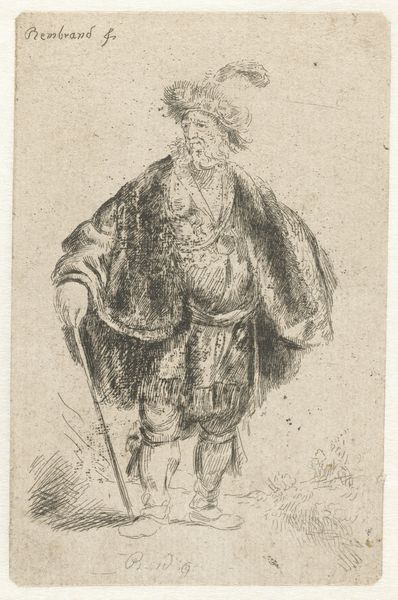
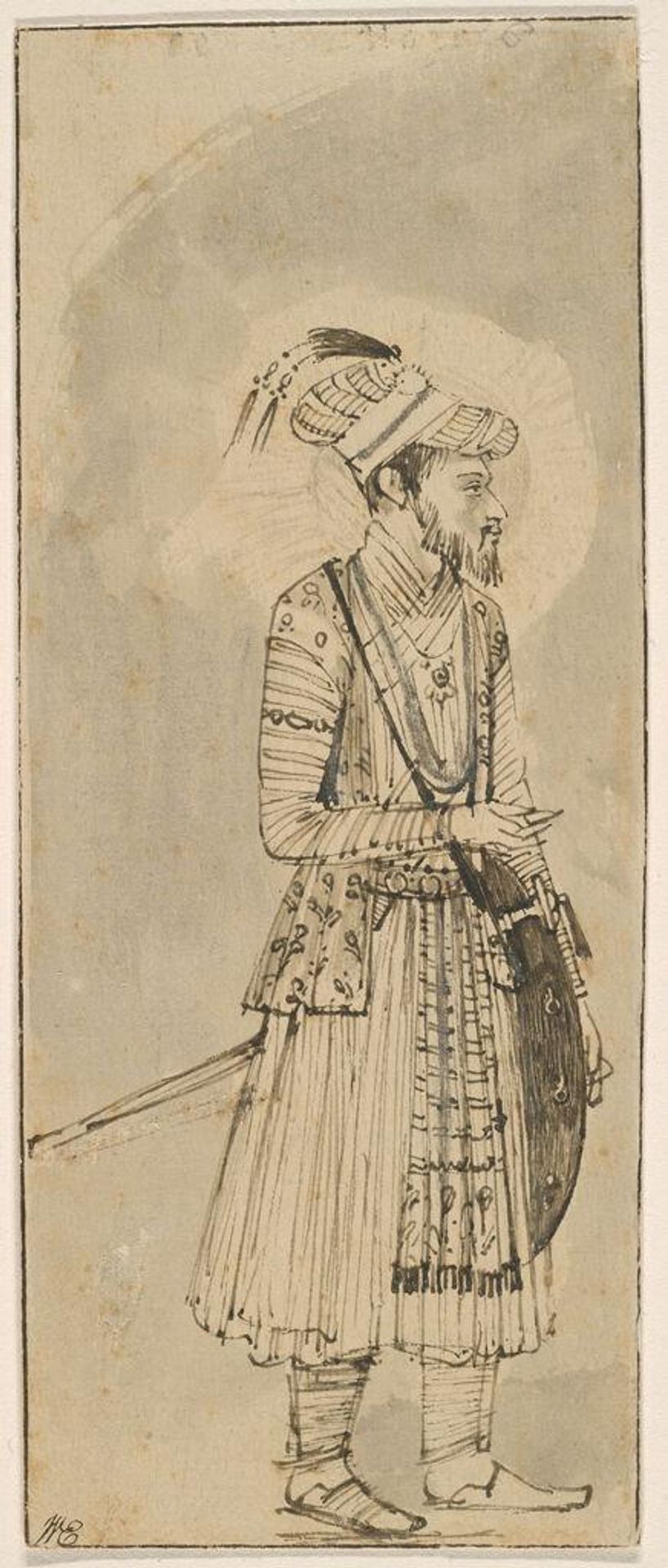
Portrait of Aurangzeb (after a Mughal painting)


Listen to curator's interpretation
Curatorial notes
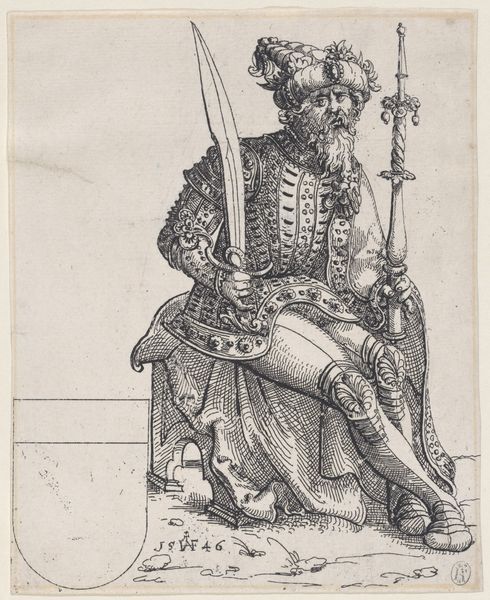
Curator: Here we have Rembrandt van Rijn's small drawing, "Portrait of Aurangzeb (after a Mughal painting)." Editor: It’s fascinating. The starkness of the ink gives the figure a ghostly, almost ethereal presence. It really emphasizes the Mughal emperor’s regality and perhaps, even his isolation. Curator: Indeed. Rembrandt likely never encountered Aurangzeb directly. This drawing is thought to be based on a Mughal painting, reflecting Europe’s growing fascination with the East during the 17th century. Editor: The turban and sword are powerful symbols of authority, but look at the halo-like circle surrounding him, reminiscent of the sun, a symbol of divine power. It appears to set him apart. Curator: Absolutely, and consider Rembrandt's hand in interpreting this image. He subtly reshapes the visual language, reflecting his own cultural understanding of power and portraiture. Editor: It is a potent reminder of how images travel and transform meaning across cultures. Curator: Precisely. It reveals so much about the exchange of ideas between Europe and Asia during this period.