About this artwork
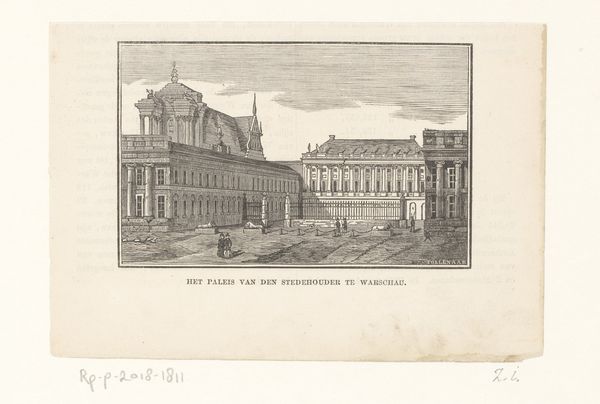
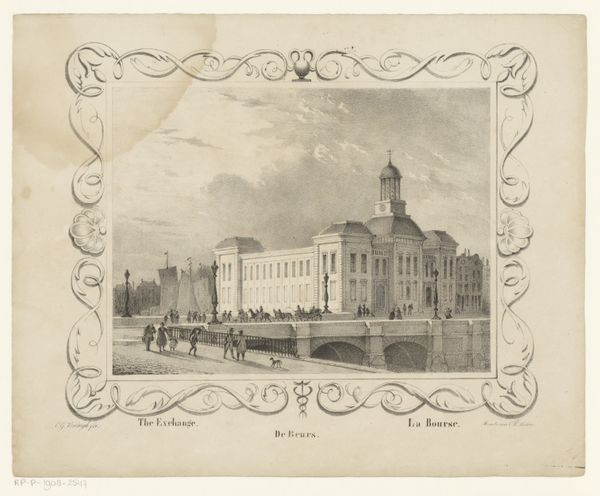
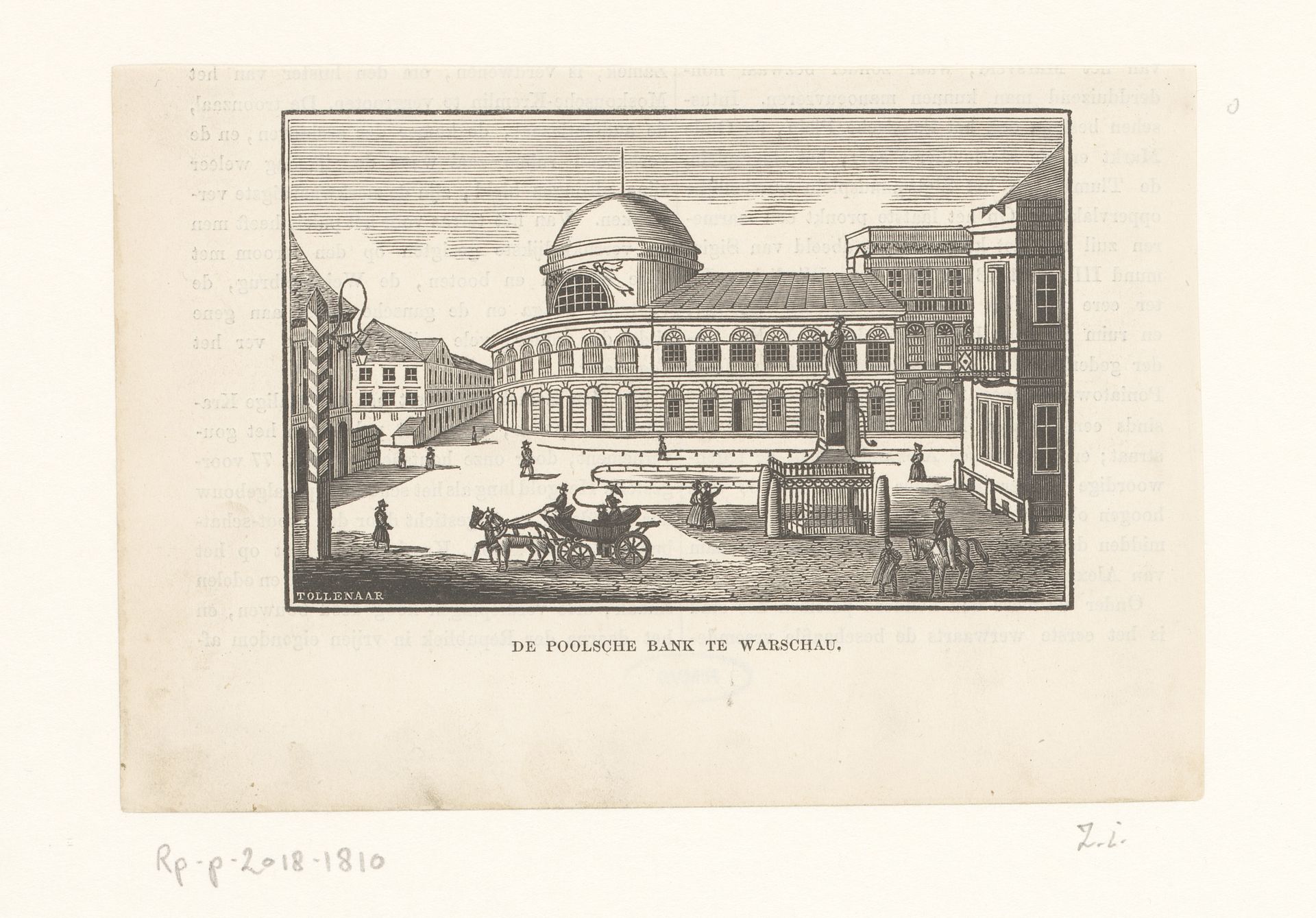
Dirk Wijbrand Tollenaar created this print of the bank building in Warsaw at an unknown date using etching techniques. What can this image tell us about the history of finance and its representation? This bank, prominently placed within the city, stands as a symbol of economic power and stability. Consider the visual codes at play: the building's imposing architecture, with its dome and symmetrical facade, evokes classical ideals of order and authority. The inclusion of horse-drawn carriages and well-dressed figures suggests a thriving economy and a confident elite. This image reflects the social structures of its time, where institutions like banks played a central role in shaping urban landscapes and social hierarchies. Through careful examination of archival materials, financial records, and urban plans, we can uncover the complex relationship between art, finance, and society in 19th-century Warsaw.
Gezicht op het bankgebouw, te Warschau
1847

Dirk Wijbrand Tollenaar
1808 - 1858Location
RijksmuseumArtwork details
- Medium
- print, engraving, architecture
- Dimensions
- height 112 mm, width 163 mm
- Location
- Rijksmuseum
- Copyright
- Rijks Museum: Open Domain
Tags
neoclacissism
cityscape
engraving
architecture
Comments
Be the first to share your thoughts about this work.
About this artwork
Dirk Wijbrand Tollenaar created this print of the bank building in Warsaw at an unknown date using etching techniques. What can this image tell us about the history of finance and its representation? This bank, prominently placed within the city, stands as a symbol of economic power and stability. Consider the visual codes at play: the building's imposing architecture, with its dome and symmetrical facade, evokes classical ideals of order and authority. The inclusion of horse-drawn carriages and well-dressed figures suggests a thriving economy and a confident elite. This image reflects the social structures of its time, where institutions like banks played a central role in shaping urban landscapes and social hierarchies. Through careful examination of archival materials, financial records, and urban plans, we can uncover the complex relationship between art, finance, and society in 19th-century Warsaw.
Comments
Be the first to share your thoughts about this work.