

c. 1550
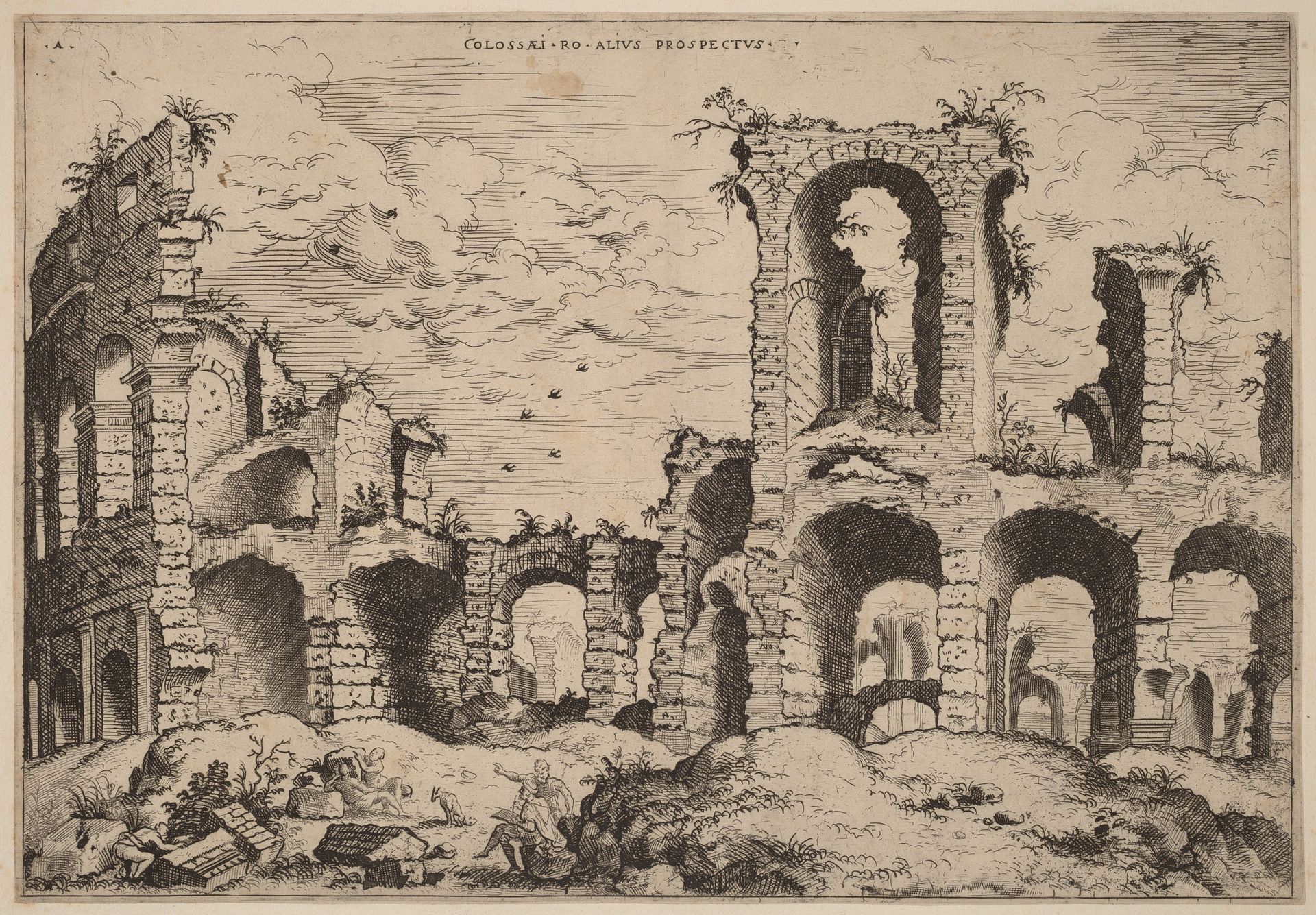
Second View of the Colosseum


Listen to curator's interpretation
Curatorial notes
Editor: This etching, "Second View of the Colosseum" by Hieronymus Cock, around 1550, really strikes me. It's all these crumbling arches and detailed stonework… a stark image, yet there’s a strange beauty to its ruin. What catches your eye when you look at this print? Curator: The enduring power of the Colosseum as a symbol of Roman authority is undeniable, even, perhaps especially, in its state of decay. Notice how Cock contrasts the monumentality of the structure with the small figures in the foreground; what kind of feeling does that give you? Editor: Makes me think about the passage of time, the transience of human endeavors against something seemingly permanent… or formerly permanent. Like a statement on hubris? Curator: Exactly. The Colosseum, once a site of grand spectacles and imperial power, is now overgrown, literally softened by nature. Consider the emotional weight attached to ruins - a fascination with cycles of civilizations rising and falling, which was quite a Renaissance preoccupation. Do you see anything that seems incongruous? Editor: Well, the tiny birds seem to offset the imposing ruins and imply vitality. It lightens the mood somewhat, I think. Curator: The birds are also messengers of time's incessant movement. What persists when everything decays is memory, retold in symbols. This wasn't just a depiction, but an emblem of something greater. Editor: I guess it's like the building itself becomes a symbol *of* symbols. That makes so much sense! Curator: Indeed! A beautiful illustration of cultural memory. We can revisit that relationship time and time again through art like this, offering continuous inspiration and lessons.