About this artwork
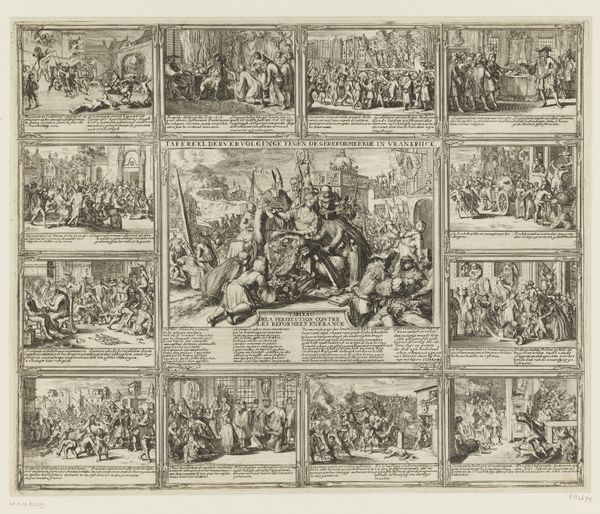
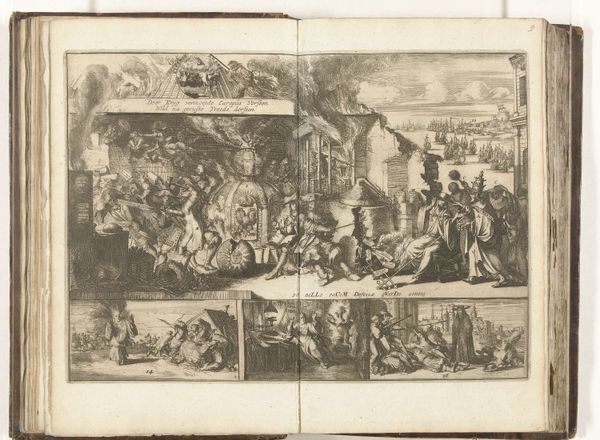
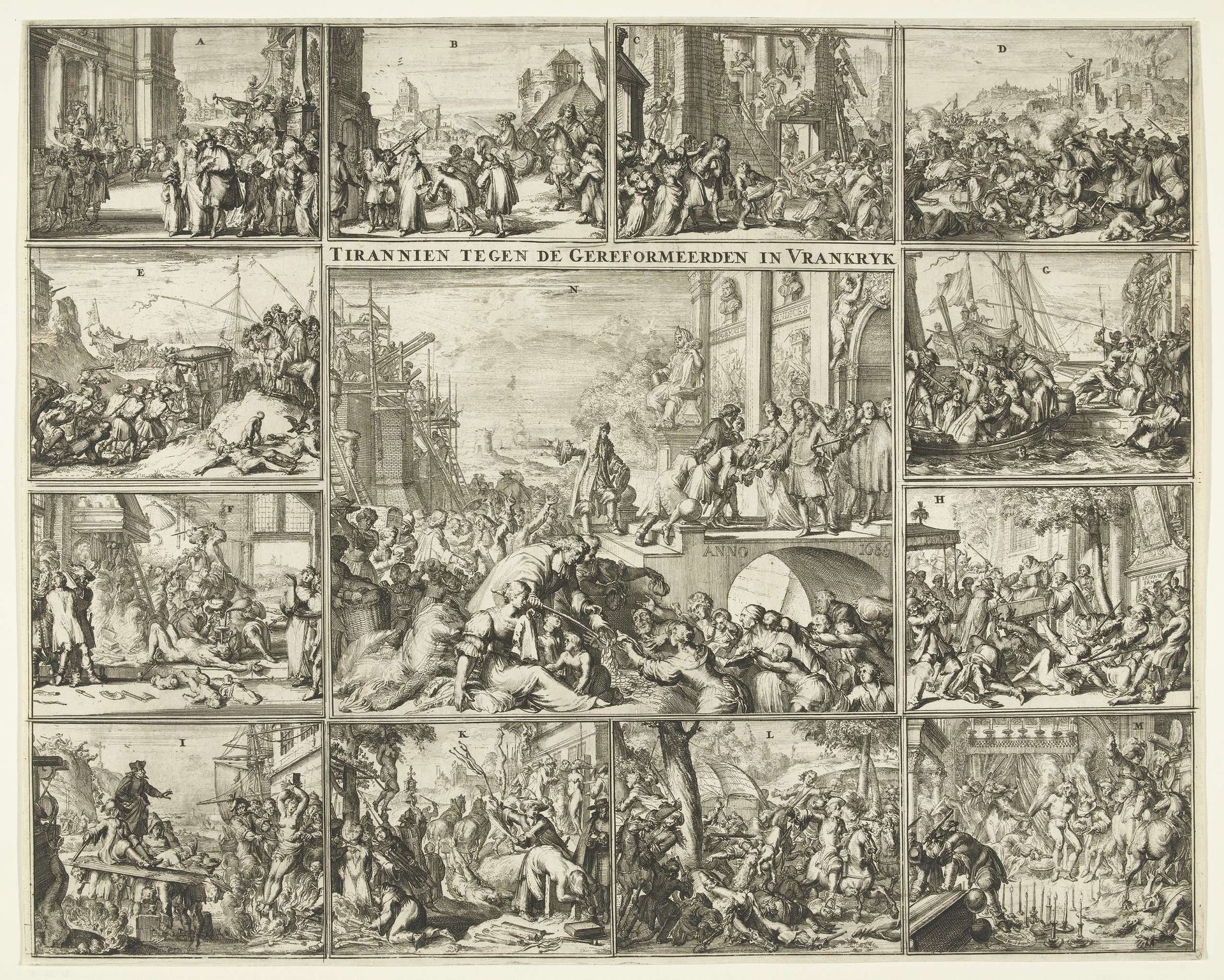
Romeyn de Hooghe created this print, "Persecution of Protestants in France after the Revocation of the Edict of Nantes, 1685-1686," using etching. The composition is divided into twelve compartments, each presenting a scene of violence against Protestants. De Hooghe uses a graphic, almost journalistic style to document the atrocities following the revocation of the Edict of Nantes. The scenes, rendered in stark monochrome, are densely populated with figures, enhancing the sense of chaos and brutality. Notice how the artist employs line and form to create dynamic movement within each frame. This piece functions as a form of visual rhetoric, critiquing religious persecution and challenging the authority that perpetrated it. The composition is not just an aesthetic arrangement but a structured argument against injustice.
Vervolging der protestanten in Frankrijk na de herroeping van het Edict van Nantes, 1685-1686
1686

Romeyn de Hooghe
1645 - 1708Location
RijksmuseumArtwork details
- Medium
- engraving
- Dimensions
- height 415 mm, width 520 mm
- Location
- Rijksmuseum
- Copyright
- Rijks Museum: Open Domain
Tags
narrative-art
baroque
pen drawing
islamic-art
history-painting
engraving
Comments
Be the first to share your thoughts about this work.
About this artwork
Romeyn de Hooghe created this print, "Persecution of Protestants in France after the Revocation of the Edict of Nantes, 1685-1686," using etching. The composition is divided into twelve compartments, each presenting a scene of violence against Protestants. De Hooghe uses a graphic, almost journalistic style to document the atrocities following the revocation of the Edict of Nantes. The scenes, rendered in stark monochrome, are densely populated with figures, enhancing the sense of chaos and brutality. Notice how the artist employs line and form to create dynamic movement within each frame. This piece functions as a form of visual rhetoric, critiquing religious persecution and challenging the authority that perpetrated it. The composition is not just an aesthetic arrangement but a structured argument against injustice.
Comments
Be the first to share your thoughts about this work.