About this artwork
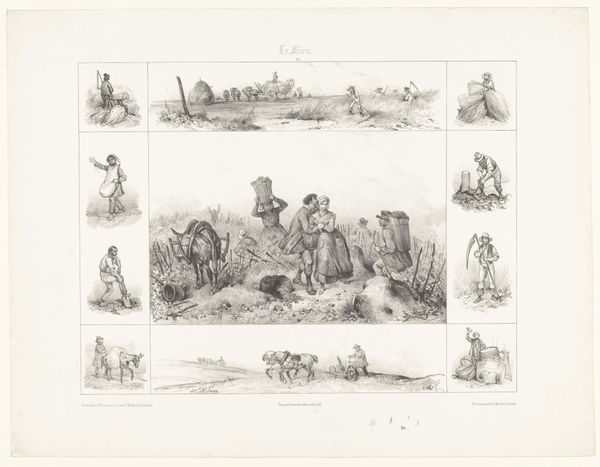
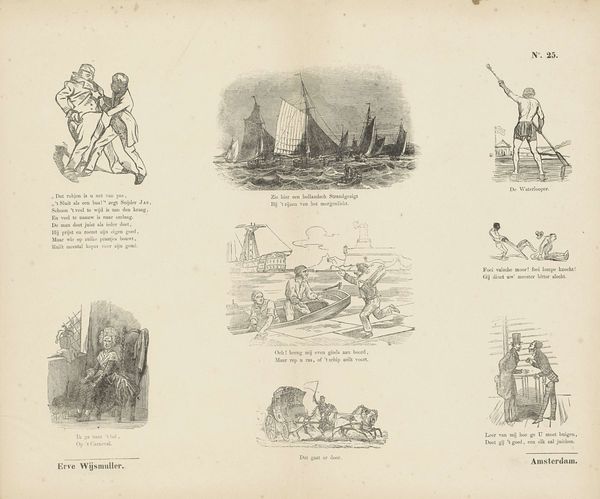
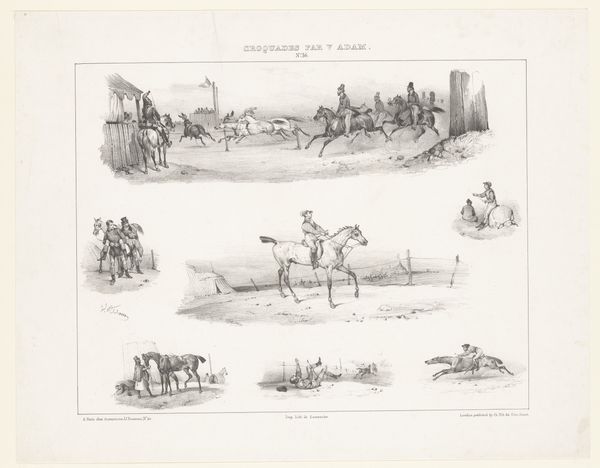
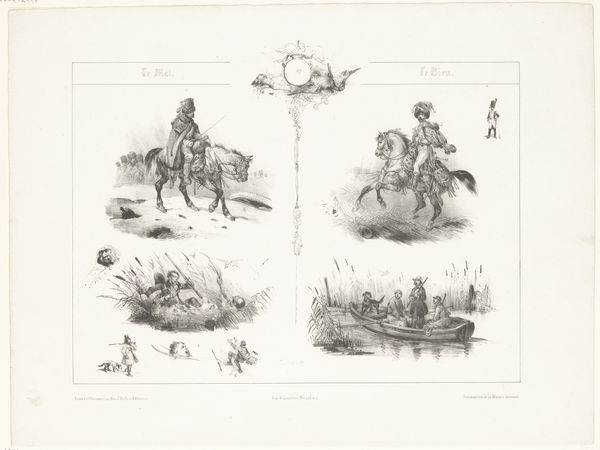
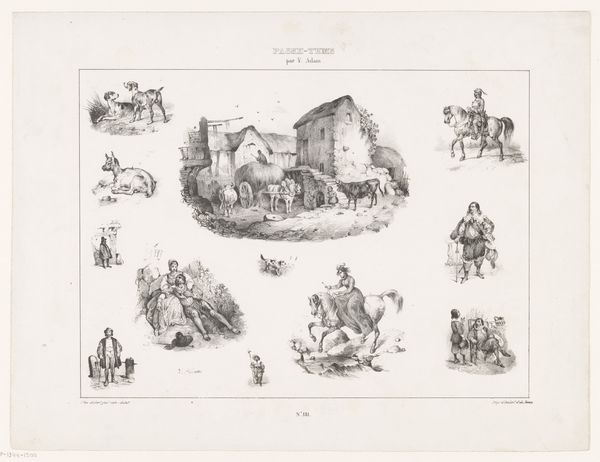
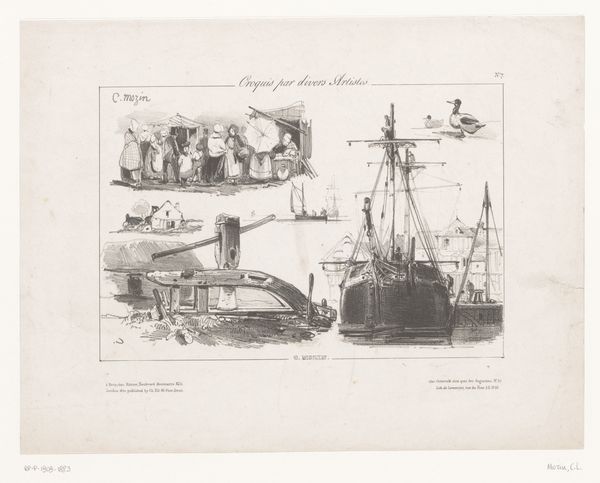
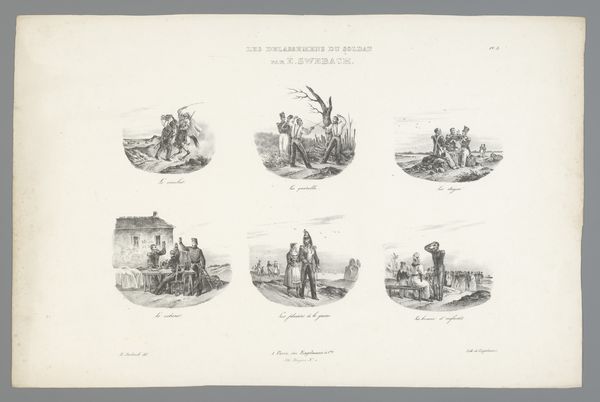
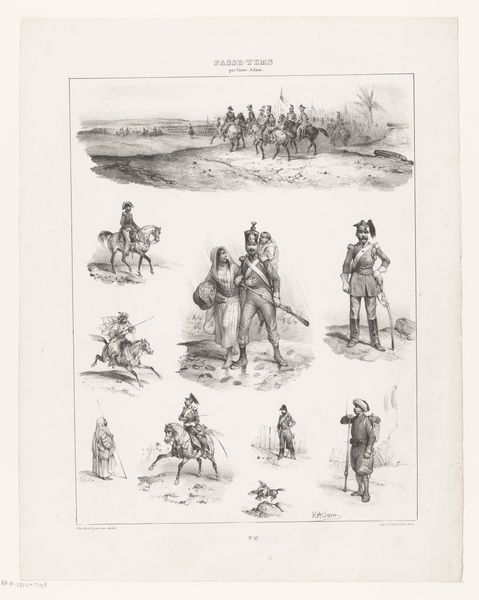
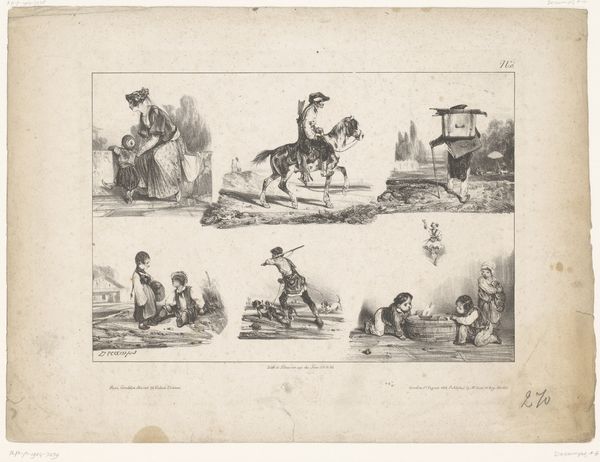
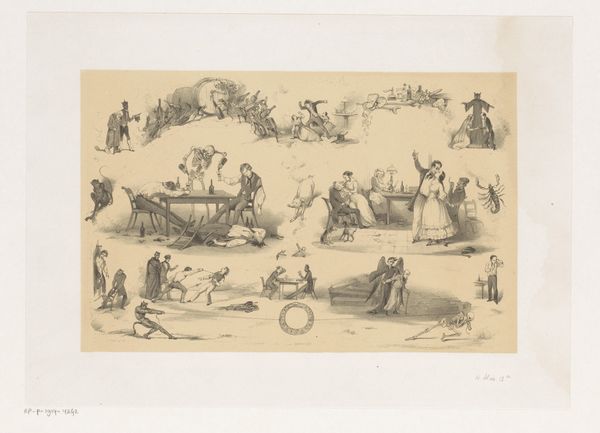
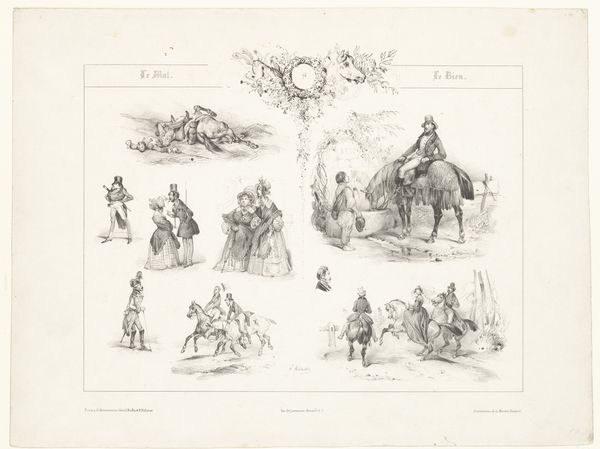
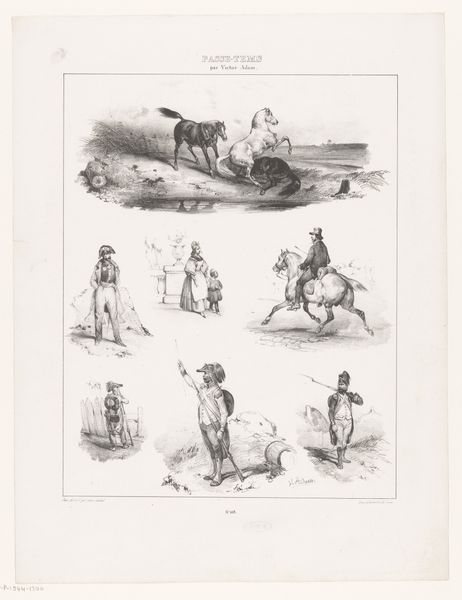
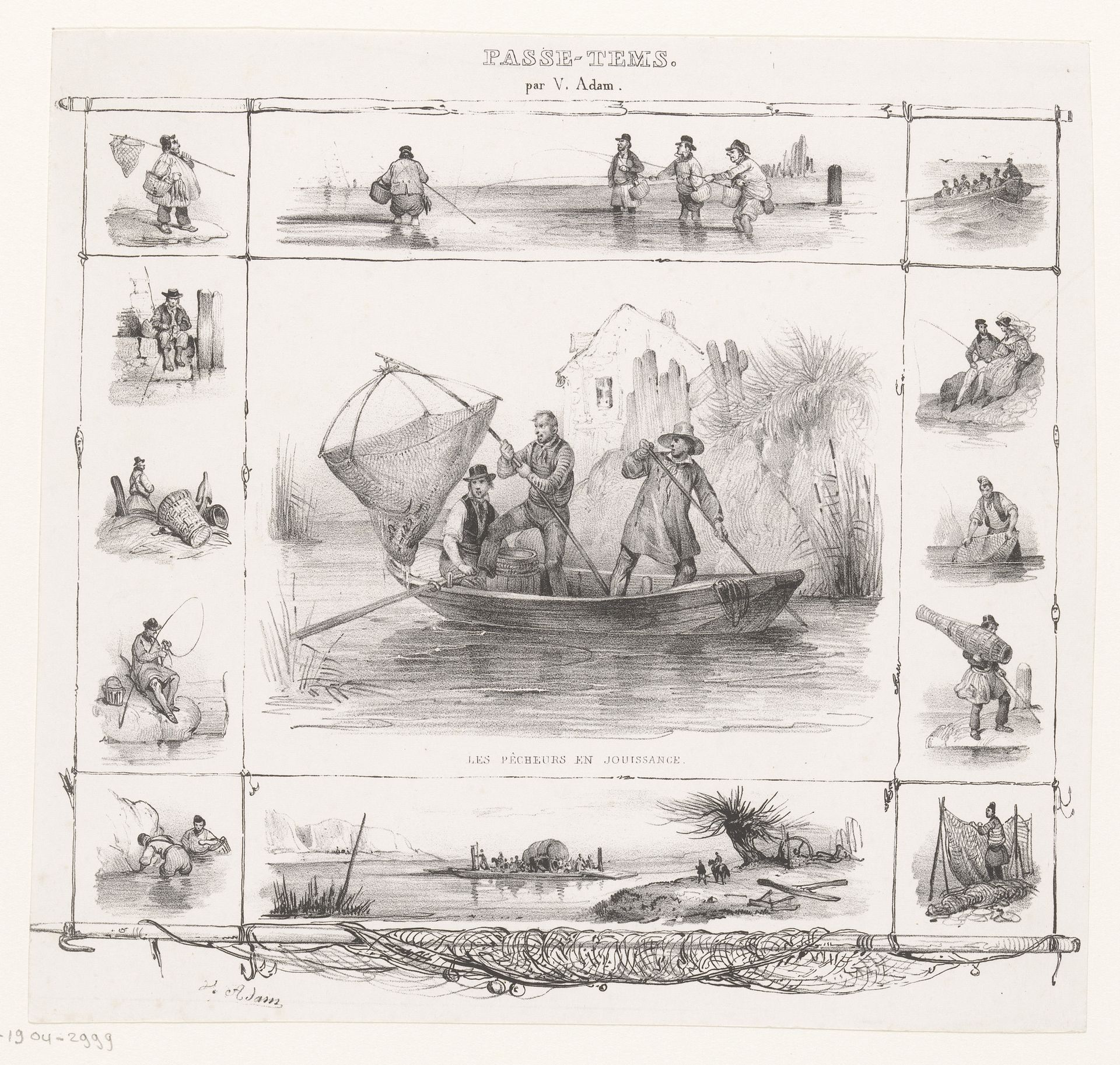
This print, “Thirteen forms of recreational fishing,” was created by Victor Adam in the 19th century. It depicts different methods of catching fish. As a lithograph, this work exists in multiple, made through a printing process which involves drawing with a grease-based crayon onto a flat slab of limestone. The stone is then treated with acid, and inked. Because the ink sticks to the greasy areas, many identical prints can be pulled, relatively easily. The lithographic technique was new at the time, and allowed for production of images at low cost. The abundance and detail of the fishing scenes gives us a sense of the contemporary attitude towards the pursuit of fish, and toward leisure time. We also get a sense of the social structure: some figures fish alone, others in groups, with different techniques available to them. Considering the material and the making, we realize this image would have been widely circulated. It shows us that new printing processes changed not only the making of art, but the distribution of ideas.

Artwork details
- Medium
- print, etching
- Dimensions
- height 218 mm, width 233 mm
- Location
- Rijksmuseum
- Copyright
- Rijks Museum: Open Domain
Tags
comic strip sketch
quirky sketch
narrative-art
etching
landscape
figuration
personal sketchbook
idea generation sketch
sketchwork
thumbnail sketching
romanticism
sketchbook drawing
genre-painting
storyboard and sketchbook work
fantasy sketch
initial sketch
Comments
No comments
About this artwork
This print, “Thirteen forms of recreational fishing,” was created by Victor Adam in the 19th century. It depicts different methods of catching fish. As a lithograph, this work exists in multiple, made through a printing process which involves drawing with a grease-based crayon onto a flat slab of limestone. The stone is then treated with acid, and inked. Because the ink sticks to the greasy areas, many identical prints can be pulled, relatively easily. The lithographic technique was new at the time, and allowed for production of images at low cost. The abundance and detail of the fishing scenes gives us a sense of the contemporary attitude towards the pursuit of fish, and toward leisure time. We also get a sense of the social structure: some figures fish alone, others in groups, with different techniques available to them. Considering the material and the making, we realize this image would have been widely circulated. It shows us that new printing processes changed not only the making of art, but the distribution of ideas.
Comments
No comments