About this artwork
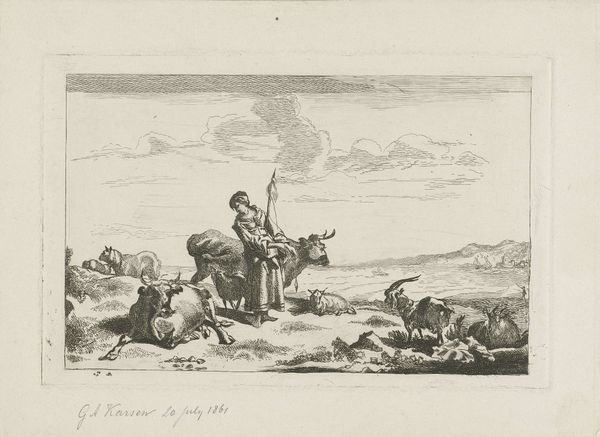
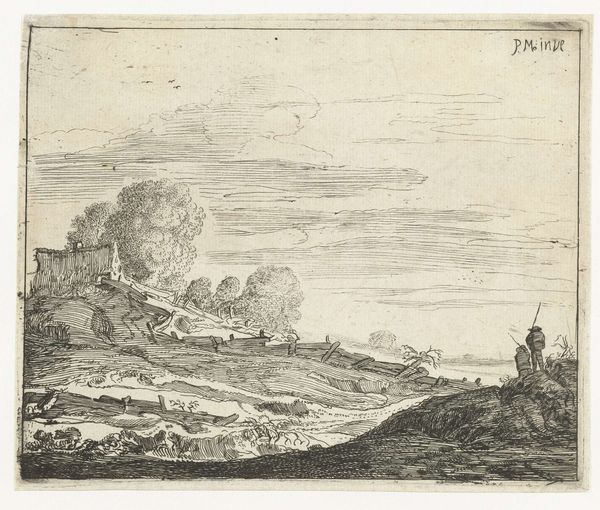
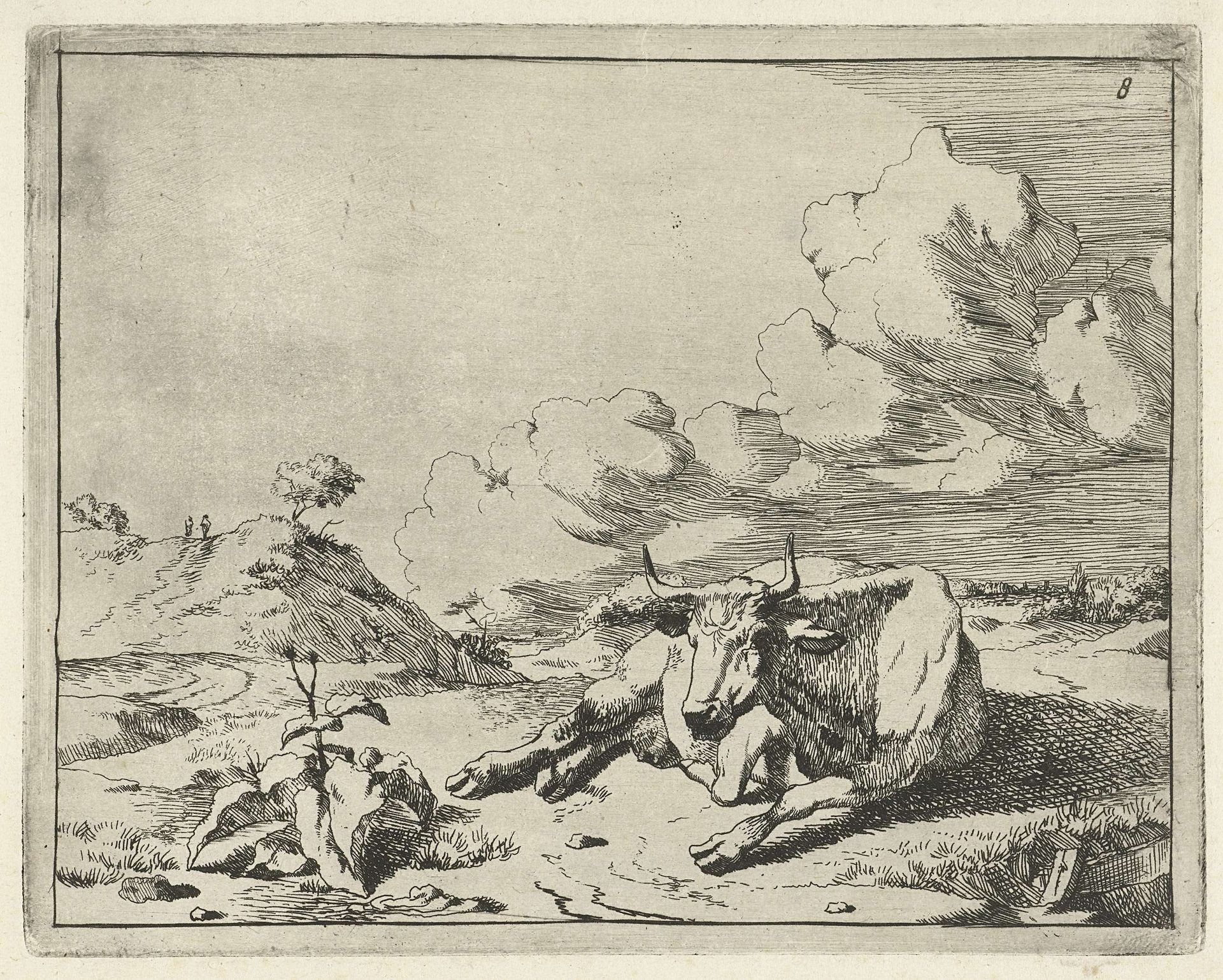
Marcus de Bye created this etching of a resting cow in the Dutch Golden Age. In this period, the Netherlands was undergoing rapid economic expansion, and art began to reflect the values of the growing merchant class. Here, the choice of a common farm animal as the central subject matter, rather than a historical or mythological scene, signals a shift towards celebrating everyday life. Note the level of detail, from the texture of the cow's hide to the atmospheric rendering of the sky. De Bye's technical skill elevates this simple subject. Dutch landscape painting, often featuring animals, became a symbol of national pride and prosperity. One can research period agricultural practices, market records, and even farmers’ journals to learn more about the social conditions in which de Bye created his work. By looking at this print through a social and economic lens, we can better understand its cultural significance.

Artwork details
- Medium
- print, etching, engraving
- Dimensions
- height 119 mm, width 150 mm
- Location
- Rijksmuseum
- Copyright
- Rijks Museum: Open Domain
Tags
Comments
Share your thoughts
About this artwork
Marcus de Bye created this etching of a resting cow in the Dutch Golden Age. In this period, the Netherlands was undergoing rapid economic expansion, and art began to reflect the values of the growing merchant class. Here, the choice of a common farm animal as the central subject matter, rather than a historical or mythological scene, signals a shift towards celebrating everyday life. Note the level of detail, from the texture of the cow's hide to the atmospheric rendering of the sky. De Bye's technical skill elevates this simple subject. Dutch landscape painting, often featuring animals, became a symbol of national pride and prosperity. One can research period agricultural practices, market records, and even farmers’ journals to learn more about the social conditions in which de Bye created his work. By looking at this print through a social and economic lens, we can better understand its cultural significance.
Comments
Share your thoughts