About this artwork
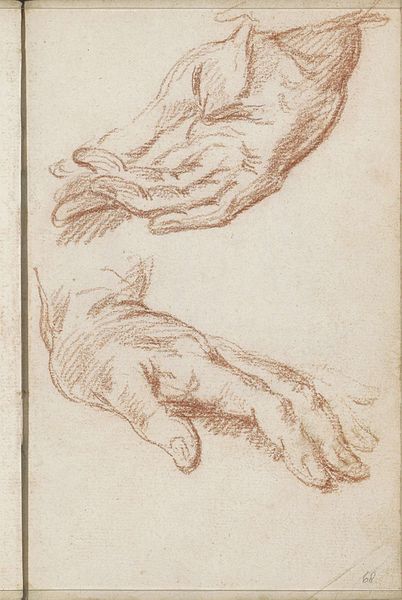
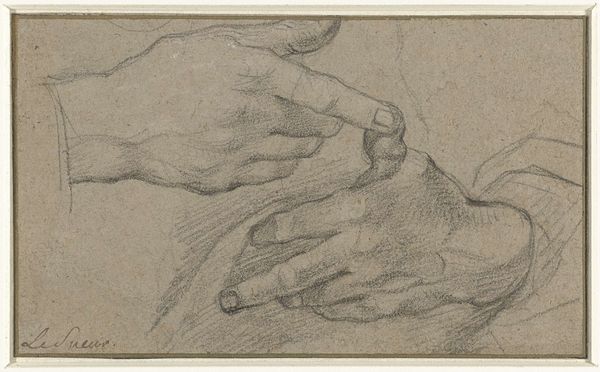
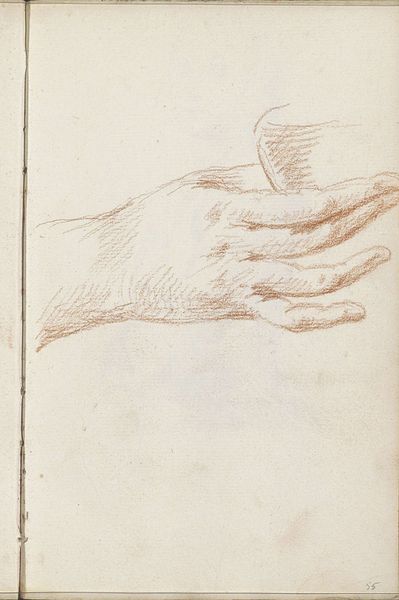
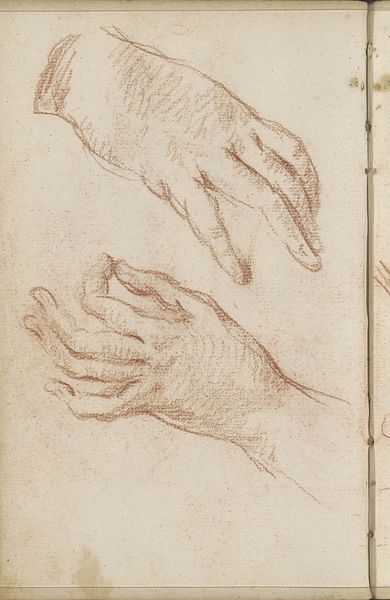
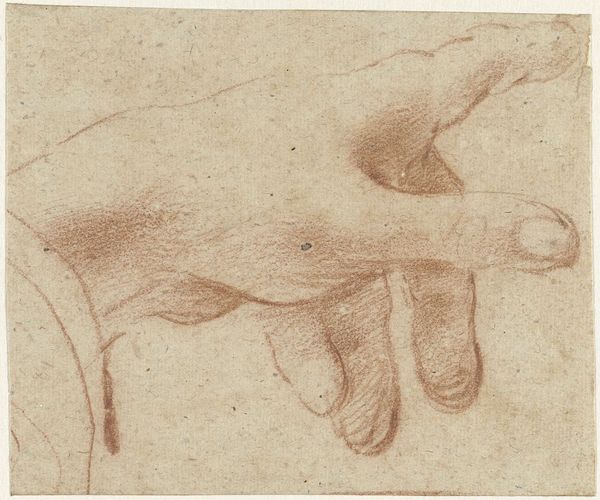
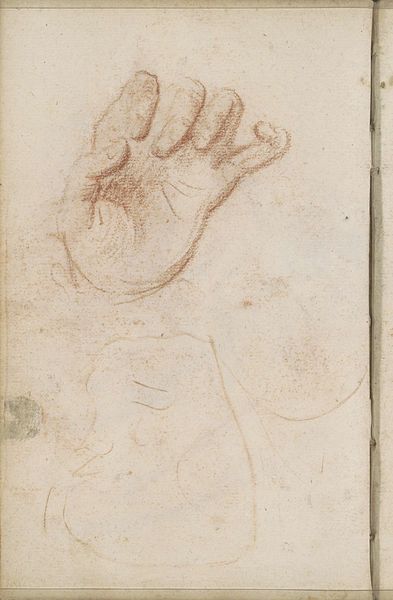
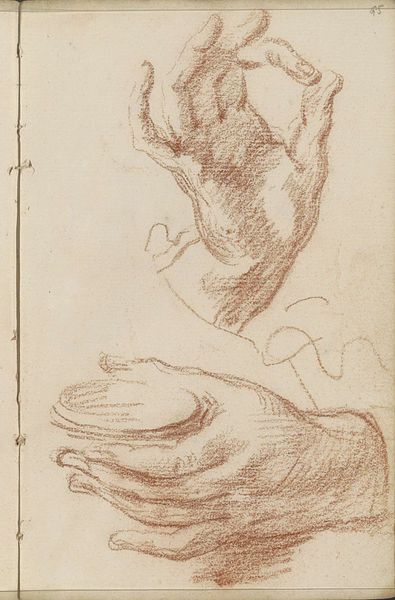
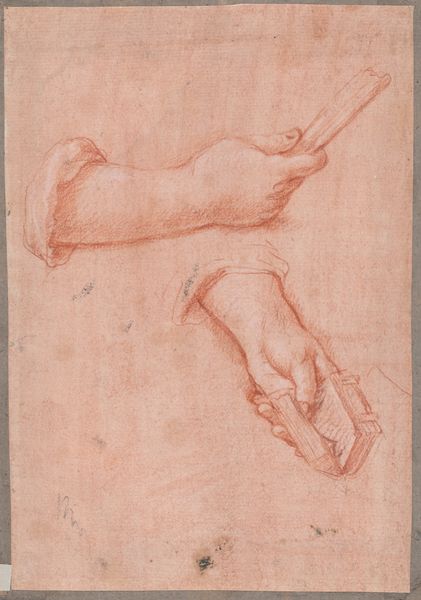
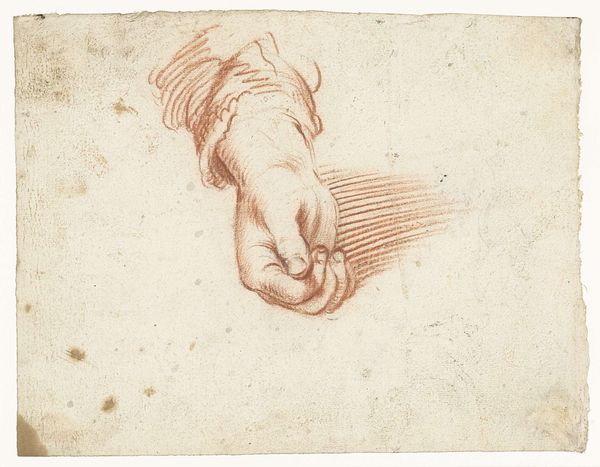
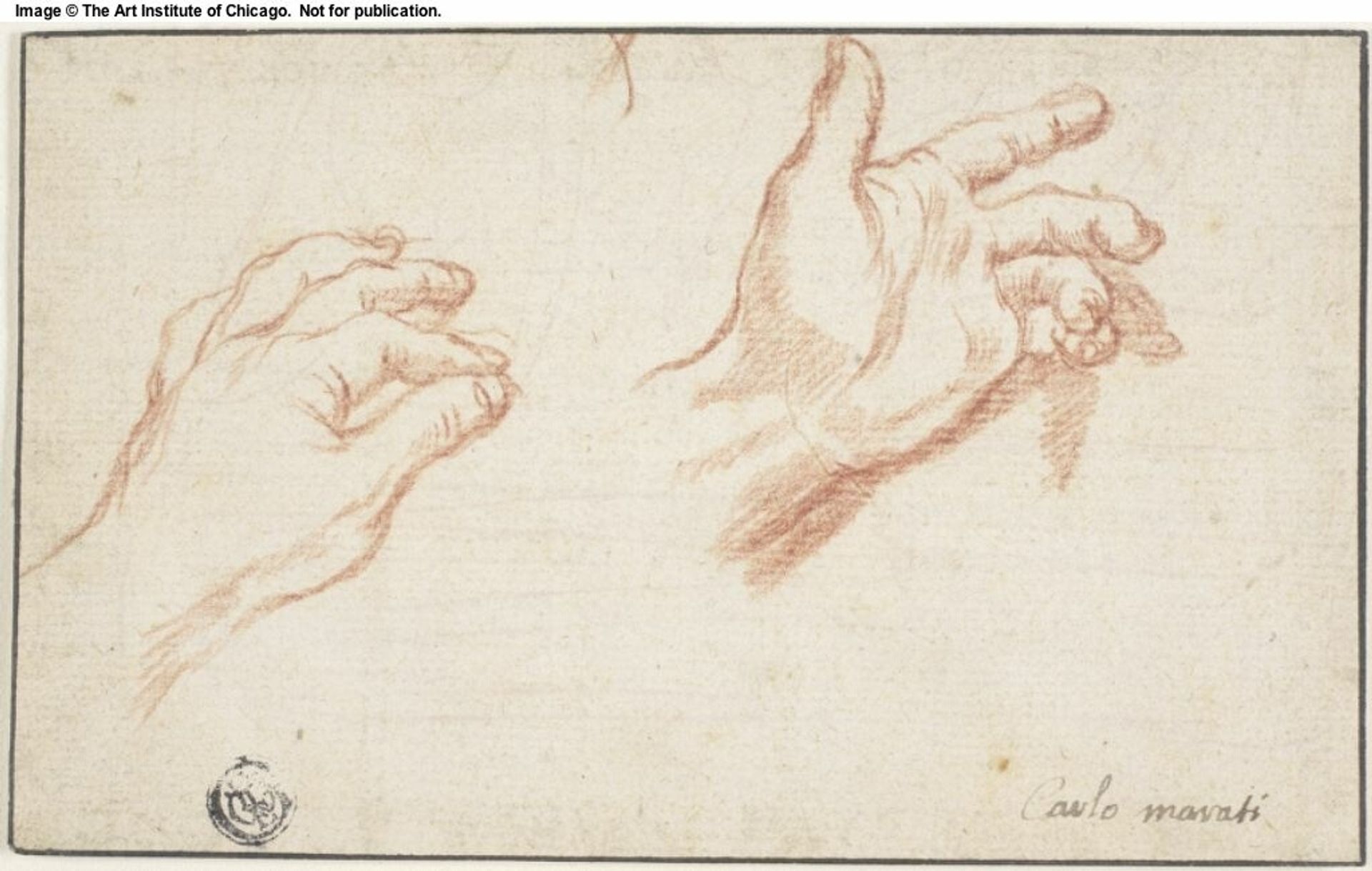
Carlo Maratti made this drawing, Two Sketches of Left Hand, with red chalk on paper. Maratti was the leading painter in Rome for much of the late 17th century, an era of great patronage and collecting. This quick sketch gives us a glimpse into the world of the artist’s studio. Academies of art, such as the Accademia di San Luca in Rome, where Maratti served as director, emphasized the importance of life drawing and the study of anatomy for aspiring artists. We might think of this drawing as a kind of visual exercise, a means of achieving mastery over the depiction of the human form. Maratti’s emphasis on drawing and ideal forms reflected his allegiance to classical tradition. This contrasted with the emerging Baroque style, which favored dynamic movement and dramatic effects. To understand the culture of academic art in the 17th century, scholars consult archival documents, treatises, and early biographies of artists. The survival of drawings like these provides a window into the day-to-day practice of artists in the past.
Two Sketches of Left Hand
n.d.


Artwork details
- Medium
- drawing, paper, chalk
- Dimensions
- 95 × 155 mm
- Location
- The Art Institute of Chicago
- Copyright
- Public Domain
Tags
Comments
Share your thoughts
About this artwork
Carlo Maratti made this drawing, Two Sketches of Left Hand, with red chalk on paper. Maratti was the leading painter in Rome for much of the late 17th century, an era of great patronage and collecting. This quick sketch gives us a glimpse into the world of the artist’s studio. Academies of art, such as the Accademia di San Luca in Rome, where Maratti served as director, emphasized the importance of life drawing and the study of anatomy for aspiring artists. We might think of this drawing as a kind of visual exercise, a means of achieving mastery over the depiction of the human form. Maratti’s emphasis on drawing and ideal forms reflected his allegiance to classical tradition. This contrasted with the emerging Baroque style, which favored dynamic movement and dramatic effects. To understand the culture of academic art in the 17th century, scholars consult archival documents, treatises, and early biographies of artists. The survival of drawings like these provides a window into the day-to-day practice of artists in the past.
Comments
Share your thoughts