About this artwork
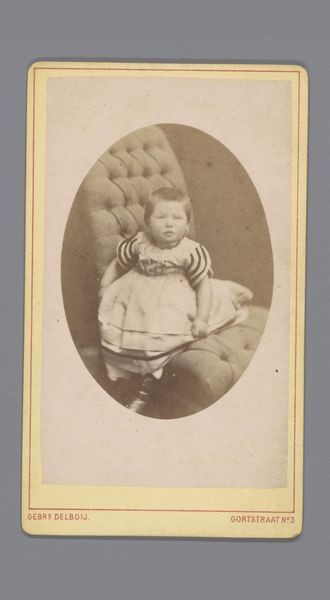
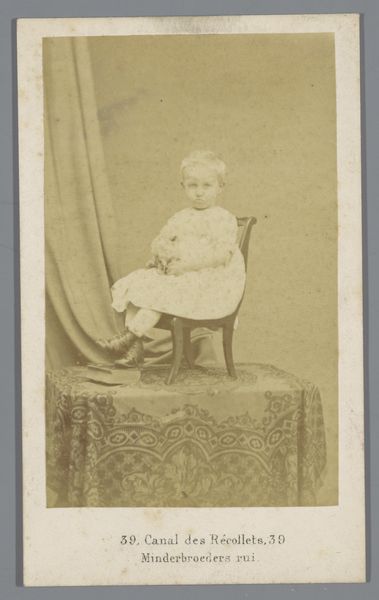
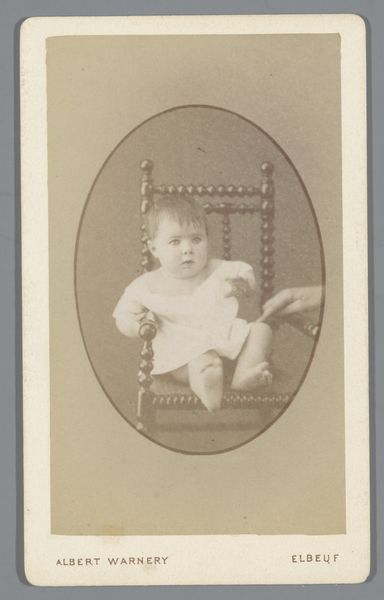
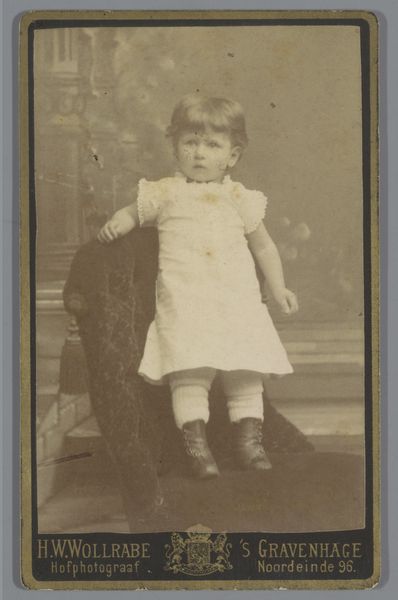
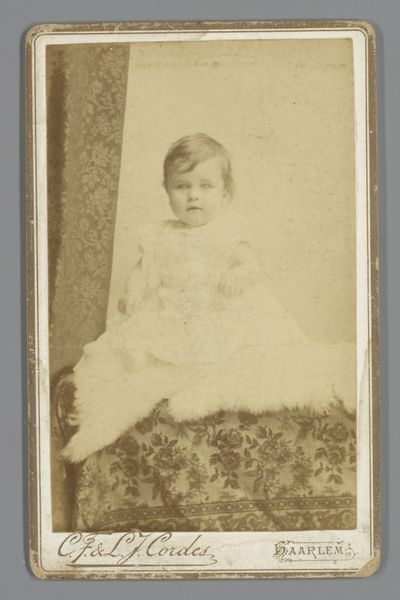
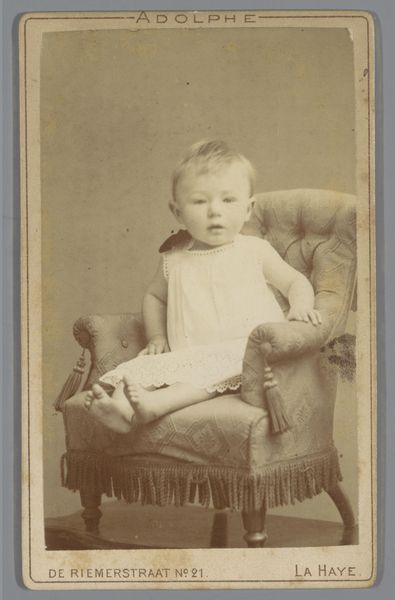
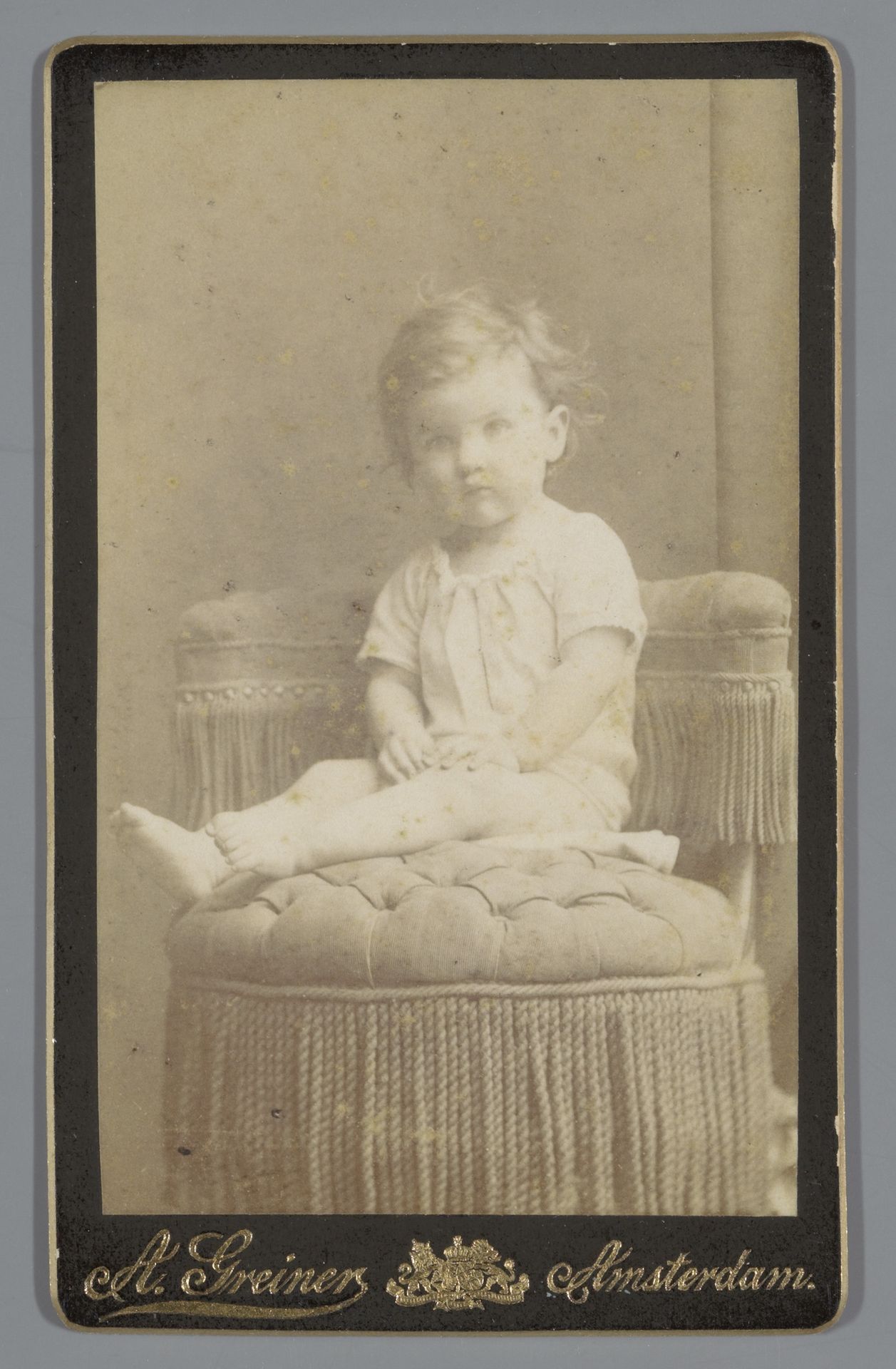
Albert Greiner captured this portrait of an unknown child, likely in his Amsterdam studio, using the then-novel medium of photography. Portraits such as this were important for families and individuals during a time when painted portraits were only accessible to a select few. Here, the child is perched on what appears to be an ornate chair; the setting carefully arranged to signify bourgeois status. Yet, the child's bare feet and direct gaze offer an alternative narrative to the traditional, idealized representations of childhood innocence and affluence. Consider the politics of representation inherent in portraiture. Who has historically been deemed worthy of having their image preserved and circulated, and what does this tell us about the power dynamics within society? The desire to document and remember loved ones, along with photography's accessibility, allowed for a democratization of portraiture. We are left with questions about identity, visibility, and the stories that images can tell, even when the subject remains unknown.
Portret van een onbekend kind, zittend op een stoel 1861 - 1889

Albert Greiner
1833 - 1890Location
RijksmuseumArtwork details
- Medium
- photography, gelatin-silver-print
- Dimensions
- height 102 mm, width 63 mm
- Location
- Rijksmuseum
- Copyright
- Rijks Museum: Open Domain
Tags
portrait
photography
child
gelatin-silver-print
Comments
No comments
About this artwork
Albert Greiner captured this portrait of an unknown child, likely in his Amsterdam studio, using the then-novel medium of photography. Portraits such as this were important for families and individuals during a time when painted portraits were only accessible to a select few. Here, the child is perched on what appears to be an ornate chair; the setting carefully arranged to signify bourgeois status. Yet, the child's bare feet and direct gaze offer an alternative narrative to the traditional, idealized representations of childhood innocence and affluence. Consider the politics of representation inherent in portraiture. Who has historically been deemed worthy of having their image preserved and circulated, and what does this tell us about the power dynamics within society? The desire to document and remember loved ones, along with photography's accessibility, allowed for a democratization of portraiture. We are left with questions about identity, visibility, and the stories that images can tell, even when the subject remains unknown.
Comments
No comments