About this artwork
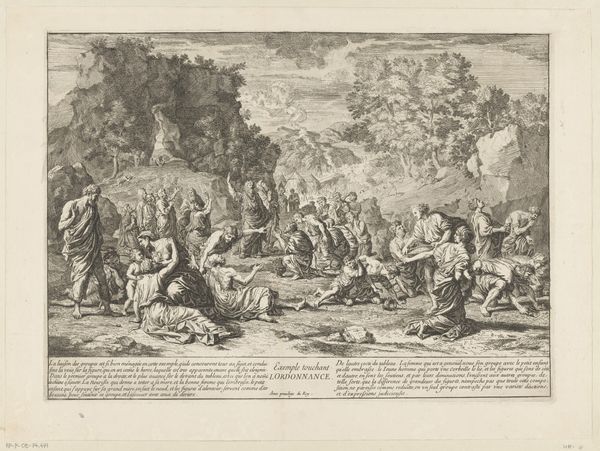
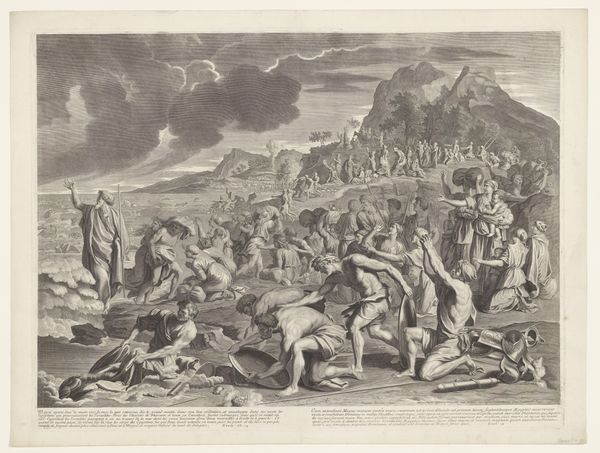
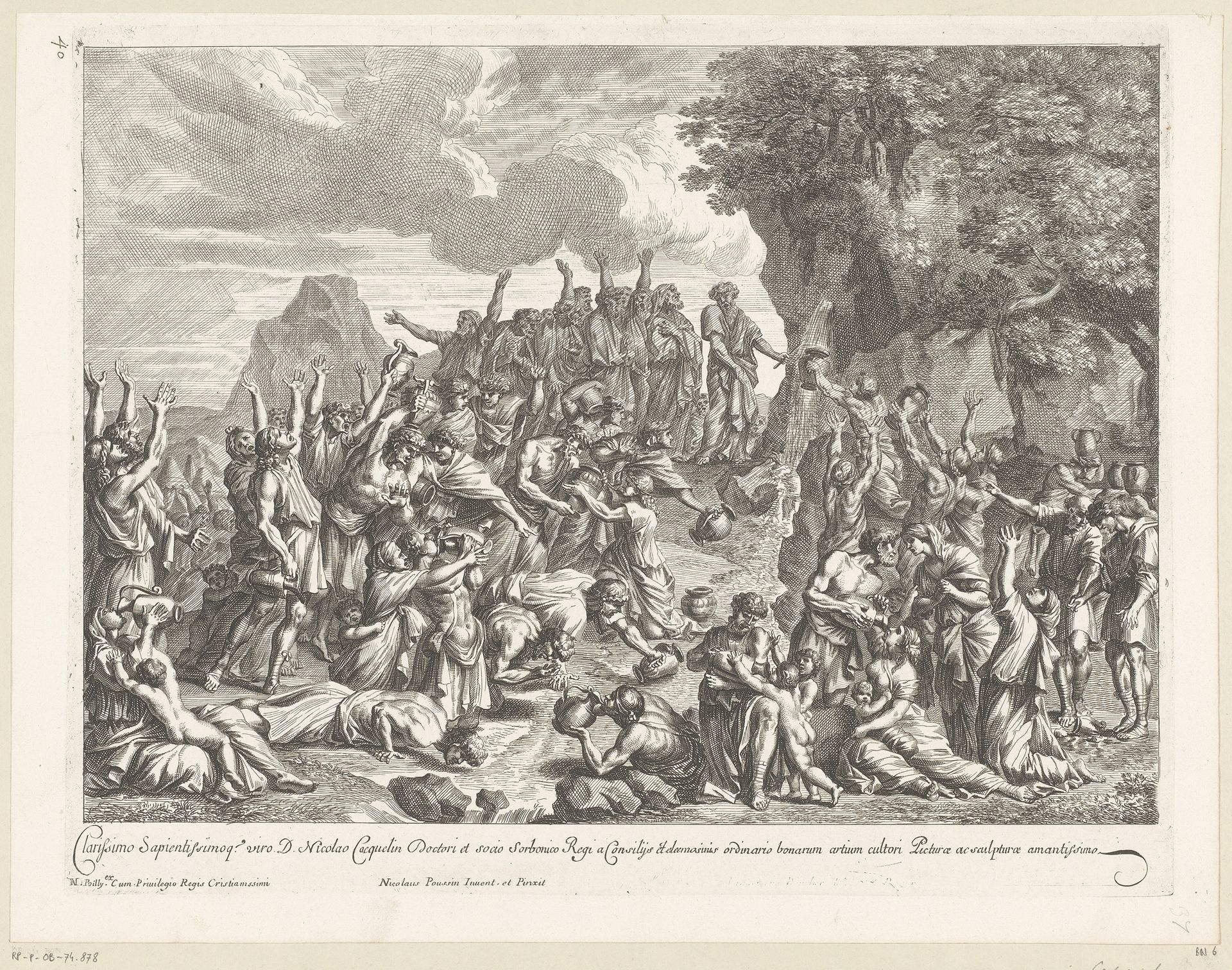
Jean Lepautre created this etching, titled "Moses striking water from the rock," during the 17th century. Lepautre was working during the reign of Louis XIV, a period characterized by grandeur, classicism, and the consolidation of royal power. The print depicts Moses providing water to the Israelites in the desert. Consider how the bodies are arranged – a mass of figures expressing a range of emotions from desperation to relief. The classical rendering of the figures reflects the artistic conventions of the time, but it also serves to elevate and idealize the biblical narrative. We might ask how Lepautre's position as an artist working for the French court influenced his interpretation of this story, particularly in relation to themes of leadership and divine intervention. This work invites us to reflect on the intersection of religious narrative, artistic style, and political context. How does it shape our understanding of power, faith, and the human condition?

Artwork details
- Medium
- print, engraving
- Dimensions
- height 352 mm, width 445 mm
- Location
- Rijksmuseum
- Copyright
- Rijks Museum: Open Domain
Tags
narrative-art
baroque
old engraving style
figuration
history-painting
engraving
Comments
No comments
About this artwork
Jean Lepautre created this etching, titled "Moses striking water from the rock," during the 17th century. Lepautre was working during the reign of Louis XIV, a period characterized by grandeur, classicism, and the consolidation of royal power. The print depicts Moses providing water to the Israelites in the desert. Consider how the bodies are arranged – a mass of figures expressing a range of emotions from desperation to relief. The classical rendering of the figures reflects the artistic conventions of the time, but it also serves to elevate and idealize the biblical narrative. We might ask how Lepautre's position as an artist working for the French court influenced his interpretation of this story, particularly in relation to themes of leadership and divine intervention. This work invites us to reflect on the intersection of religious narrative, artistic style, and political context. How does it shape our understanding of power, faith, and the human condition?
Comments
No comments