About this artwork
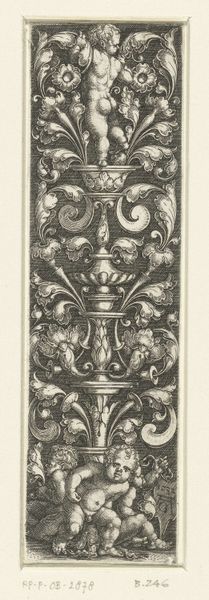
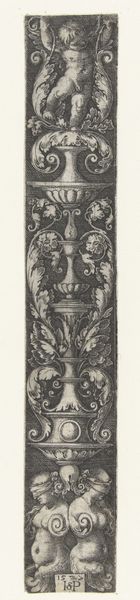
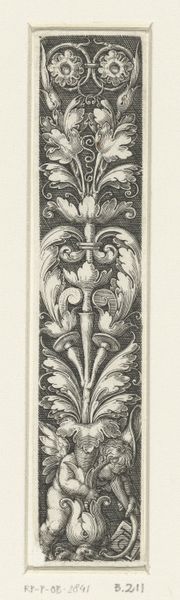
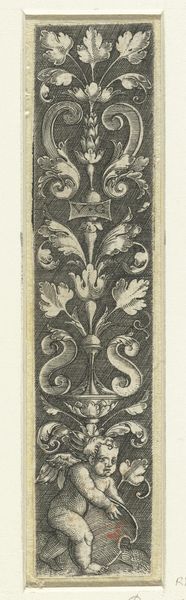
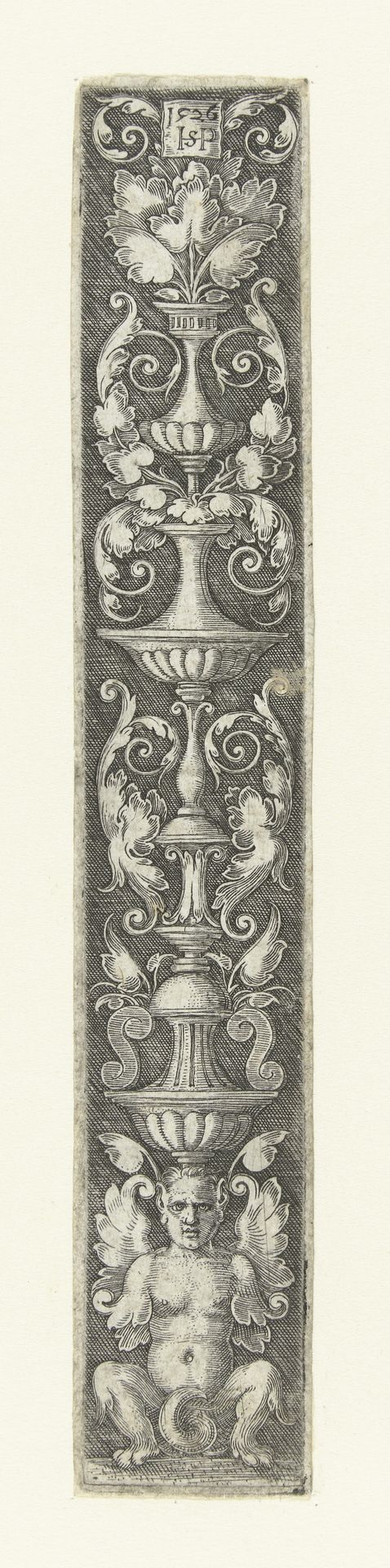
Sebald Beham created this "Vlakdecoratie met onderaan een gehurkte sater" in the 16th century. The artwork is composed of symmetrical patterns and classical motifs, constructed with fine lines on a small vertical scale. This dense ornamentation evokes a sense of crafted precision. Beham employs symmetry to structure the composition; the arrangement of vases and foliage creates a balanced visual rhythm. The recurring motifs and their calculated placement suggest an intellectual interest in order and harmony, reflecting the era’s humanist values. The satyr at the bottom introduces a contrasting element. It disrupts the rigid verticality and abstract perfection of the classical motifs, and its inclusion hints at the tension between the rational and the irrational in Renaissance thought. In summary, the interplay between the ornamental structure and the figure is a negotiation between ideal form and the destabilizing force of nature. This contrast invites ongoing interpretation into the cultural values of the time.
Vlakdecoratie met onderaan een gehurkte sater
1510 - 1527

Sebald Beham
1500 - 1550Location
RijksmuseumArtwork details
- Medium
- print, relief, engraving
- Dimensions
- height 131 mm, width 20 mm
- Location
- Rijksmuseum
- Copyright
- Rijks Museum: Open Domain
Tags
Comments
Share your thoughts
About this artwork
Sebald Beham created this "Vlakdecoratie met onderaan een gehurkte sater" in the 16th century. The artwork is composed of symmetrical patterns and classical motifs, constructed with fine lines on a small vertical scale. This dense ornamentation evokes a sense of crafted precision. Beham employs symmetry to structure the composition; the arrangement of vases and foliage creates a balanced visual rhythm. The recurring motifs and their calculated placement suggest an intellectual interest in order and harmony, reflecting the era’s humanist values. The satyr at the bottom introduces a contrasting element. It disrupts the rigid verticality and abstract perfection of the classical motifs, and its inclusion hints at the tension between the rational and the irrational in Renaissance thought. In summary, the interplay between the ornamental structure and the figure is a negotiation between ideal form and the destabilizing force of nature. This contrast invites ongoing interpretation into the cultural values of the time.
Comments
Share your thoughts