1628 - 1652
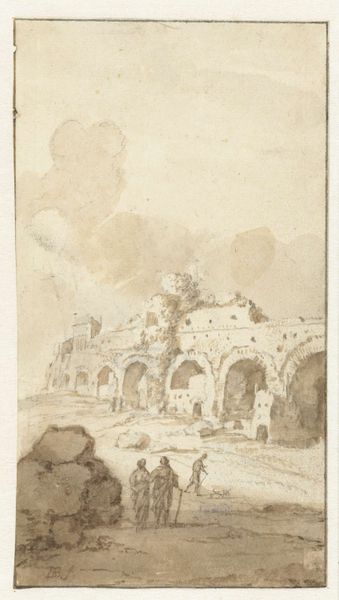
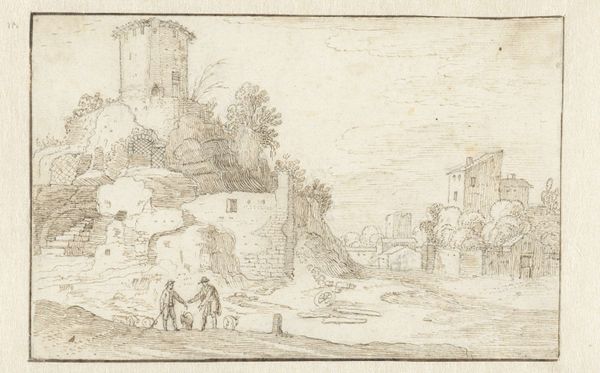
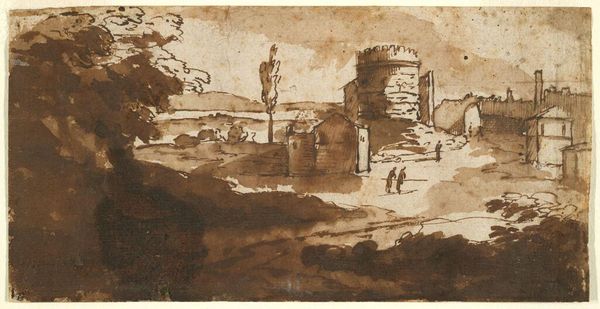
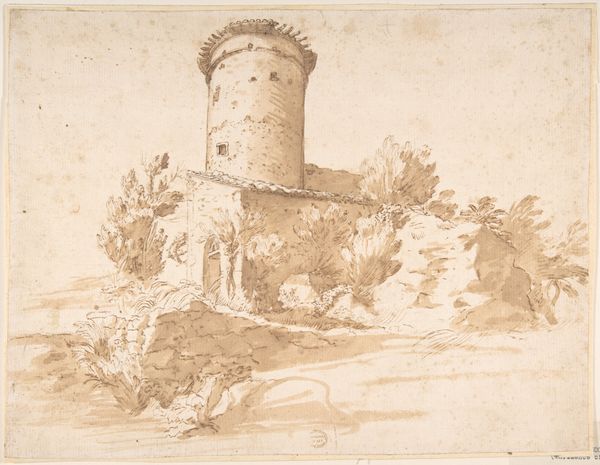
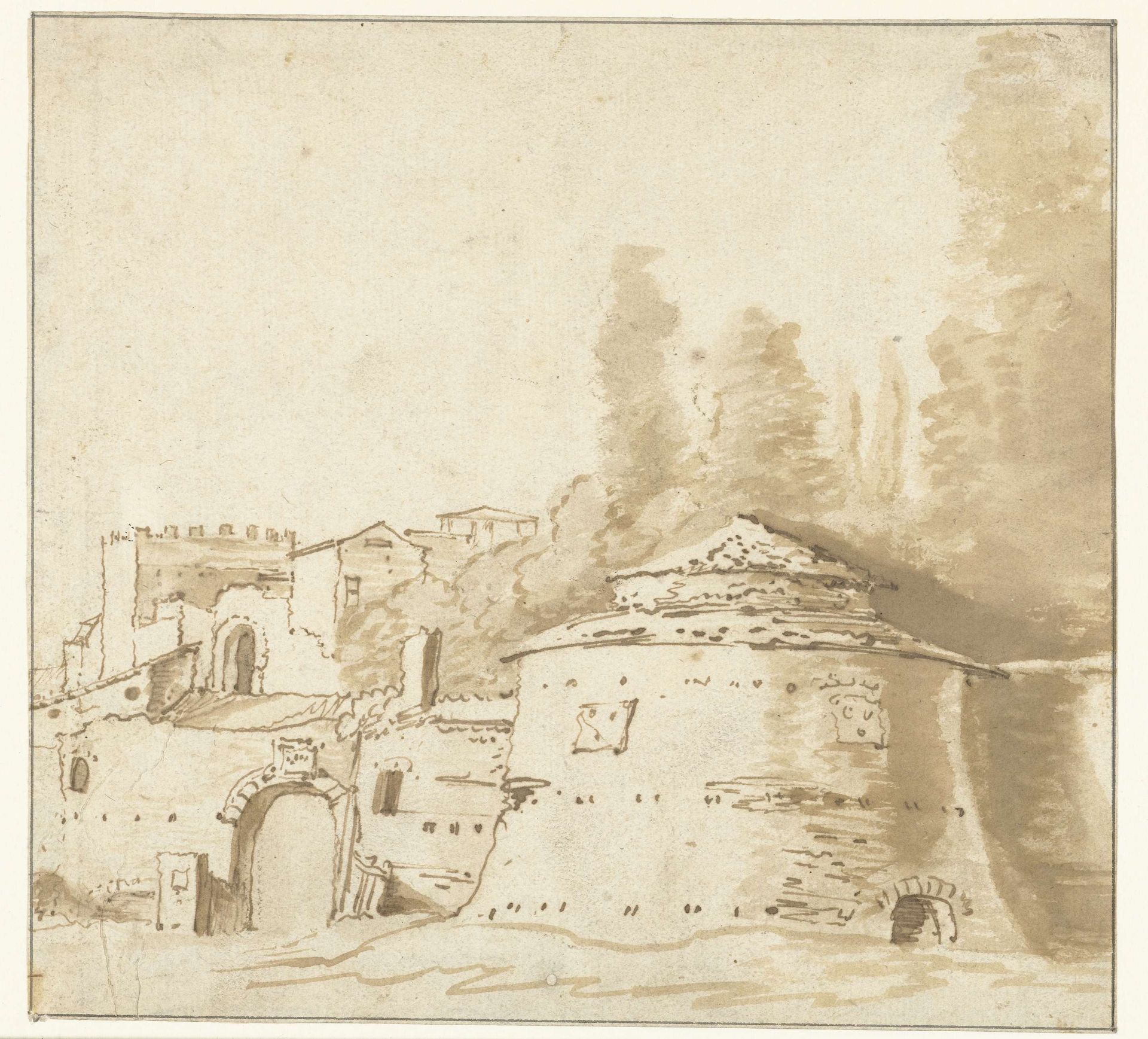
Italiaans gebouw met zware ronde toren

Jan Both
1618 - 1652Location
RijksmuseumListen to curator's interpretation
Curatorial notes
Editor: This is Jan Both’s "Italian Building with Heavy Round Tower," made sometime between 1628 and 1652. It's a watercolor and graphite sketch currently housed in the Rijksmuseum. I’m immediately struck by how this simple sketch evokes such a sense of place. What do you see in this piece? Curator: Well, seeing this work through the lens of art’s public role, I’m particularly drawn to how Dutch artists like Both, through their depictions of Italy, helped construct a shared cultural understanding of the Italian landscape for a Dutch audience. It’s more than just a picture; it's a representation shaped by cultural and political interests. Do you notice the details he emphasizes? Editor: Yes, especially the crumbling textures and the light. I guess I hadn't thought about the impact that images like these might have on a society’s collective imagination of a faraway place. Was this common at the time? Curator: Absolutely. Images of Italy were highly sought after in the Netherlands. They fed into a sense of cultural sophistication, and possessing these images reflected on the collector. So, this simple sketch becomes evidence of complex socio-economic dynamics at play. Think about what it meant to own a little piece of Italy, rendered by a Dutch hand. Editor: So it’s not just a depiction, but also a marker of status. It's fascinating to consider the layers of meaning embedded in what I initially perceived as a simple landscape study. Curator: Exactly! And understanding that context adds so much richness to our viewing experience. Editor: I'll definitely look at landscape sketches differently now, considering not just what is depicted, but also why and for whom. Curator: Indeed, that shift in perspective is the first step toward contextualizing the complex and intertwined relationship between artist, artwork, and audience.