About this artwork
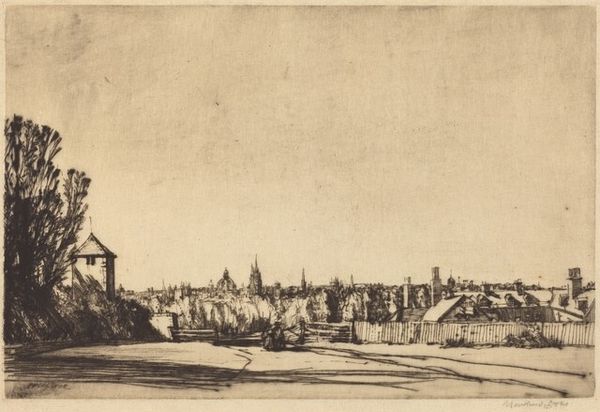
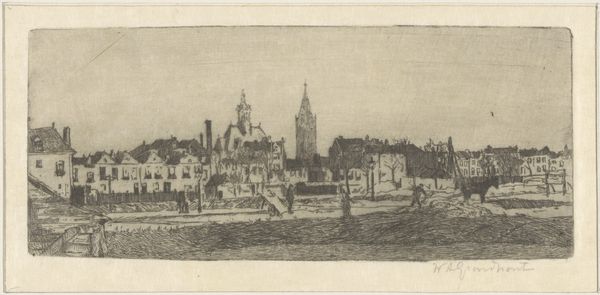
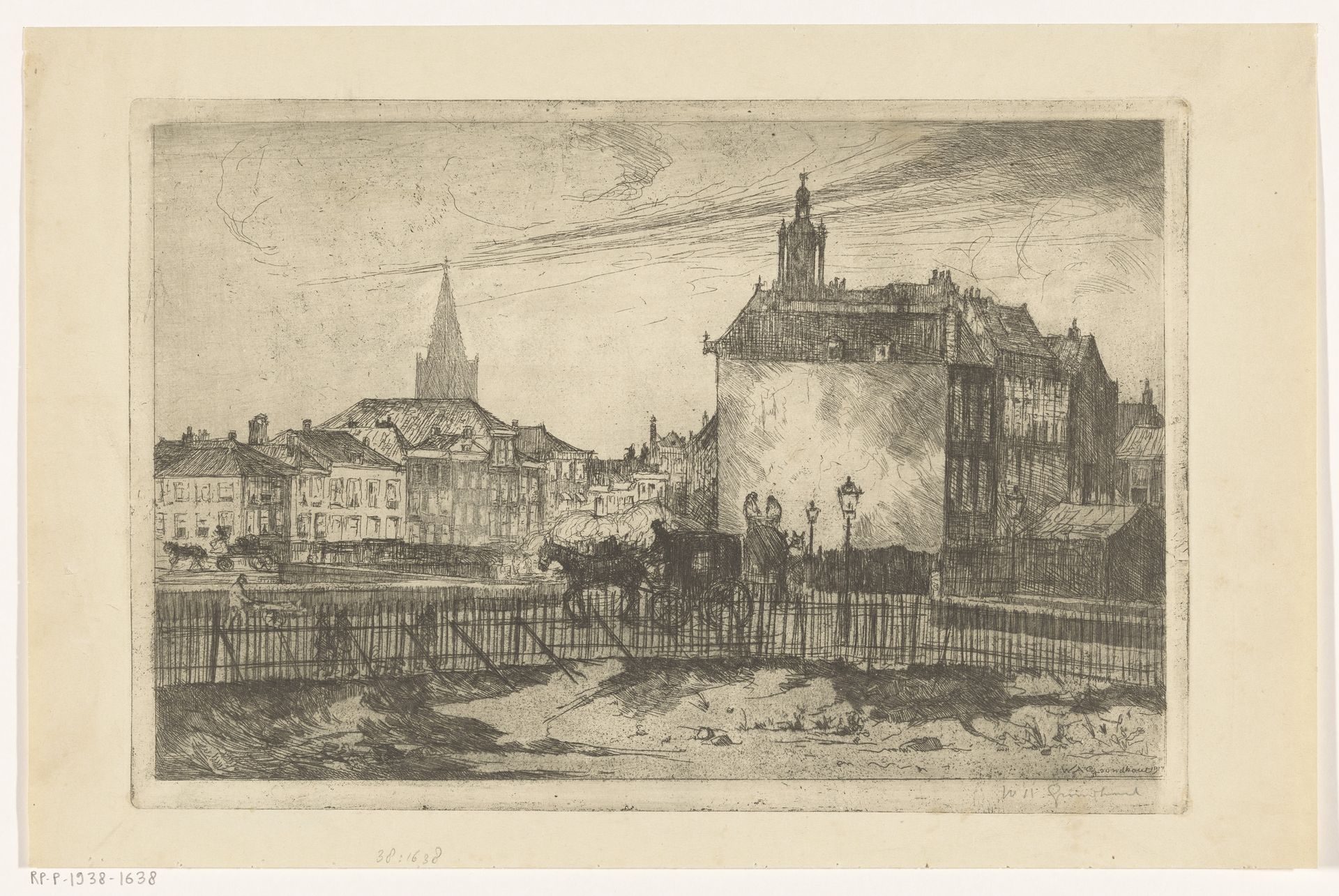
This etching, Den Haag, was made by Willem Adrianus Grondhout sometime around the turn of the century. It’s almost like Grondhout is sketching with acid; the way he builds up the image with these tiny, feathery lines feels so immediate, like he’s trying to capture a fleeting moment. Check out the sky, how it’s not just a blank space, but a flurry of these marks that suggest movement and atmosphere. There’s something about the density of the lines in the buildings compared to the openness of the sky that creates a real push and pull. It's like the built environment is solid and permanent, while the natural world is always changing, always in flux. I love how the darkness of the carriage and fence in the foreground create depth and shadow, contrasting the muted buildings behind. I’m reminded of Whistler's etchings, though maybe Grondhout has a slightly rougher, more expressive touch. It shows how artists can be in conversation with each other across time, each finding their own voice within a shared medium.

Artwork details
- Dimensions
- height 259 mm, width 385 mm
- Location
- Rijksmuseum
- Copyright
- Rijks Museum: Open Domain
Tags
Comments
Share your thoughts
About this artwork
This etching, Den Haag, was made by Willem Adrianus Grondhout sometime around the turn of the century. It’s almost like Grondhout is sketching with acid; the way he builds up the image with these tiny, feathery lines feels so immediate, like he’s trying to capture a fleeting moment. Check out the sky, how it’s not just a blank space, but a flurry of these marks that suggest movement and atmosphere. There’s something about the density of the lines in the buildings compared to the openness of the sky that creates a real push and pull. It's like the built environment is solid and permanent, while the natural world is always changing, always in flux. I love how the darkness of the carriage and fence in the foreground create depth and shadow, contrasting the muted buildings behind. I’m reminded of Whistler's etchings, though maybe Grondhout has a slightly rougher, more expressive touch. It shows how artists can be in conversation with each other across time, each finding their own voice within a shared medium.
Comments
Share your thoughts